
How To Transplant Pepper Plants – Simple Guide

Disclaimer: As an Amazon Associate, I earn from qualifying purchases. Pepper Geek takes part in various affiliate programs. This means that purchases through our links may result in a commission for us.
Growing healthy pepper plants and big harvests comes from attentive care throughout the season. One of the most important processes is transplanting young pepper seedlings.
Transplanting is an important skill to master for growing peppers. Whether you start indoors, or buy your plants from the store, you’ll need to transplant them properly, and at the right time.
In this article, I’ll share my process on how to transplant pepper plants. It is very simple, but timing and technique are important to avoid damaging your plants or slowing down growth. Let’s get started!
Skip Ahead:
- What is transplanting?
- When to transplant peppers
- What you’ll need
- Step-by-step instructions
- Why not move straight to full-sized pots?
How To Transplant Pepper Seedlings (Video):
What Is Transplanting
Transplanting is the process of moving a plant from a smaller container to a larger one. This allows the plant to continue growing a larger root system. Without transplanting, your plants cannot reach their full potential.
Why transplant?
Keeping started plants in small pots for too long can cause a number of problems. The main issue is that the roots have nowhere to expand and grow.
This means that the root system will become entangled, or ‘root bound,’ making a later transplanting more shocking and disruptive to the plant’s health. This is why it is important to get the timing of your transplant right.
Another problem that can arise from not transplanting is stunted foliar (leafy) growth. Without transplanting, your pepper plants will likely grow tall and leggy without as many branches and leaves.
Stunted growth is caused by the root system’s inability to uptake the nutrients required to fuel a larger plant. This is why the size of your final planter will determine the maximum size of your pepper plant.
When To Transplant Pepper Seedlings
We often start our seeds in small seed cell trays, 6 plants per tray. About 3-4 weeks after sprouting, pepper seedlings should be ready to move into larger pots. After the plants begin to produce their 2nd or 3rd set of true leaves, they are ready to be transplanted.
Timing of planting and potting-up can vary based on the variety of pepper. Learn when to plant pepper seeds here.
For example, hotter peppers tend to grow slower, meaning the root systems may not develop as quickly as bell peppers or jalapeños. If your plants seem too small by week 4, give them an extra week before moving them into larger pots.
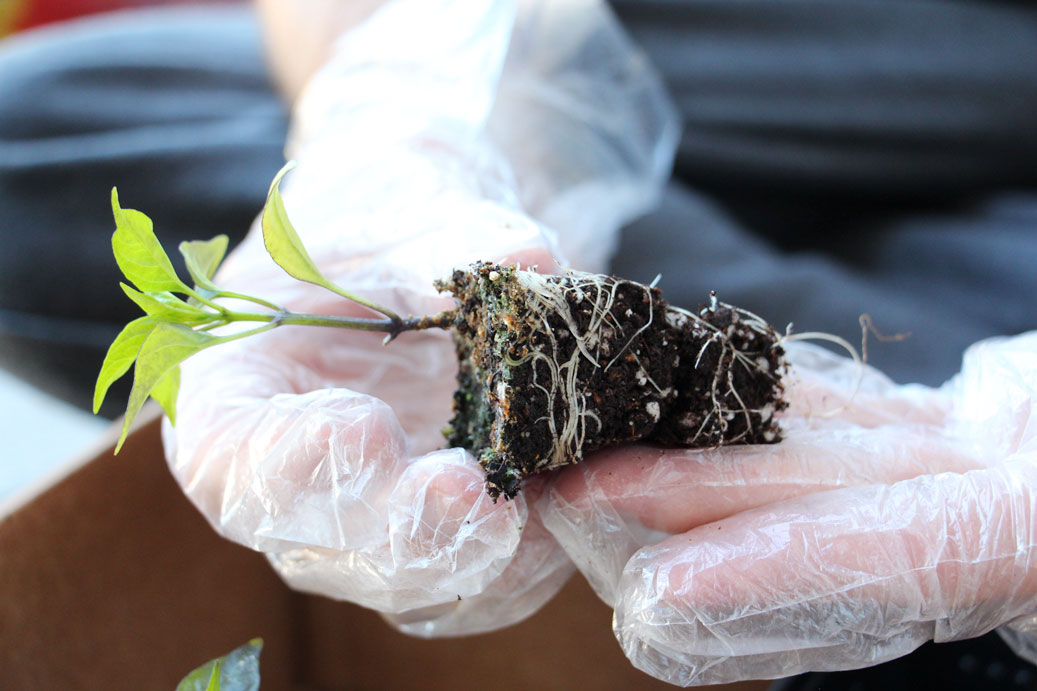
Tip: If you’re not sure if your plants are ready, peak at the root system by gently loosening the plant from the seed cell. If you can see a strong root ball with white roots all the way to the very bottom, your plant is ready to be transplanted. Ideally, you want to transplant before the roots start to coil.
Items You’ll Need For Transplanting
Transplanting is almost as simple as it sounds. You have your timing right, now all you need are a few items to ensure success. We’ve listed the items we use for transplanting our pepper plants, and where you can buy them online.
- Pots (3 Inch). These are the perfect size-up from seedling trays. They allow significantly more soil and retain water for much longer. You may also plant seeds directly in 3 inch pots, and transplant them directly into their final location from there.
- Pruning shears. Pruning shears are used to cut away any additional sprouts at the base of their stem. Each seed cell should have just one plant. I have heard of some gardeners allowing multiple plants to compete in close proximity, but I’ve yet to experiment with this. I recommend just one plant per pot. Note: You’ll also want pruning shears if you plan to top off your peppers. Learn more about pruning pepper plants.
- Potting soil. After your seedlings have grown for 3-4 weeks, they are ready to handle nutrient-rich potting soil. The fertilizer in these soils is necessary for pepper plants to develop healthy foliage and structure during the early plant stages. If your plants have any nutrient deficiencies, you may notice signs such as yellowing leaves or curling leaves.
Other household items needed:
- Water
- Gloves (optional)
How To Transplant Pepper Plants
So you’re ready to transplant! Now it is time to take the steps to get it done. We prefer to get this all done in one go, but it can be back-breaking if you don’t have the right space for it.
What is a rootball? The rootball is the root system of your plant, the part of the plant that is below the soil surface.
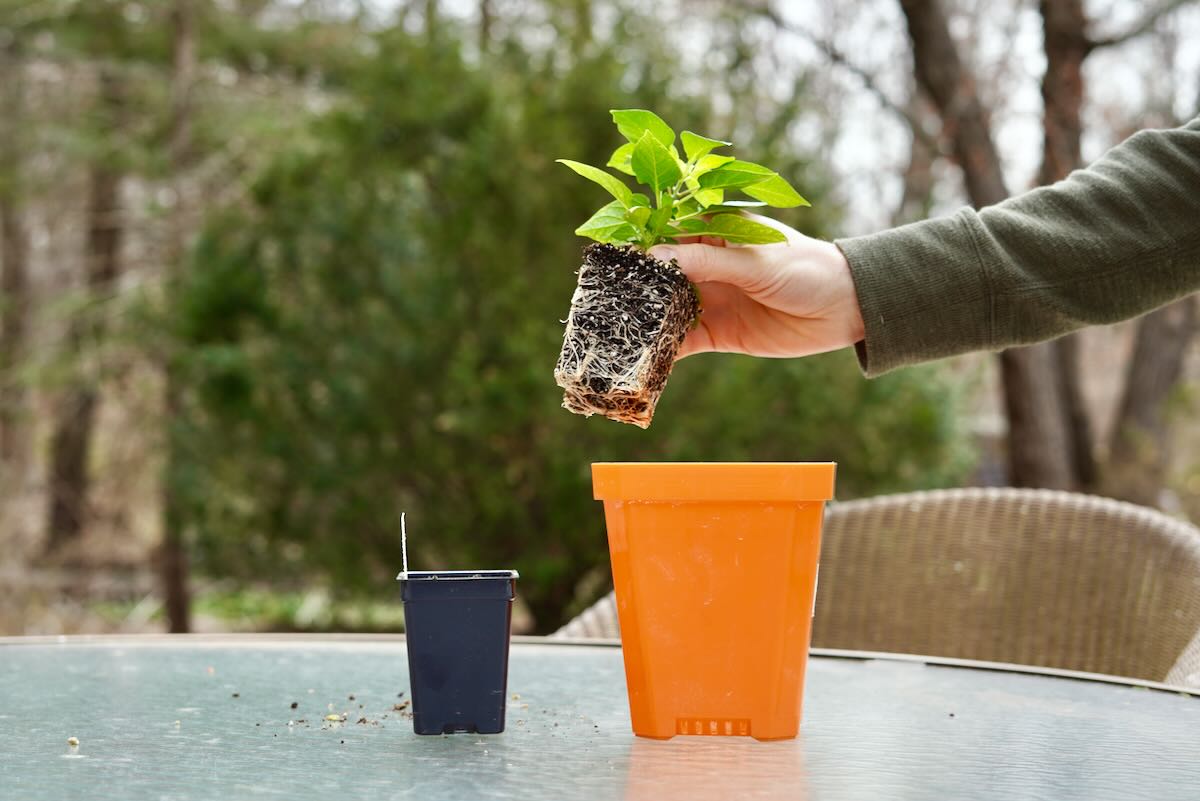
How To Transplant Pepper Plants (Steps):
- Get the required items.
Make sure you have enough larger pots (we use 3-inch pots when transplanting seedlings) and potting soil.
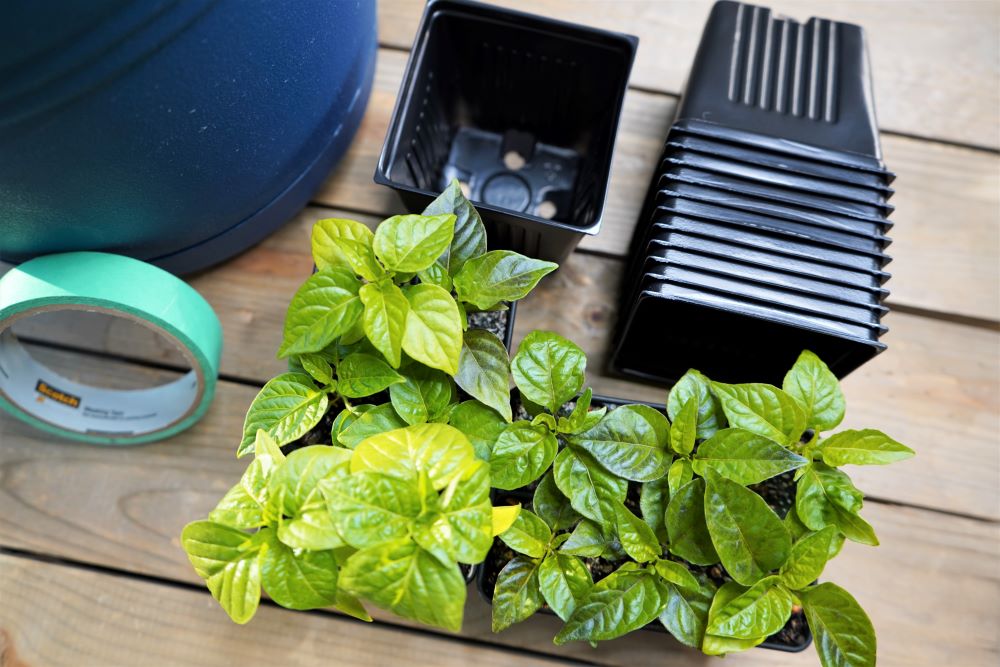
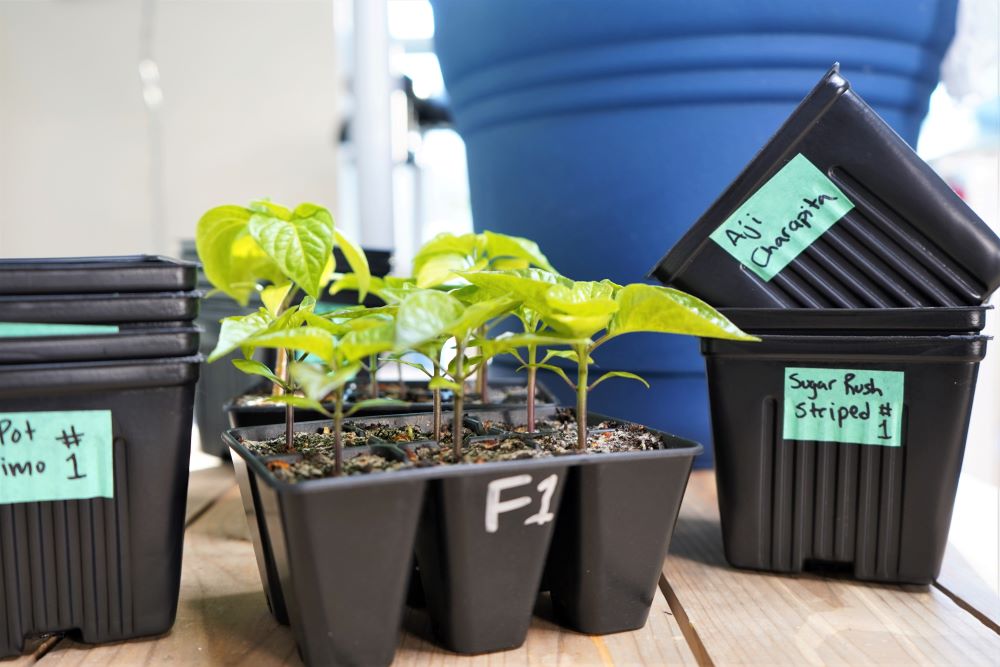
- Label new pots.
Organization is key! Don’t lose track of which plants are which. Use tape or a permanent marker to label each new pot with the plant variety.
- Prepare a work station.
Transplanting pepper plants is messy. Ideally, you should work outdoors. If you don’t have an outdoor space, put down some cardboard or newspaper to save your floors from a dirty mess. This can also be hard on the back if you have a lot of plants, so consider spreading out the work over multiple days.
- Pre-moisten soil
Start with a small amount of water and work the soil over to moisten evenly. Add water until it is just moist but not soaking wet! It should slightly stick together but not feel muddy. If it gets too wet, add more dry soil.
Tip: Use gloves to avoid dirty fingernails.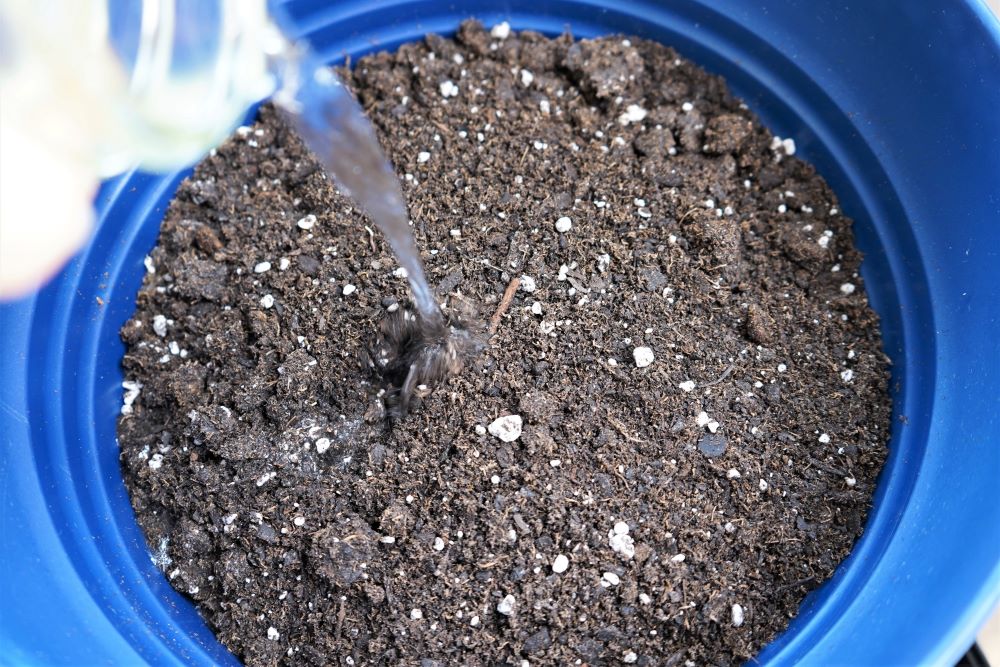
- Fill 3-inch pots with ~1 inch of soil.
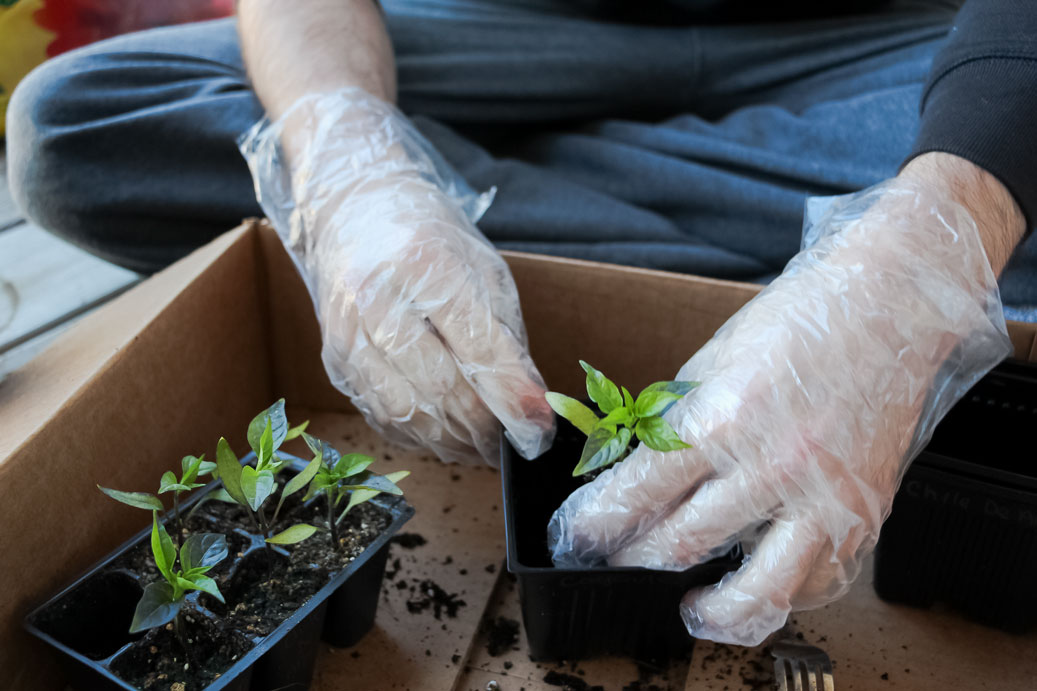
- Gently remove plants from seed trays.
Loosen the plant by gently squeezing the seed cell on all sides. The plant can then easily be removed from the cell by turning the tray upside down and holding the plant by its upper foliage. Be careful not to damage the stem of each plant.
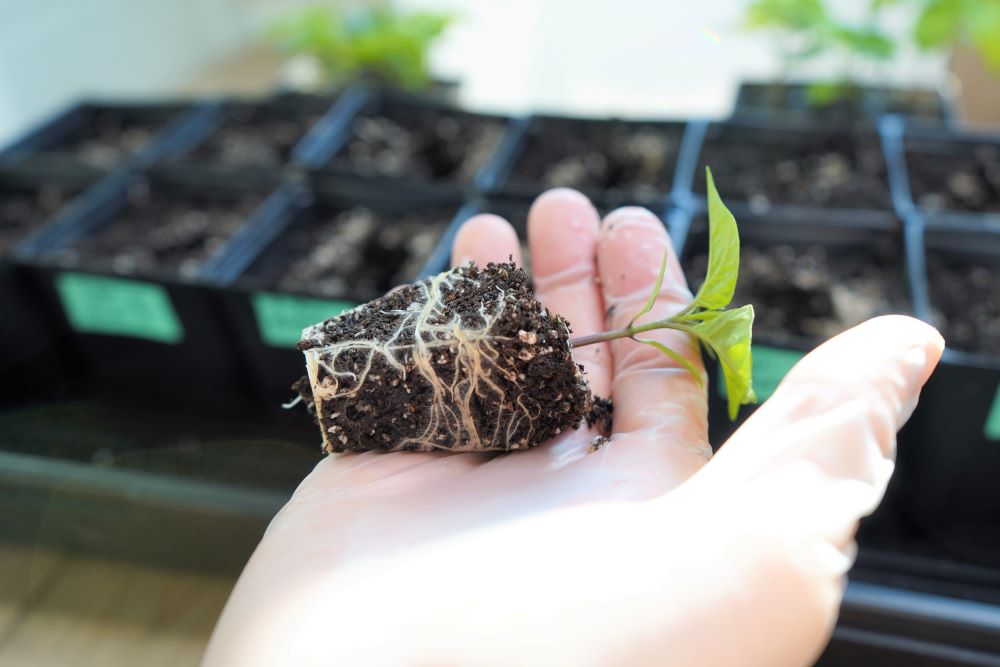
- Place the plants in new pots and surround with soil.
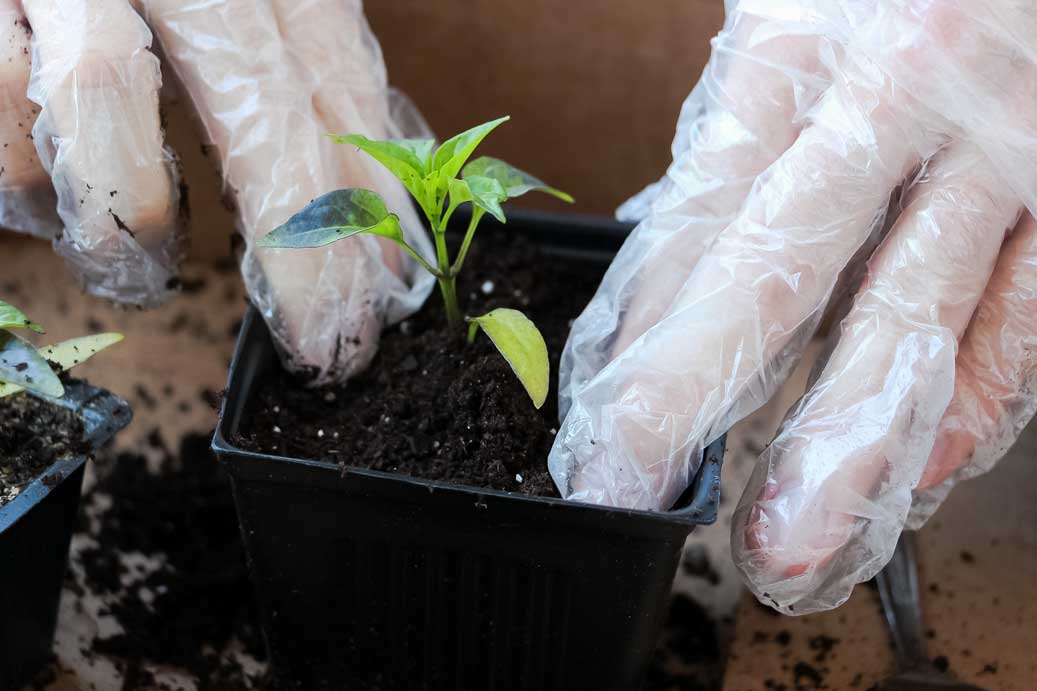
Allow the soil to surround the rootball naturally, filling in empty spots. Fill the pots to about 1/4 inch from the top. Avoid burying the plant’s main stem, planting at its original depth.
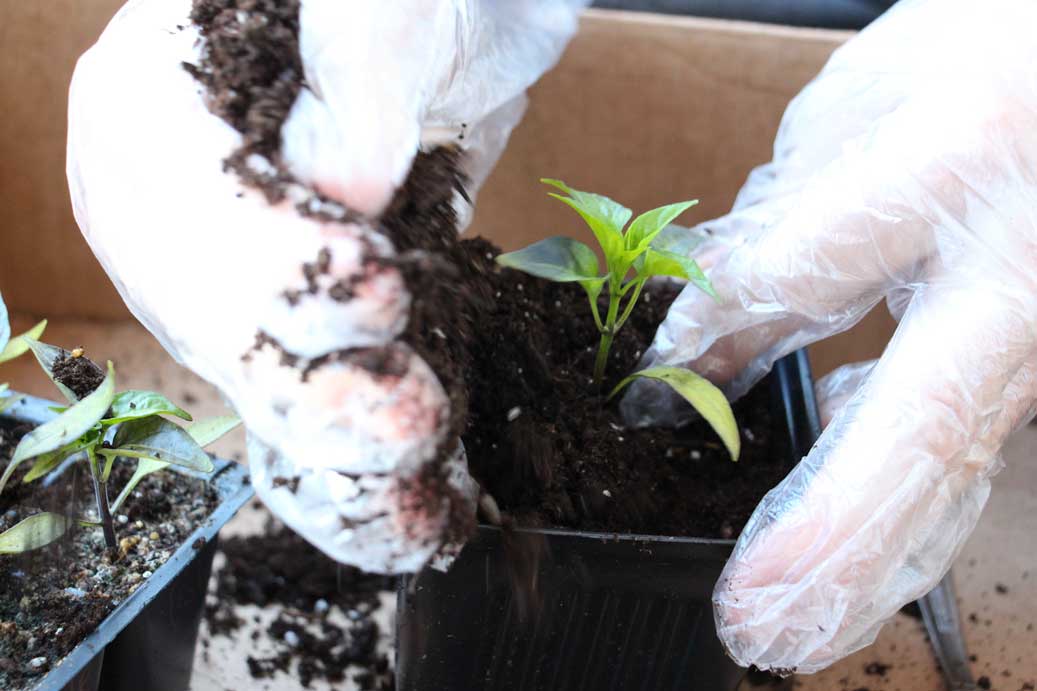
- Gently pack down the soil and top off.
Pack the soil gently with your fingers to ensure that there is good contact with the rootball. Top off with soil to keep the pots full.
- Water lightly.
To ensure each plant has a healthy transition, water lightly. This will join the old soil with the new and begin delivering nutrients to the roots.
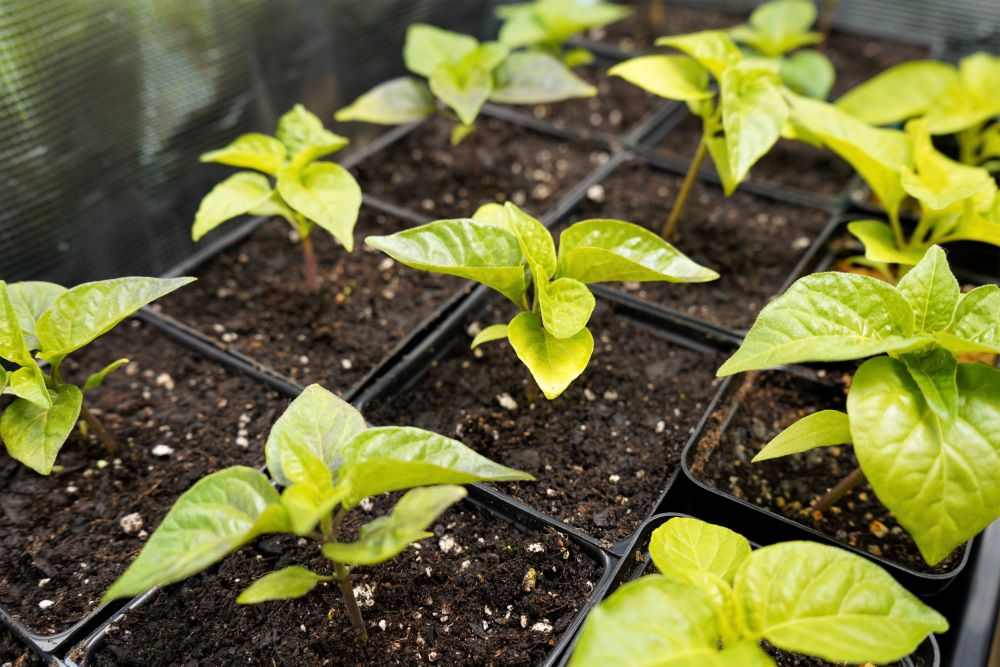
- Prune any additional plants.
If multiple seedlings sprouted in any of your seed cells, prune away the weaker plants with pruning shears, leaving one per container.
When Do I Move Peppers Into Large Pots?
One question we see a lot is, “Why not just move the seedlings into a large container?” There are a few reasons that we gradually increase the size of the container for the plants.
Indoor Space
The biggest reason to keep the young plants smaller pots is to save space. We grow many different pepper varieties each year (usually 50+ plants), and if we put each seedling into a 5 gallon pot, we would run out of indoor space before the weather was warm enough!
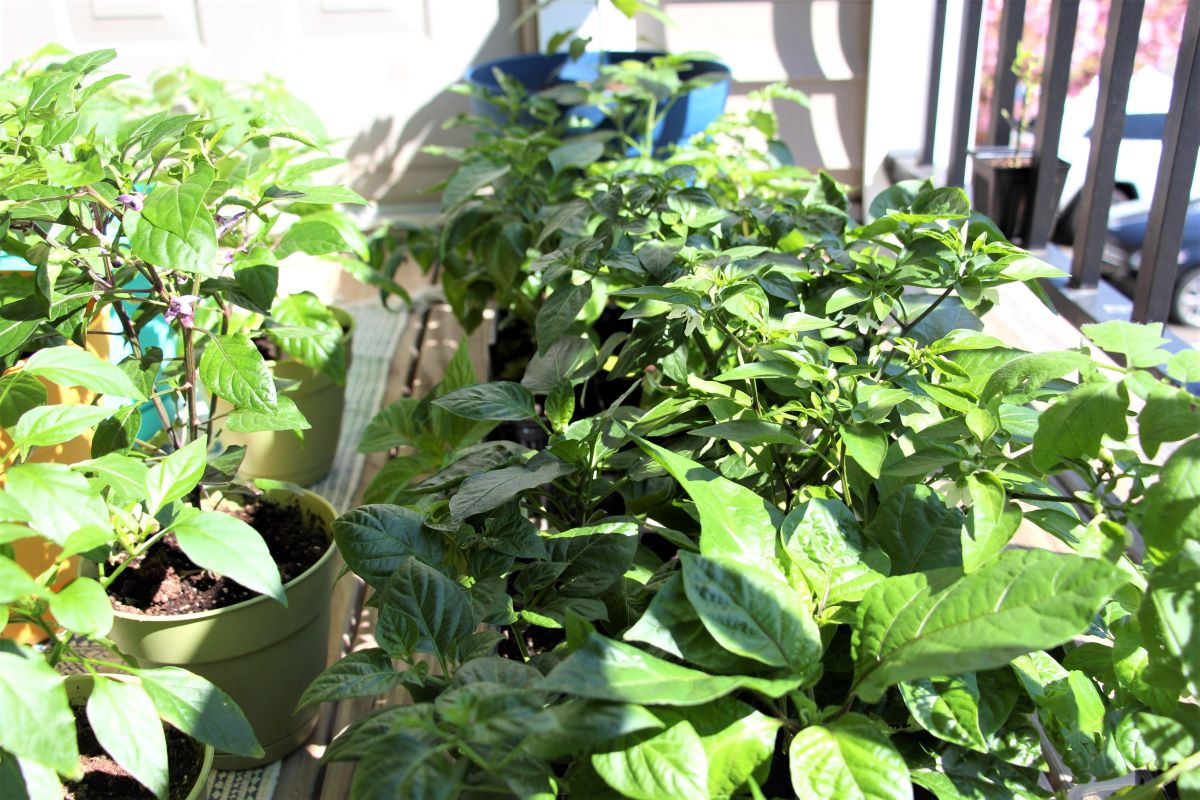
However, this doesn’t apply to all growers. If you only have just a few pepper plants to worry about, you may wonder if you can simply put the seedling-sized plants into their final pots right away. There is one other important reason that we would not recommend it.
Water Usage
When your pepper plants are small, they don’t drink too much water. However, a 5 gallon pot of soil will hold a lot of water that your plant is not yet large enough to use.
Without a large enough plant living in that soil to uptake the water, most of it will simply sit in the container. This moist environment in the unused soil is the perfect environment for other things to develop, such as mold and unwanted fungus.
By moving the seedlings into slightly larger pots, they will grow more quickly, and use the water within their pots more efficiently. The same is true for planting seeds – if you plant directly in a large pot of soil, the plants may grow more slowly.
The next step after transplanting is hardening off your pepper plants to acclimate them to the outdoor elements. Before you know it, you’ll be wondering when to pick your peppers!
I hope this guide helps you learn how to transplant pepper plants this year! Don’t hesitate to ask questions or reach out with any suggestions. Good luck!

Calvin
One of the original Pepper Geeks! When Calvin isn’t gardening or learning more about peppers and botany, he might be traveling new places or playing some music.
Hey PepperGeek! I love your videos. I just potted up to 3 inch pots for my sweet peppers. How tall should my peppers be before I transplant them into 5 gallon grow bags?
Would you reccomend snipping off the top of each plant when transplanting them into their final spot? Thank you for all the work and knowledge you given us pepper geeks!
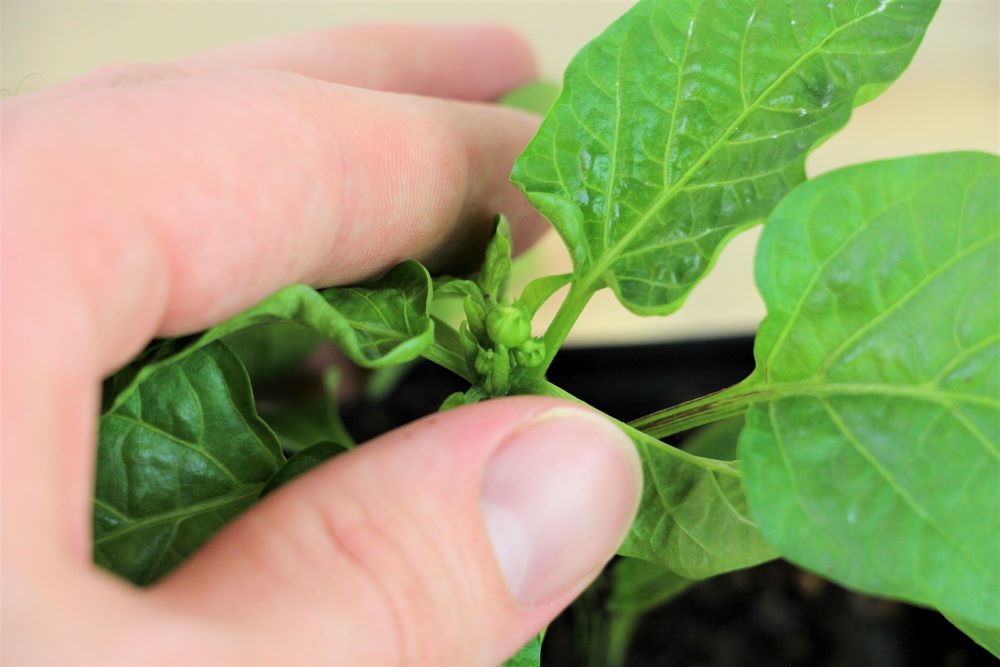
Hey, glad you enjoy our videos! As for the transplants, we usually allow them to grow for about 4 weeks or longer in 3.5″ pots before potting up again. You’ll notice a pretty significant change in size and you can begin to check the roots. Here is a picture of a pepper that is ready for transplant into a large container.
As for snipping, don’t bother unless you have a very long growing season. Even if you do, we have pretty much walked away from pruning our peppers and just let the plants do their own thing. Best of luck this season!
Hi, I’m growing a verity of peppers hot and not hot I have them on a hot mat set to 80 degrees the problem is there growing and their about 2 inches tall and are starting to be too heavy and leaning over in their cell how do I keep them from falling over and dying. They seem to be growing too tall on their first set of Leaves…..PLEASE HELP!!!!
It sounds like they may need better lighting. Also, once the seedlings sprout, they don’t need the seed heating mat anymore. That is just for germination. Shoot for a room temperature around 70°F after the seeds sprout.
potting mix or potting soil ? which brand do you suggest i use when transplanting my sweet peppers into my 4 inch pots. and depending on which you suggest, will i have to fertilize them ? i use Alaska fish fertilizer at 1/2 strength after they have been transplanted into the pots.
This makes a lot of sense for transplanting, but what about splitting? I had most of my peppers sprout all seeds, so I have like 3 of every pepper variety I tried to grow. If I wait a month before splitting them up, the roots will be coiled around each other, which is basically impossible to untangle. I would have to cut the roots up. I’ve done a few of them after only a week or two after sprouting, so as to not damage the roots, and I’m hoping they survive. When do you split them, if you get multiple in one cell?
Hi, I’m trying to grow Carolina reapers in zone 9/10. I sprouted the seeds in hot mat. The plants are about 3″ with no true leaves yet. Can I move them to the green house now? Day time Temperature in a green house is about 85* Drops at 40* at night. Should I continue using the hot mat at night? Thanks.
40 is definitely too cold, so I’d wait a couple more weeks until it is above 55°F at night. The heating mat is really just for germination, as the roots don’t need to be too warm, however it could work to keep the plants warm in the night. I would just monitor the actual temperature to make sure it isn’t getting too cold.
What size pots to use for potting up ? These peppers will be going into 5 gallon buckets . should I use 5″pots when I do the first transplant?
Depends how much time you want to have before moving to the final 5 gallon pot. The larger the halfway-pot is, the longer it will take for the plant to fill it with roots. We typically use 3.5″ pots, but have also used 5″ pots before.
Hey there!
My first year growing and have cayennes, jalapenos, and carolina reapers in 12in pots. It’s a good way through the season and my cayennes and jalapenos have grown nice and tall, began to bore fruit, but still seems a bit meager when compared to previous harvests with friends and family. My carolina reaper seems to have gotten a disease and all flowers have dropped off.
I’m realizing that I don’t believe I added enough soil for the cayennes and jalapenos… would it make sense to replant in the same pot but with more soil? And for the reaper… I’m not quite sure what is the deal. Any advice would be much appreciated!
Hey Nick, I would only repot if you have plenty of season left. Disturbing the roots can cause a temporary stunt to growth, which I wouldn’t risk this late in the season here in New England. As for the reapers, if it is very hot outside, that may explain the flower drop. Believe it or not, reapers don’t love super hot weather, and they can be pretty finicky plants to grow successfully.
How long should I wait to transplant outside after up potting? I use soil blocks and I’m at a weird stage where they need to be up potted but we’re supposed to plant everything outside in one week.
I would just hold off and transplant directly outside when the time is right. In the meantime, you can get the plants used to direct sunlight
Hi.
How do you use Epsom salt ? How much, how often and how do you apply it?
Thank you.
We add Epsom salt once when transplanting into a final pot. If you are in-ground planting, you may not need it at all. Check your soil/potting mix for magnesium to make sure it is worth it.
Hi pepper geeks, first time pepper grower here and i have a question.
I just finished transplanting my 9 pepper seedlings today from their seed cells into the medium 3.5 inch pots, but had a bit of difficulty getting them out of the cells and into the new ones. Some of my plants seem to be fine now after moving over, but a few of them; all a bell pepper variety, have gone from being tall and firm to slumping over with the cotyledons seeming to wilt. Will they be ok and make a recovery after the move and is there anything i can do to help ensure they survive? For now i tried to prop them up with toothpicks for support so they don’t fall into the dirt.
Slouching plants is pretty normal, especially after a traumatic event. They should recover fine, just keep them well watered and give them plenty of light!
Good to hear, thanks for the quick answer and thank you for all of the hard work you put in to post all of your great pepper growing resources.
Hi, I have a few bell pepper plants (Cali Wonder & Carnival Blend) that are about 3″ tall but barely has 2 sets of true leaves. 2 of my plants I can see white buds. I’m assuming those are roots starting. Should I pot up even though I don’t have 3 or 4 sets of true leaves? This week will make the 3rd week of growth after sprouting.
I would take a peek at the root system to make sure the rootball is developed enough to move up in size. Just make sure the roots are reaching the bottom of the seed cell, and you’re good to go!
Hi there, I think I am going to be ready to transplant to a larger pot size in a few weeks. I have everything in a seed starter right now, and I am just starting to get first and second sets of true leaves. Question: Since I planted 2-3 seeds per cup, is it absolutely necessary to trim back the “weaker” looking one(s)? I think I lucked out as most of the seeds took to the soil. Also, are red solo cups a good container for a next size up? Thanks and happy growing.
Some swear by leaving multiple plants growing in close proximity for better yields, so feel free to try it! The other option is to carefully separate the root systems without damaging the stems and transplant them into individual pots. Good luck!
Hi! Question about transplanting….
Peppers have long tap roots. Is it o.k. to prune these back? I know with nursery plants we often prune roots at planting time, but not sure if we can/should prune roots when transplanting from germination cells to 4″ pots the first time. I have roots growing through the bottoms of the cells, long enough to reach the bottom of the 4″ pots they are to be transferred to! I have been told to “prune them back”, and “don’t prune, soil/spread them in the pot” That last suggestion seems bad to me?
We do not prune the roots, however they should be able to handle it if you wish to do it. Even with partially root bound plants, we haven’t pruned roots during transplanting!
When you transplant from small pot to larger pot, do you plant at original depth or should you plant them deeper?
Always plant at the same depth for peppers – planting deeper can cause the stem to rot. Tomatoes are different and can be planted deeper.
@peppergeek, thank-you for this answer!!! I had the exact same question!
I’m about ready to transplant my seedlings from their 3 inch pots to their final 3 gallon pots. Is there a right time to know when to do this? They’ve been in their 3-inchers for about two weeks, but it’s also approaching cold season (central Florida) so I’m wary of moving them to the porch when it’s cold out.
Thanks in advance!
Hi Kelly,
Peppers will tolerate temps down to about 40°F without dying, but anything below 50°F and they will begin to suffer (drop leaves, drop flowers, grow more slowly, etc.). You can keep them indoors under grow lights until weather starts to warm back up in the Spring.
As for transplanting, if the plant’s roots have reached the bottom of the 3″ pots, you can transplant them to the 3 gallon pots. You can check by lifting the plant out of the pot by the base of the stem. We usually allow our plants 3-4+ weeks in the 3″ pots before transplanting up, but it will depend on the pepper variety and the rate of growth.
Enjoy!
-Calvin
I am germinating a carolina reaper seed in hydroponic and when it gets bigger when can I put it in a 4″ pot? Or can you give me suggestions on it
We have not tried transplanting from hydro to soil, but once the plant produces 3-4 sets of true leaves it should be ready. Let us know how the transition goes!
Good Morning 🌞
Another HOT day in Central Texas, great for my CHILIS!
I need to transplant my Ghost Chili’s plant (with fruit) to a larger planter.
I suspect there will be some shock to the plant but it’s outgrown its existing home.
Best soil mixture?
I use liquid seaweed along with Fish emulsion & Epsom salts for nourishment.
Any pointers?
Jim
Hi Jim,
For potted peppers, we typically recommend using storebought potting mix, like a Fox Farm Ocean Forest or similar (miracle gro, etc.). If you have any compost or organic matter, mix about 20% into the soil beforehand. We also use blood meal and epsom salt to enrich the soil before transplanting. You could also add a bit of perlite for better drainage.
Hope this helps, and good luck with the ghosts!
-Calvin
My pepper plants were about a foot tall with flowers and someone pulled them out of the garden. After a week the pepper plants showed up back in the garden. Can I just replant them or should I trim the plants back and take off the blossoms. They are a hot variety
Hi Wendy,
This sounds pretty serious, not sure how this happened! I would just gently replant the peppers and water thoroughly. No need to trim them back. Give them some water and allow them to adjust over a few weeks.
Best,
Calvin
Hey Pepper Geeks!
So glad to have stumbled upon your website – thanks for putting so much work into it, it’s so helpful!
I’m wondering if you could answer some of my transplanting questions for me. I recently bought some mature seedlings at a nursery (Shishito and poblano) and they both were about 6-8 inches tall and already had about 8 leaves or so. I transplanted them into 4 inch plastic container pots since I had read that it’s better to gradually increase pot size vs jumping from seedling to big pot. What guideline can I use to know when to transfer into a bigger pot? Just look at the roots and see if they are reaching the bottom of the pot? Also, once they are ready, would it be ok to then transfer these directly to their final home or should I continue gradually increasing pot size? Many thanks!
Hi MK,
Thanks for reading and reaching out! Glad you’re growing some peppers, we love shishitos!
As for the transplanting, we go straight from 3.5 inch pots to a final destination. We have a few that did go into 5-6 inch pots before a large pot, but the difference in growth rate is unnoticeable.
Hope this helps!
-Calvin
Good one I need seed of ball pepper for planting, howcan i get it. Thank you