
Bell Pepper Plant Growth Stages (Day 1-120 w/Pictures)

Disclaimer: As an Amazon Associate, I earn from qualifying purchases. Pepper Geek takes part in various affiliate programs. This means that purchases through our links may result in a commission for us.
We have grown a lot of bell peppers in our many years as gardeners (this might be obvious, given the name of our website…). Ranging from beautiful red, yellow, purple, and even striped sweet bell peppers, we’ve grown a ton!
One thing that would have been helpful as a beginner is knowing the bell pepper plant growing stages. In this article, I’ll share the main growth stages of sweet bell peppers so you know exactly what to expect.
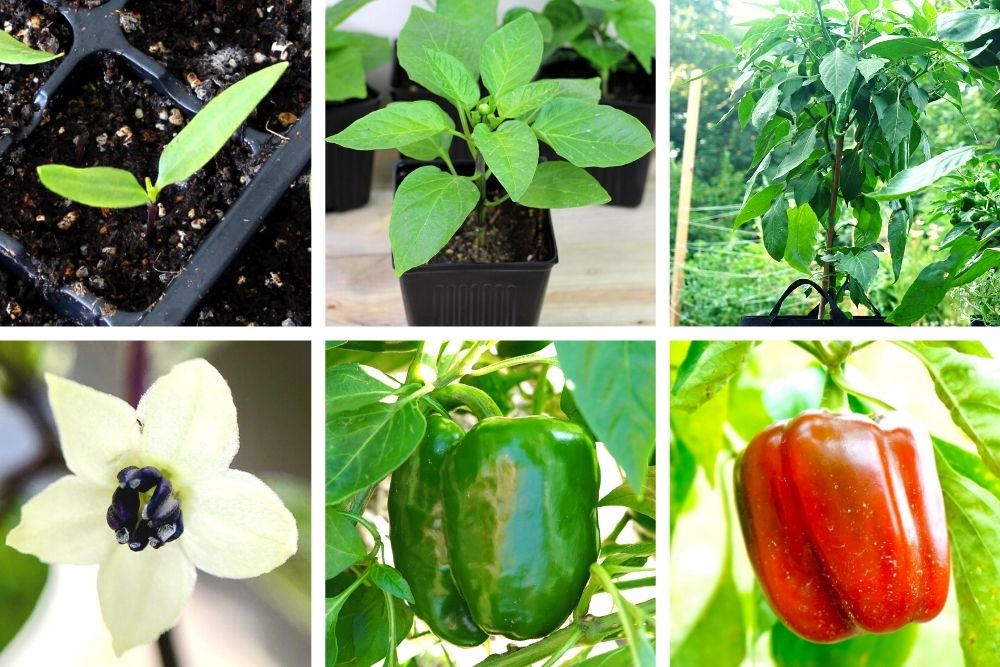
For each stage, I’ve given a rough timeline or approximate age of the plant. However, this will vary based on the specific bell pepper variety, as well as the plant’s growing conditions.
Seedling Stage (Weeks 1-4)
Every bell pepper starts off as just a tiny seedling. This stage begins as soon as a seed sprouts until about 2-4 weeks of growth.

During the seedling stage of growth, pepper plants grow quite slowly. However, they still like lots of light, up to 16 hours per day. Pepper seedlings are also small and delicate, requiring proper care practices. For example, the seedlings are vulnerable to animals, so they should always be kept elevated when outdoors.
If you have used seed starter mix, you may need to fertilize your seedlings after the first week of growth. I recommend using an all-purpose water-soluble fertilizer at 1/4-1/2 the recommended concentration.
Bell peppers tend to grow taller than some other peppers in their earliest stages. To help strengthen the young stems, I always use a small fan to blow a gentle breeze across the seedlings.
Early Growth Stage (Weeks 4-6)
As a bell pepper plant continues to grow, it will primarily produce leaves and branches. This early form is known as the growth stage.

The main goal of a bell pepper plant at this stage is to prepare for the future. The plant will focus on becoming large and bushy with strong branches to support fruits later on in its life.
Tip: Many gardeners like pruning pepper plants, but we have not found it to be beneficial for bell peppers. So my advice is to skip pruning your young bell pepper plants!
Maturation Stage (Weeks 6-8)
After bell peppers are transplanted into a large container or into the ground outdoors, they will begin to mature in size. This can take anywhere from 2-4 weeks or longer depending on growing conditions.
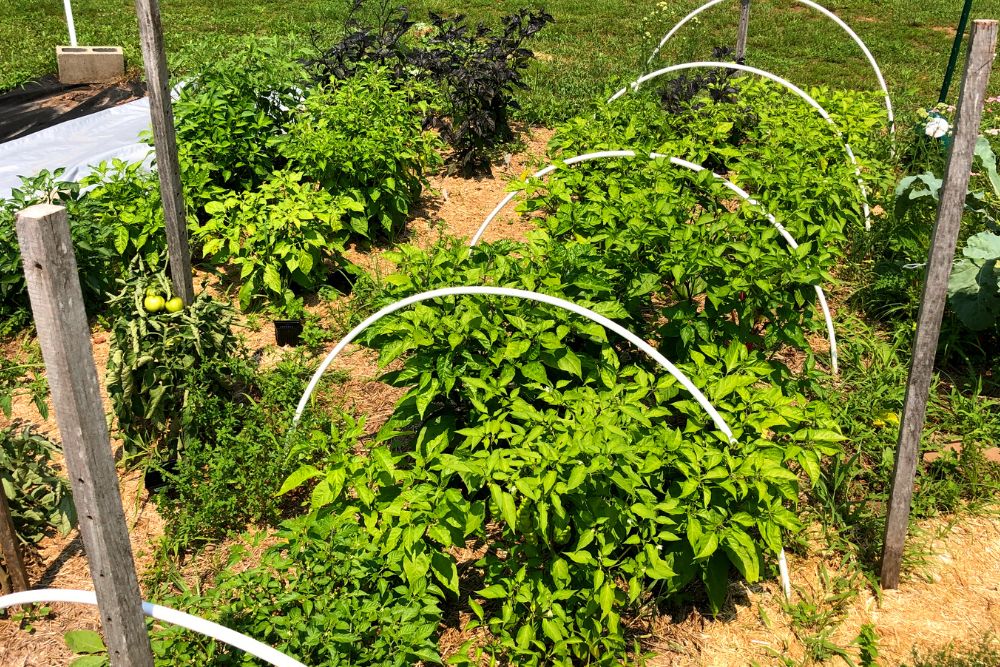
More sunlight, better quality soil, and a the right nutrient quantities in the soil all contribute to healthy growth during this stage. During the transition outdoors, I always pluck early flowers and fruits to help the plant focus on growth, not fruiting.
It is normal to see stunted plant growth for 1-2 weeks after transplanting outside. Also, remember to gradually harden off your bell peppers to the outdoors to avoid sun scald on the leaves.
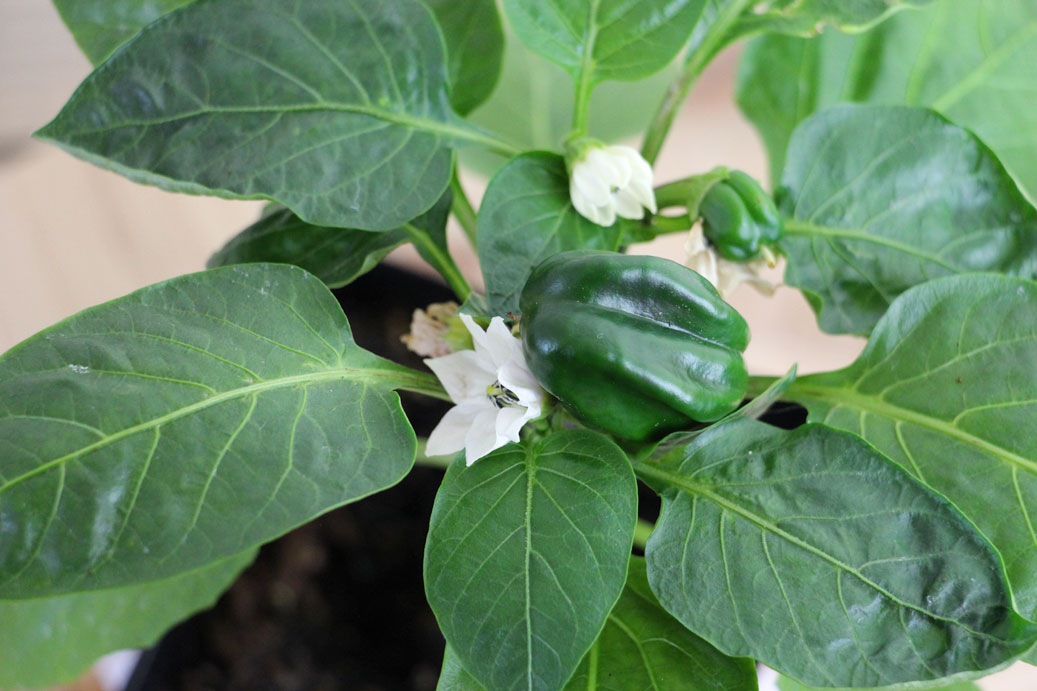
How tall do bell pepper grow? Most bell pepper plants will grow between 3-4 feet tall when mature. However, this can vary by variety, and certain growing techniques can lead to plants that are 10′ or taller!
Flowering Stage (Weeks 8-10)
As the plant continues to grow and mature, it will begin forming flowers along its stems. This is the beginning of the reproductive stage of growth.
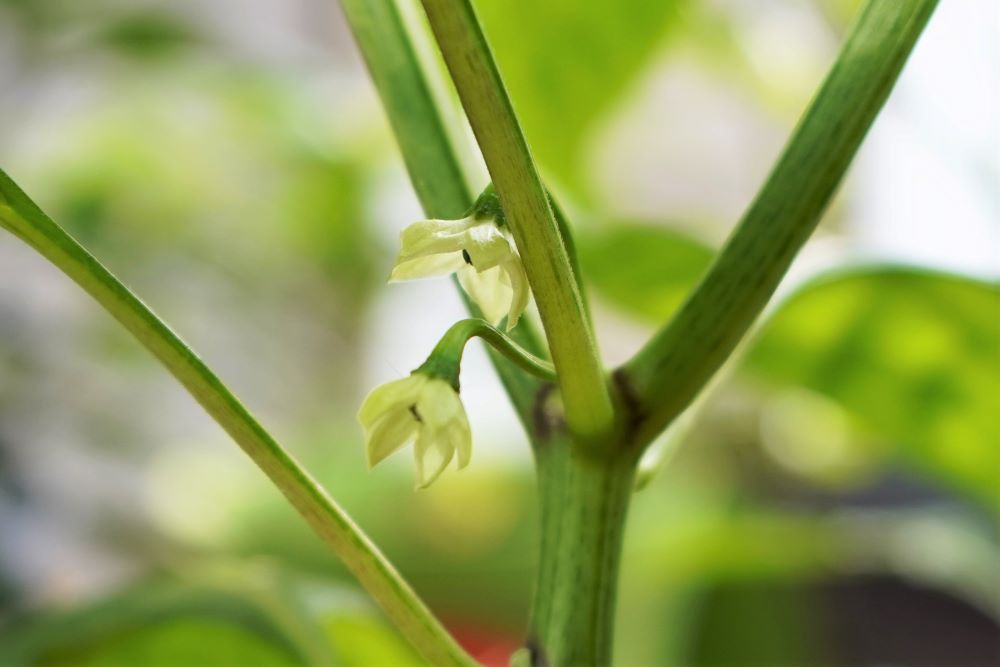
Bell pepper plants are self-fertile, meaning that each flower is capable of self pollinating. This makes growing bell peppers easy, even if you have just 1 plant.
I typically allow flowers to grow and mature after our plants have been outdoors for at least 2-3 weeks in spring. This allows the plants to set roots and establish in their new home (in ground or in large pots) before starting to flower.
Note: Once your plants begin to flower, it is best to reduce the amount of nitrogen you are feeding the plants. Excess available nitrogen may cause flower drop or lower fruit production.
Fruiting Stage (Weeks 10-14)
Shortly after a flower forms, it should begin forming a small bell pepper! Not all flowers will form a pepper, and that is completely normal.
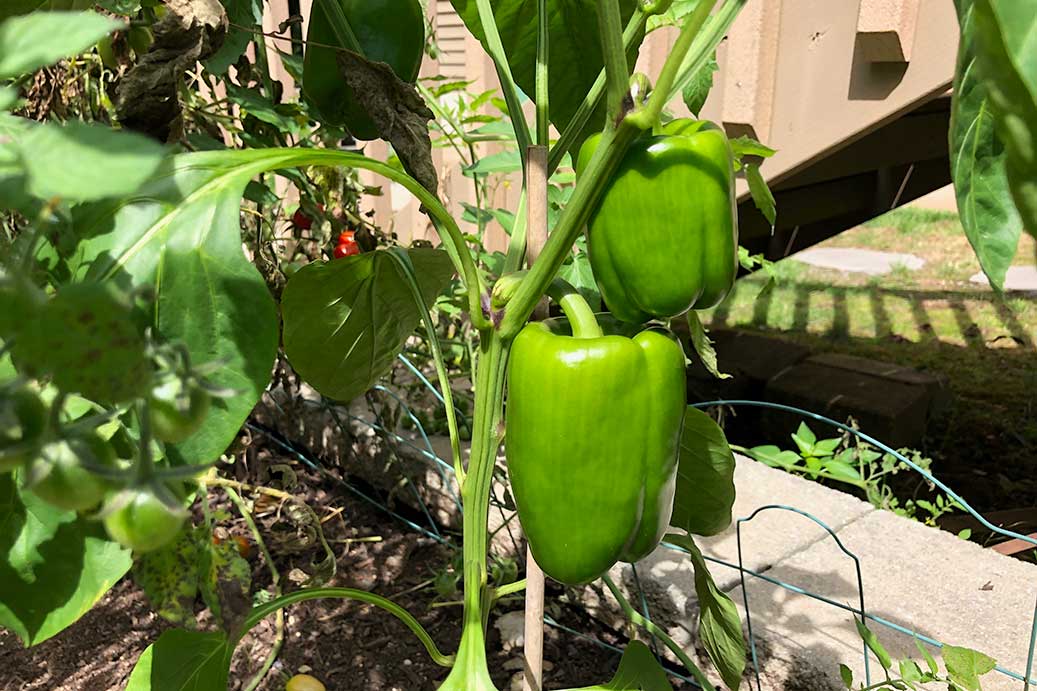
With enough sunlight and nutrients, bell peppers grow quickly once they begin to form. You should notice growth every day or two until the fruits reach their mature size.
Tip: When harvesting bell peppers, they can be picked green or red. Don’t pick before the peppers reach their mature size or the flesh will be bitter and bland.
If your plants are smaller than average, then you may want to prune away some of the fruits to encourage larger peppers. If a plant has too many peppers growing simultaneously, it is common to see smaller fruit size.
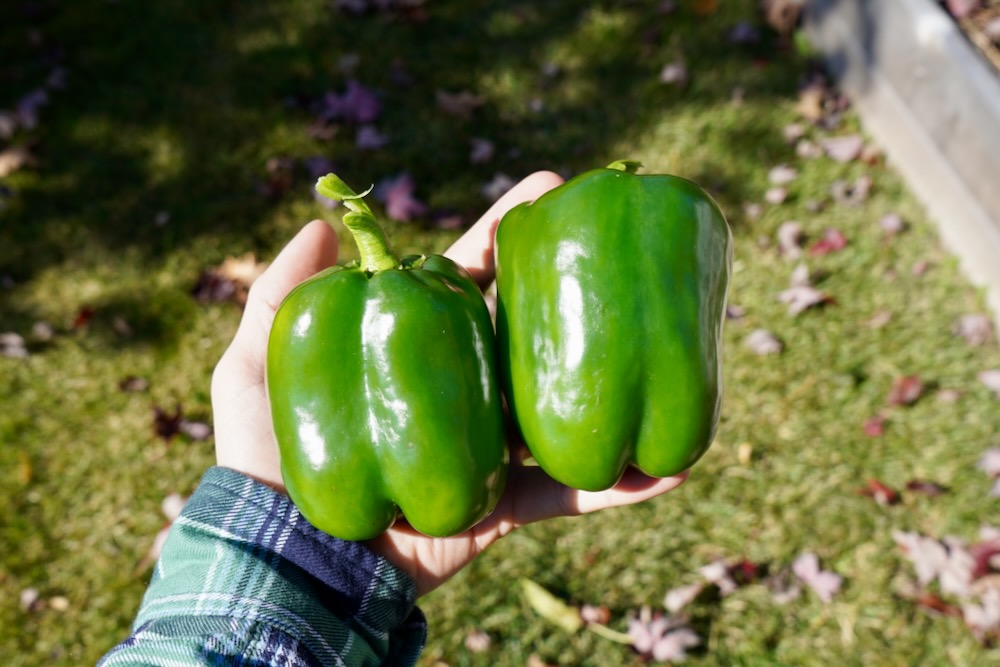
How many bell peppers per plant?
While your results can vary significantly based on growing conditions, most bell pepper plants can produce 6-8 full-sized peppers per plant at any given time. A longer growing season, more sunlight, more fertile soil, and regular harvesting can all contribute to higher yields.
Ripening Stage (Weeks 14+)
Not everyone knows this, but green bell peppers will eventually turn red. In fact, red bell peppers are just the ripe form of green bells.
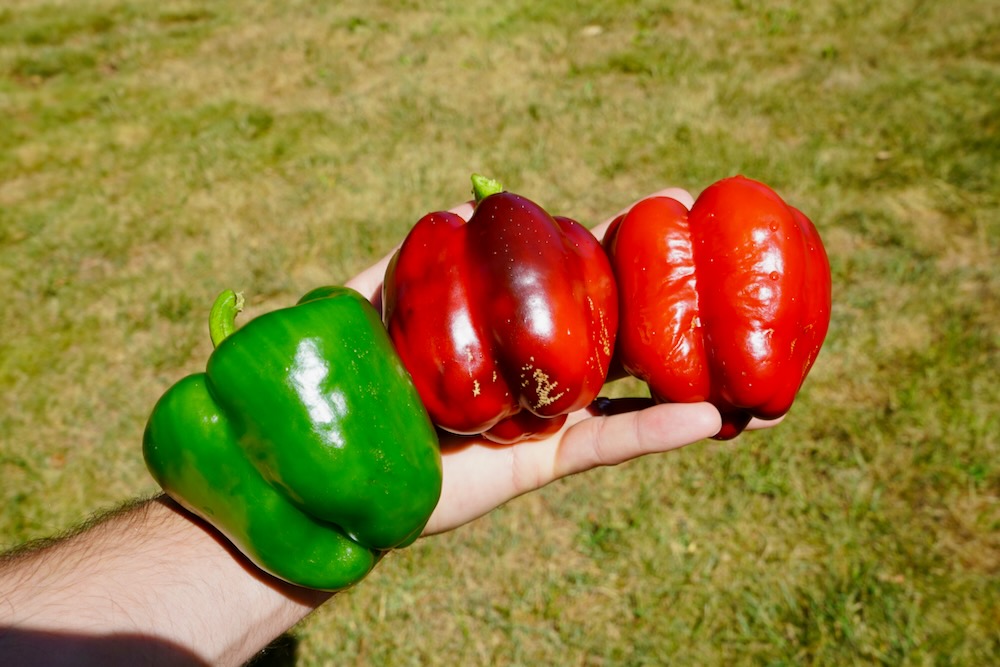
So, if you prefer the flavor of a red bell (as I personally do), you can leave your green bells on the plant a few extra weeks to turn color. Bell peppers will usually change from bright green to a darker green, and finally to bright red.
Bell peppers also come in yellow and orange ripening varieties. Growing a few of each can lead to a colorful and vibrant garden.
Note: Red bell peppers not only taste sweeter, but they are more nutritious! Ripe peppers contain more vitamin C and beta-carotene than green ones.

Keep in mind that waiting for bell peppers to ripen leaves them vulnerable to pests and disease for longer. While I prefer harvesting when fully ripe, bell peppers are edible at any stage of ripeness.
Watching bell peppers go through their growth stages is magical. It is amazing that we can take a tiny seed from a bell pepper and grow it into dozens more! I hope this guide helps you understand the full life cycle of your bell pepper plants.

Calvin
One of the original Pepper Geeks! When Calvin isn’t gardening or learning more about peppers and botany, he might be traveling new places or playing some music.

please i want to know how to preserve bell pepper
Freeze them, pickle them with other veggies, or ferment for long term storage 👍
I love bell peppers to snack on whole during the summer months and grow them yearly but your advice will help me produce larger & tasty peppers.
Cheers!
Rand
I live in Murcia, Spain and having great difficulty in finding the Spanish Nora seeds in saying that they are available on a number of sites but at a high cost. A number of Spanish dishes use the semi dried Nora pepper do you think it would be possible to use the seeds within the pod?
I would say it’s worth a shot, though you never know exactly what to expect from saved seeds (especially if other pepper varieties were grown nearby)