
Choosing The Best Fertilizer For Pepper Plants

Disclaimer: As an Amazon Associate, I earn from qualifying purchases. Pepper Geek takes part in various affiliate programs. This means that purchases through our links may result in a commission for us.
When growing peppers, it is easy to feel unsure of your fertilizing habits. Am I fertilizing too often? Not enough? Is this Miracle-Gro even any good for my plants? Is it safe for veggies? I’ve been there, too.
After testing dozens of fertilizers, we now have a tried-and-true method for growing healthy and productive pepper plants. In this article, I’ll go through some of the best fertilizers for pepper plants. This will include both organic and chemical versions to suit all growers.
Quick summary: This all-purpose fertilizer (organic) does well for in-ground planting. This fertilizer trio (not all organic) is great for potted plants. This is another good option for year-round feeding in any planting setup.
Fertilizing Peppers (Video):
There are countless fertilizer brands on the market today and most seasoned gardeners have their favorite. However, some are certainly better than others. The basic fertilizer regimen we use for peppers will work for a wide variety of fruiting plants, especially those grown in containers.
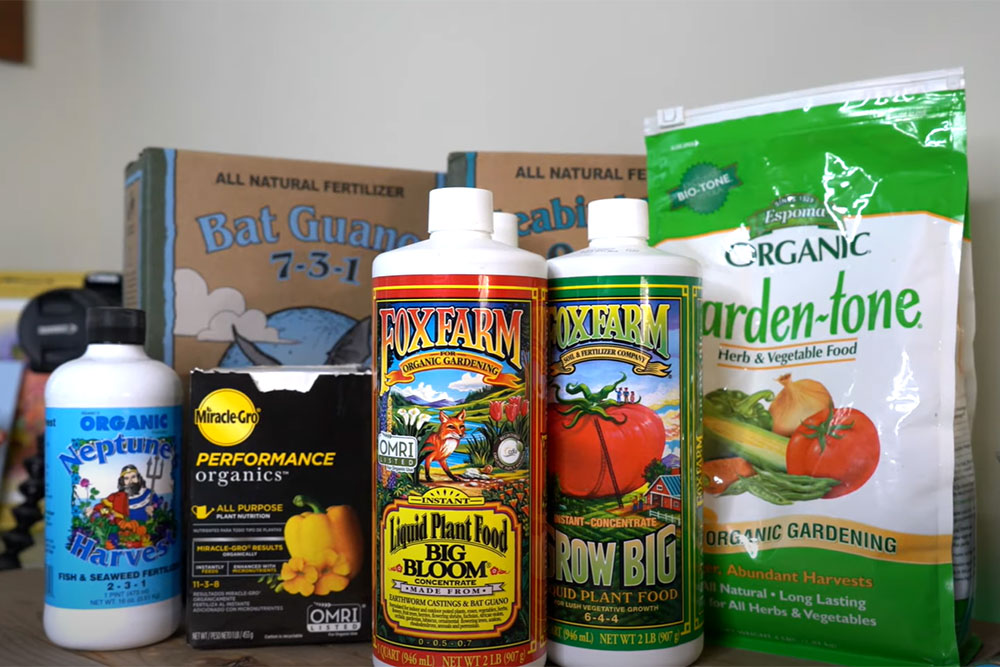
For peppers, we usually use two fertilizers through the growing season. The first fertilizer encourages leafy growth and root development, while the second stage fertilizer encourages flower and fruit production. I’ll share which fertilizers we use, when and how often we use them, and where to buy them.
Fertilizer Grades and Contents
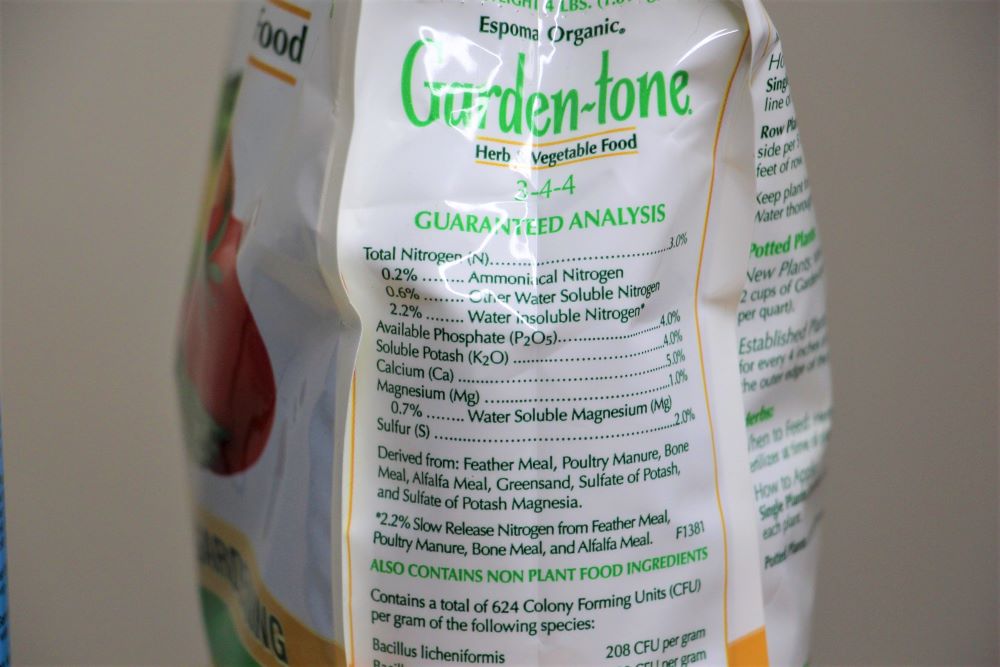
On the packaging of most fertilizers, you will find a 3-digit number. This is an important number as it represents the percentages of three important elemental nutrients. It is called the fertilizer grade or NPK ratio.
These numbers will look something like this:
- 5-5-5
- 4-1-4
- 12-0-4
The first number represents the amount of nitrogen (N), the second number is the amount of phosphate (P₂O₅), and the last number is the amount of potash (K₂O) in the fertilizer. This is a labeling requirement for all fertilizers, and it is essential to understanding how the fertilizer will feed your pepper plants.
So what ratio is best?
Based on nutrient analysis of healthy pepper plant tissue, a fertilizer with an NPK ratio of 4-1-4 is best for growing peppers. However, this is assuming that your soil doesn’t contain any of these nutrients to begin with. If you are growing in containers, a 4-1-4 fertilizer will work perfectly.
Unfortunately, it can be difficult to find a fertilizer with this ideal ratio, and it doesn’t need to be perfect. Anywhere from an even ratio (ex. 5-5-5), to a 5-1-5 will work well. And frankly, most “all-purpose” fertilizers fall somewhere near this range.
What Do These Nutrients Do?
The primary nutrients are those used most by plants (that aren’t available in the air). Here are the 3 primary nutrients and their roles in plant growth.
- Nitrogen is first because it is the most important element for foliage production and overall plant health. Nitrogen is essential to the process of photosynthesis and new leafy growth. This is why lawn fertilizers typically have a large amount of nitrogen. It is also quick to deplete from soil, as rainfall can wash this nutrient away.
- Phosphate is a nutrient that gives plants phosphorus, an essential nutrient in most life forms, allowing plants to take in energy from the sun.
- Potassium is essential to plant life because of its role in water and nutrient movement throughout the plant’s tissue. Without potassium, the regulation of photosynthesis could also be compromised.
Secondary Nutrients
While the main three nutrients are the most important, there are several secondary nutrients and trace elements, that are also critical for ideal growth of peppers.
- Calcium helps with cellular development in pepper leaves and fruits. If your fertilizer does not contain calcium, be sure that your soil does (most native soil has plenty). If you need to, you can amend your soil with bone meal to add calcium.
- Magnesium is important for healthy, green foliage. A magnesium deficiency can cause stunted plant growth and inter-veinal yellowing. Epsom salt is one method to amend soil with magnesium and sulfur, but should only be added if you know it is lacking.
Best Fertilizers For Pepper Plants
When you plant a pepper seed, the seed itself contains the nutrients required to germinate and become a small seedling. However, after just a few days, the plant will require additional nutrients from the soil.
Great All-Around Fertilizer
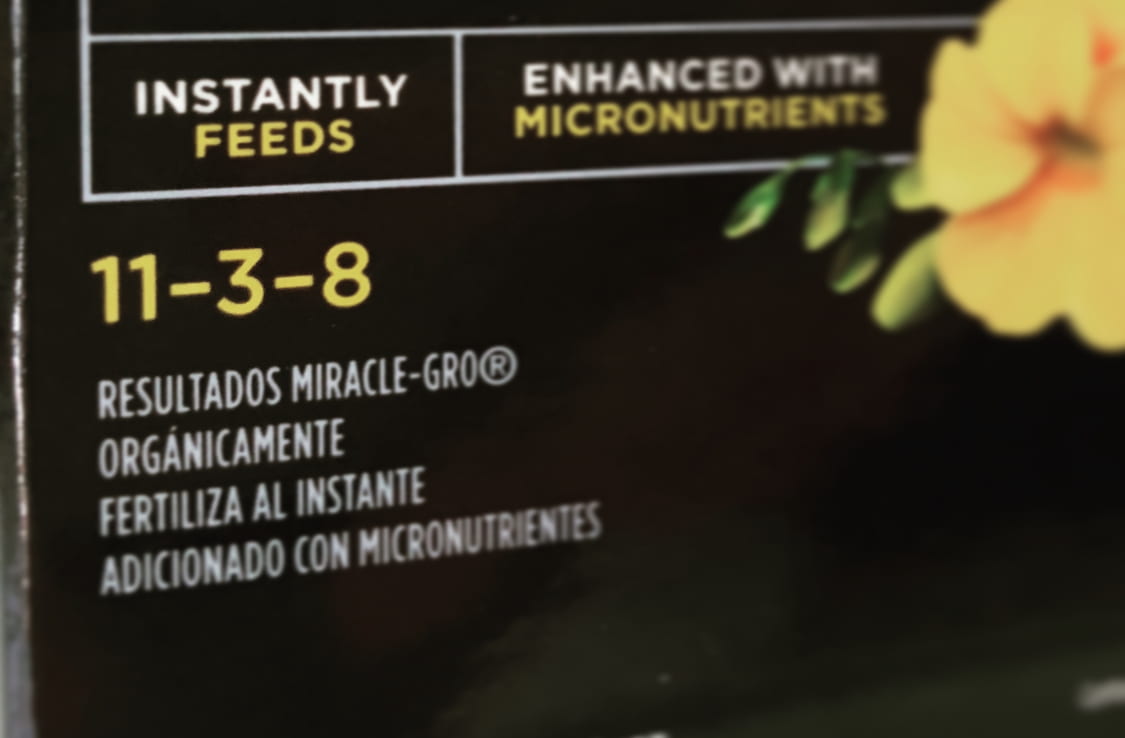
Miracle-Gro Performance Organics (11-3-8) has the best NPK ratio that is available for cheap. Nitrogen is highest, while phosphate the lowest. This has been hard to find lately, but a similar option exists with a good ratio too.
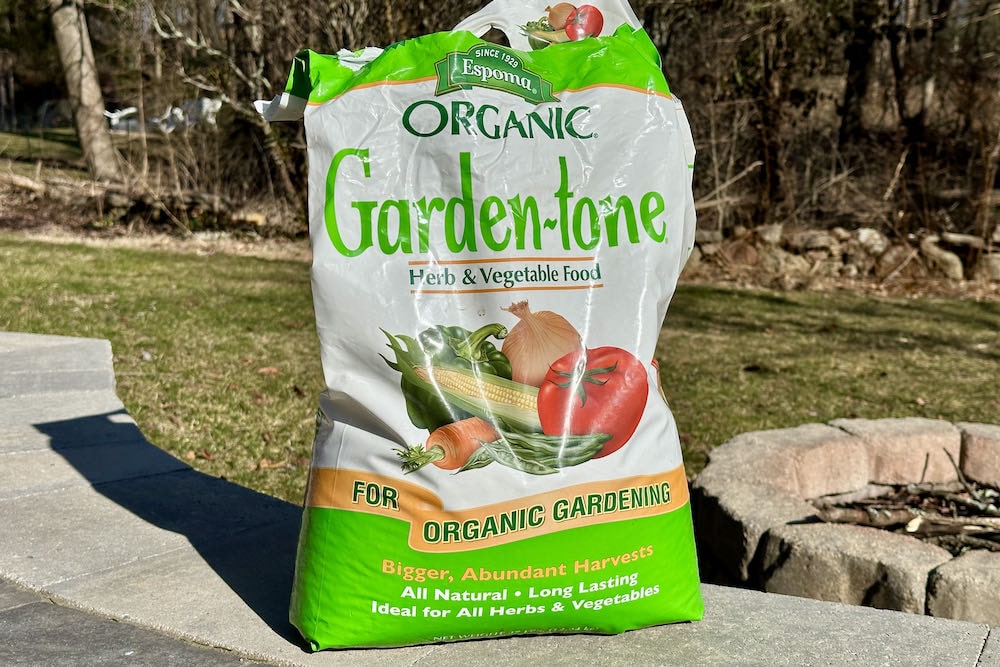
Another easy option is a slow release, all-purpose fertilizer like Garden Tone. These granulated blends contain all the primary and secondary nutrients that peppers need to thrive. They can also last for months before needing replenishment.
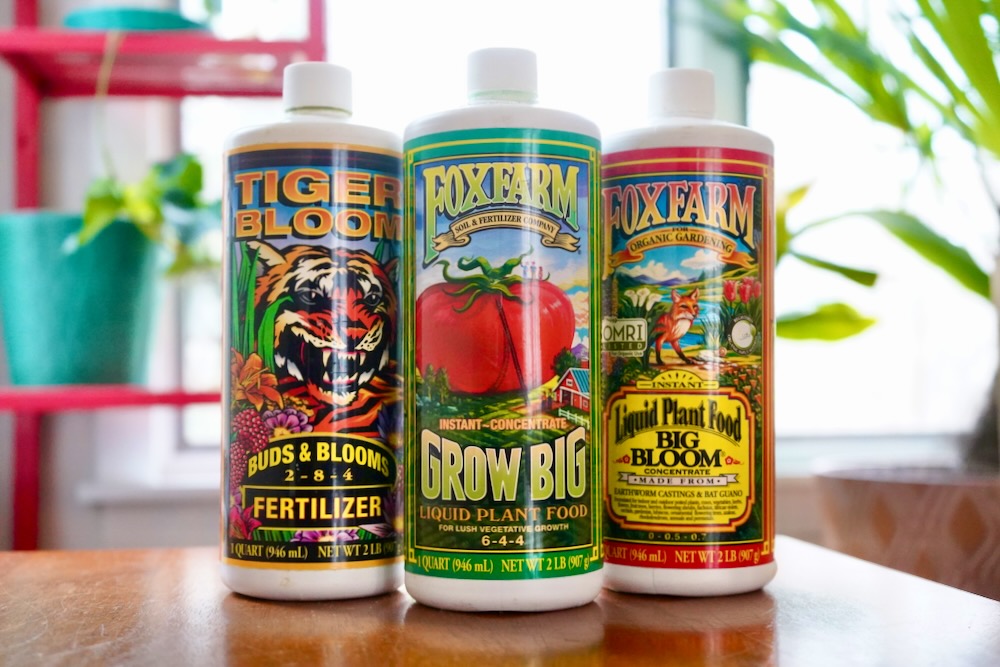
Another option we’ve seen great results from is Fox Farm’s trio of fertilizers. They have a straight-forward feeding schedule which makes the growing process a lot easier, especially for potted plants. These are best used in a controlled environment (potted plants, indoor growing, etc.) to avoid nutrient washout.
Also, be careful not to over-feed with these nutrients – they can burn!


How To Fertilize Peppers
Many casual gardeners fertilize whenever they remember to do it. This is not ideal, as you may be over or under-feeding your plants. To get the most out of your pepper plants, you’ll want to keep track of when you fertilized last and stick to a schedule.
When to Start Fertilizing
Once your plants have sprouted their first true set of leaves, the plants need nutrients from the soil. If you start seeds in seed starting mix, the soil likely does not contain any nutrients. That is why it is important to begin fertilizing as soon as the plants need it.
For most pepper varieties, fertilizing should begin about 1 week after the seeds have sprouted. After the first feeding, you can usually wait 2-3 weeks before re-applying since the plants grow slowly early on. However, fertilizer will play an essential role in forming healthy roots at this stage, as well as strong stems and leafy growth.
If your seeds were planted in a nutrient-rich medium, hold off on fertilizing until they are established in a final planting location. Compost, potting mix, and other soils often contain all the nutrients that peppers need, in which case there is no need to add more!
Frequency
Aside from the initial fertilizing (the first ~3-5 weeks of growth), we simply follow the packaging guidelines. Most fertilizers are administered weekly or bi-weekly for potted plants. Don’t over-fertilize and expect good things to happen! Pepper plants require a steady supply of nutrients, not an abundance of nutrients all at one time.
Note: If you plant in a medium that has built-in nutrients (potting soil, etc.), hold off on fertilizer until the plants are more mature and have used the available nutrients.
Nutrient Burn and Flushing
If you provide too much fertilizer, your pepper plants will show you. Leaves will develop brown spots, usually towards the edge of the leaf.
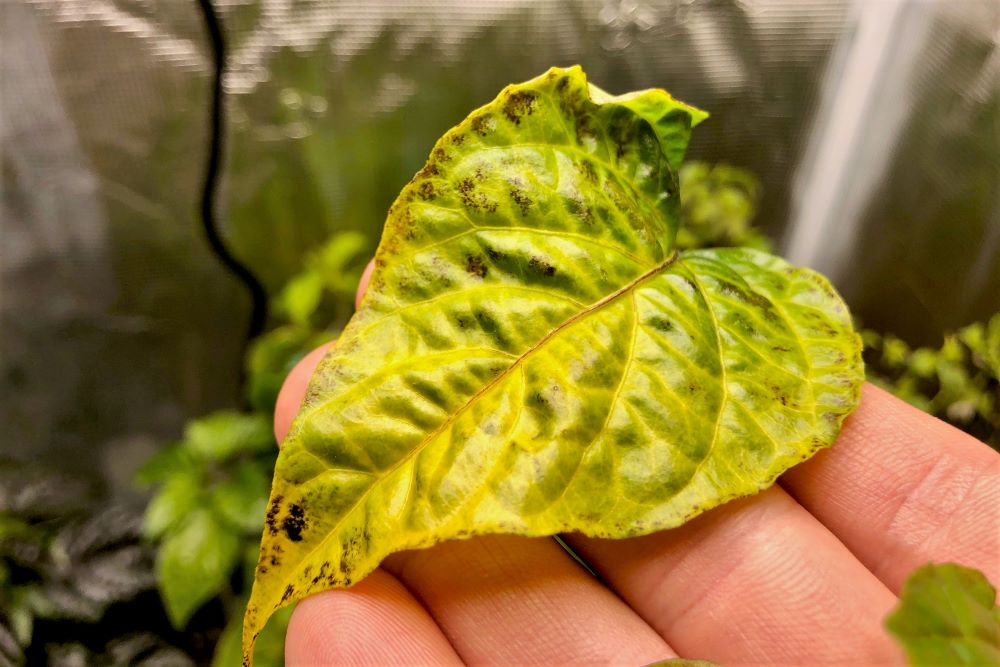
If you notice brown spots and have ruled out disease, you may be over-feeding your plants. Non-organic liquid nutrients are the most likely to cause nutrient burn, since they are immediately available for plant use. One option is to flush the nutrients from the soil to reduce the amount of excess compounds.
To flush your potted pepper plants, water the plants with plain water, allowing the excess water to flow out of the pot’s drainage holes. This process washes away some of the excess nutrients from the soil and root system.
If your plants are in a raised bed or in the ground, simply water without nutrients, skipping a few weeks of fertilizing. Basically, allow time for the fertilizer to be used by the plants before adding more.
Soil pH
While nutrients are what fuel healthy pepper plant growth, the pH of your soil is arguably just as important. Most peppers grow best in a soil pH between 5.8-6.8, or slightly acidic soil.
Why is pH important, you ask? Well, if the pH is too low or too high, your pepper plants may not be able to access and use the nutrients from the soil, even if they are present. This is called ‘nutrient lockout’ and can be detrimental to productivity and overall plant health.
You can test your soil’s pH with a simple meter, though the readings are often inaccurate. If you suspect you have alkaline soil, you can get a soil test.
Read Next:
I hope this article helps you choose the best fertilizer for your pepper plants. Remember, it’s important to “listen” to your plants. If a plant is unhealthy or nutrient deficient, you’ll know it!
What works for some people in certain climates may not work for others, so experiment with new feeding regimens. What’s your favorite fertilizer? Feel free to leave questions or suggestions in the comments below.

Calvin
One of the original Pepper Geeks! When Calvin isn’t gardening or learning more about peppers and botany, he might be traveling new places or playing some music.
I need some help. I’ve been trying to follow you so I can have the most amazing pepper patch eva. I got Miracle Gro Organic 9-2-7. I’ve put down compost, top soil, perilite and peat. I want to know how to use the fertilizer. I’m planting Memorial Day weekend in northeast MA on my harbor side garden. Should I sprinkle some fertilizer and mix it into the soil and/or put fertilizer in the hole when I transplant with other stuff. This my passion and I know it’s yours so guide me to my pepper nirvana.
Mark
Hey Mark – sounds like you’re off to a good start with some compost amended into the soil. If you’re planting in ground, I would recommend raking the fertilizer into the soil. For potted plants, we use a water-soluble fertilizer that can be applied during irrigation. The slow-release nutrients work very well for raised beds or in-ground plantings. (Miracle gro makes things confusing by making 2 types of the same fertilizer. One is slow release/added to the soil, and the other is mixed into water. Read the instructions on yours to see which it is and follow them!)
Can I make compost tea from my homemade compost and water my pepper plants when they get a little bigger?
Yes that sounds like a great idea for providing good quality nutrients
Awesome information!!!
My pepper seedings are small…will follow your professional advice…thanks a million
In your fertilizer video you say you started with the diluted fish and seaweed fertilizer, but in the article mention the miracle grow as the stage one fertilizer. Do you just use the diluted fish and seaweed to give some nutrients until its big enough and out of the seed starter mix then use the miracle grow as the phase 1 fertilizer?
Yes at this point we use fish and seaweed as more of a supplemental nutrient, and for seedlings
I bought Miracle Grow performance organics. Directions say to put 2 scoops per gallon, in watering can.
Problem. Because this product is chunky and dense, it immediately falls to the bottom of the can. I called miracle grow and, after much conferring, was told to crush it up first!
Of course, once crushed up, what was once 2 tbl spoons is now, probably, closer to 3.
This is an I’ll conceived product and you should not be recommending it. Sorry.
We usually use some warm water first to dissolve it, then top off the watering can. It’s part of the drawback of using organic fertilizer, some of the products are not easily dissolved in water. We also use garden tone which is very easy. Just mix it with soil and it releases over the course of a month.
Please help, my super hot pepper seedling stems and leaf veins are turning purple. They are about 7″ tall now and this just started happening. I started them in seed starter then transplanted them into Happy Frog soil. The stems are going purple from the bottom up. The leaves are not purple. They are under T5 fluorescent lights and the room temp is 72 at night and 80 during the day. As tiny seedlings I fed them half strength, or less, Neptune seaweed and fish fertilizer then switched to Miracle Gro organics when they were bigger. Any suggestions?
With happy frog, you can likely just allow the soil to provide nutrients for several weeks. However, purple coloration is normal on many pepper varieties, especially around the nodes. However, if it is severe and the plant looks unhealthy, then it may be some sort of issue. More likely that it is simply the natural anthocyanins that are present in the plant’s tissue.
I really appreciate the helpful guide. Just to clarify, your recommendation is
1-2 weeks after the seeds sprouted in tiny cells or when they have true leaves to give a one-time dose of 1/4 neptunes fertilizer.
Then wait until they get to about 6 inches to transplant to a larger container (3 inch). At this stage, add the high nitrogen fertilizer you recommended, and continue to do so weekly or biweekly as instructed.
After they get close to a foot tall, prune the top and keep 6 leaves (not including initial leaves). Let them bush out. Continue to use water soluable high nitrogen fertilizer.
Then transplant to ground and provide bone meal and rock phosphate. Let grow, pinch off any flowers.
Continue to fertilize with the high phosphate potassium and calcium fertilizer.
Once fruited, reduce fertilizer and use neptunes again.
I hope I have that correctly, I’ve watched your many many videos and wanted to summarize. Thanks in advanced!
Yes, with a couple modifications: If you transplant to a soil with added fertilizer, you may not need to fertilize when they are still young.
Also, topping/pruning is optional! We don’t really prune our plants anymore. It can help keep the size smaller, but unless you planted very early, it may not be beneficial.
Flowers are a sign of a root-bound plant, so if your timing is on point, you shouldn’t start seeing flowers until the plants are fairly large. But yes, we do recommend pruning any while the plants are still small.
Best of luck!
I’m curious why you recommend using 2 stage nutrients intended for photo period plants like cannabis when peppers are not a photoperiod plant? I used to go this approach as my background is in cannabis growing and just transfered everything directly over. I then realized that wasn’t the move as they are not comparable species. I now use an even npk mix and have since improved results. May be worth checking out and comparing results 🙂
Thank you for the great info. Which helped me a lot. But, last year was a hot year and I got a lot of growth out of my pepper plants. I had many in the 4 to 5 foot tall range and a couple over 5 foot tall. Now here was the problem. I didn’t get many fruit out of the plants. Some of my bells only produced 3 peppers on them with many others having up to maybe 6. I even had a Admiral that didn’t produce any fruit at all and didn’t grow very good. I am planning on getting a truck load of manure and tilling it to my soil. Or should I use Miracle Grow for the soil and till it instead?
I’d just be sure to use rotted manure, and not fresh. Fresh manure can be overly high in nitrogen and burn plants. A slow release granular fertilizer may be another good option if you don’t need/want to add bulk to your soil.
@Mike,
You may need to go easy on the nitrogen, soon as the pepper plant starts to show flowers, once it’s a foot or so, start to use a furtilizer that has more phosphate and potasium but very little nitrogen
I slightly over fertilized my plants. Do I need to flush them or can I just exclude nutrients the next couple waterings? I don’t want to stress my plants out too much by oversaturating the soil. Im using fabric grow bags and not sure of the best method to flush them out. Any chance pepper geek will do a video on flushing pepper plants? Cant find one anywhere online!
I would just water without nutrients for a few rounds of watering. Been there and done that, the plants will handle it! Just go lighter next time, and maybe avoid if your soil is nutrient-rich
Trips are seriously affecting my plant, I have been using chemicals for treatment but they are still there, your advice is needed, please.
Your article is helpful, I’m in Nigeria, I’m using both organic and inorganic fertilizer NPK 15 15, I hope it’s a good fertilizer?
Have had very good success growing in 3 & 5 gal containers. Now I see that grow bags are becoming popular. What would be the benefits or downside to growing peppers in 5 & 7 gal bags? Have you growing peppers in these bags? I mostly grow melrose, marconi, UFOs and starfish peppers. Any advice for someone that has never used these bags before?
After our first year with grow bags, the drawbacks are that they dry out more quickly, can develop mold and/or algae on the outside, and are difficult to clean. They do, however, grow very healthy plants and are great for easy storage.
Which nutrient is needed when the pepper plants are heavy with peppers? My plants are LOADED, and I’m just waiting for them to ripen before harvesting. But my plants themselves are looking a little sad, with drooping and yellowing leaves. How do I perk them back up?
You can always add a low dose of all purpose fertilizer while plants are full of peppers – this can help avoid some fruit forming issues, especially in potted plants. Otherwise, just wait it out and keep the watering even!
Hi! I started my peppers from seed and they were doing great… however i went away for a 3.5 week trip with my family and when I returned there is trouble. My plants all look way smaller than they should… small leaves, small plants. Most plants have peppers on them but the plants are way smaller than in years past. They’re in a raised bed in Maryland. It’s been hot and I think my plant waterer was less than diligent… Can I save them? My tomatoes are similarly small-leaved and stunted looking.
I’m sure they can be saved! All you can really do is give them what they need – if that is more water, then water more and allow them to recover in time. We’ve seen plants come back from having literally 0 leaves, as long as the roots are not too damaged peppers are very resilient (with enough time). Best of luck – Calvin
Hi my pepper plants it’s super chilly starting to have peppers that are shriveled I just started using miracle grow organics for edibles i’m not sure what could be the cause of the all of a sudden shriveling peppers some are green and not yet mature
I have several pepper plants and the super hots don’t seem to be flowering at all… they’re all super big and green. Our regular hits seem to be doing well, flowering and fruiting. Is there anything you can suggest for the super hots?
I would try cutting all fertilizer at this point in the season (assuming you’re in the US). If it is very hot where you live, that could also play a role in fruiting. As cooler temps arrive, we always see a boost in productivity!
My chilli is now flowering nicely, at this stage, do i continue fertilising the the soil and what’s the best fertiliser for flowering because currently what I have is multipurpose plants food. Thanks counting your expert advice.
You can continue using that fertilizer just reduce the strength (maybe use half of what you were using during growth stage). Or, there are some bloom-stage fertilizers specifically designed for flowering/fruiting.
Hello Peppergeek,
I am starting to get a ton of buds and some flowers on my Purple UFO. I watered it with Neptune’s Fish Fertilizer 2-4-1 because I could not find the Fish and Seaweed Fertilizer 2-3-1 near me, and I did not want to delay fertilizing any longer.
Would this make much of a difference? Should I switch to the exact 2-3-1 you listed here? Thank you for all of your help!
No, not much different, I love all of the fish-based products that they make. Hope you’re having success!
I have bell pepper plants that I planted last season. I live in Malibu, CA. They are starting to get new leaves from the bottom and a couple of the plants are starting to get flowers. Should I cut the plant down and let it go again or leave them alone?
Thanks…..just found you….and glad I did!
I would let the plants go on their own! As long as they are in a large enough pot/in a raise bed, they should produce naturally. Good luck!
Ok. They’re already replacing their leaves. Will follow your advice. THANKS!