
Choosing The Best Fertilizer For Pepper Plants

Disclaimer: As an Amazon Associate, I earn from qualifying purchases. Pepper Geek takes part in various affiliate programs. This means that purchases through our links may result in a commission for us.
When growing peppers, it is easy to feel unsure of your fertilizing habits. Am I fertilizing too often? Not enough? Is this Miracle-Gro even any good for my plants? Is it safe for veggies? I’ve been there, too.
After testing dozens of fertilizers, we now have a tried-and-true method for growing healthy and productive pepper plants. In this article, I’ll go through some of the best fertilizers for pepper plants. This will include both organic and chemical versions to suit all growers.
Quick summary: This all-purpose fertilizer (organic) does well for in-ground planting. This fertilizer trio (not all organic) is great for potted plants. This is another good option for year-round feeding in any planting setup.
Fertilizing Peppers (Video):
There are countless fertilizer brands on the market today and most seasoned gardeners have their favorite. However, some are certainly better than others. The basic fertilizer regimen we use for peppers will work for a wide variety of fruiting plants, especially those grown in containers.
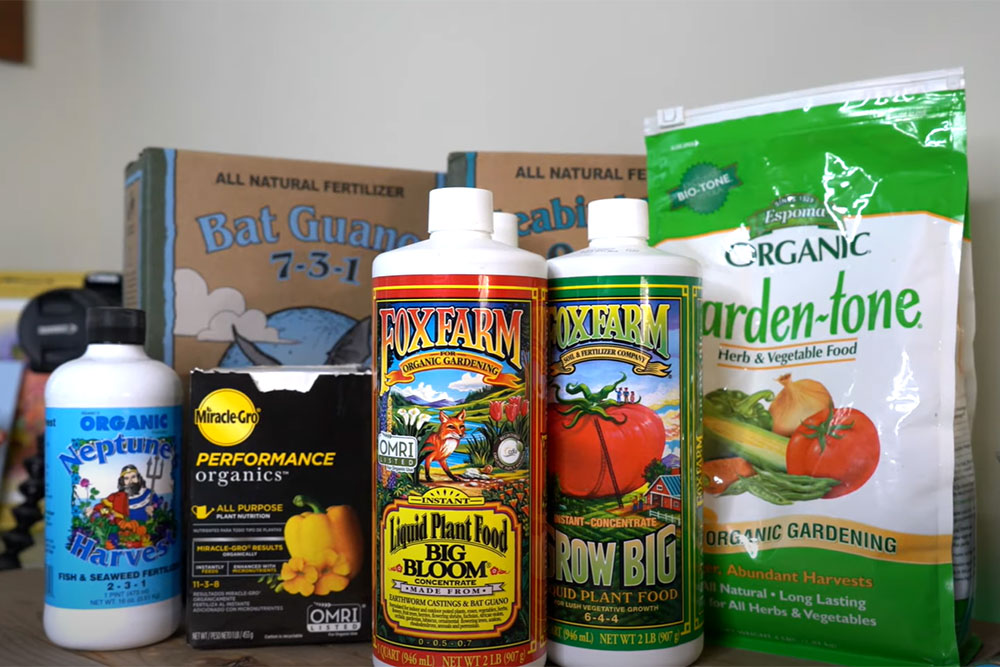
For peppers, we usually use two fertilizers through the growing season. The first fertilizer encourages leafy growth and root development, while the second stage fertilizer encourages flower and fruit production. I’ll share which fertilizers we use, when and how often we use them, and where to buy them.
Fertilizer Grades and Contents
On the packaging of most fertilizers, you will find a 3-digit number. This is an important number as it represents the percentages of three important elemental nutrients. It is called the fertilizer grade or NPK ratio.
These numbers will look something like this:
- 5-5-5
- 4-1-4
- 12-0-4
The first number represents the amount of nitrogen (N), the second number is the amount of phosphate (P₂O₅), and the last number is the amount of potash (K₂O) in the fertilizer. This is a labeling requirement for all fertilizers, and it is essential to understanding how the fertilizer will feed your pepper plants.
So what ratio is best?
Based on nutrient analysis of healthy pepper plant tissue, a fertilizer with an NPK ratio of 4-1-4 is best for growing peppers. However, this is assuming that your soil doesn’t contain any of these nutrients to begin with. If you are growing in containers, a 4-1-4 fertilizer will work perfectly.
Unfortunately, it can be difficult to find a fertilizer with this ideal ratio, and it doesn’t need to be perfect. Anywhere from an even ratio (ex. 5-5-5), to a 5-1-5 will work well. And frankly, most “all-purpose” fertilizers fall somewhere near this range.
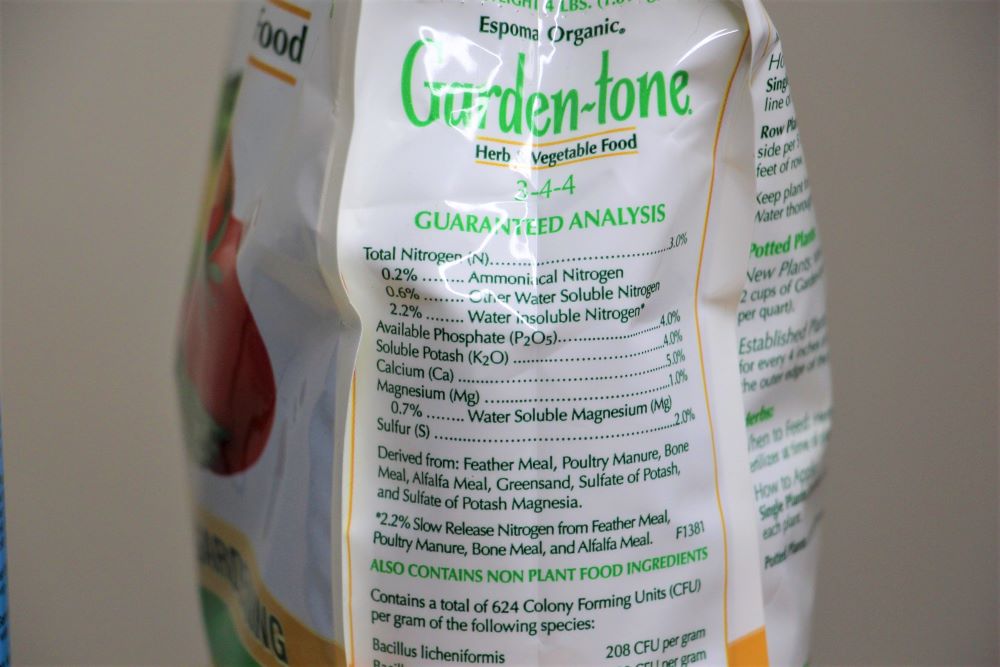
What Do These Nutrients Do?
The primary nutrients are those used most by plants (that aren’t available in the air). Here are the 3 primary nutrients and their roles in plant growth.
- Nitrogen is first because it is the most important element for foliage production and overall plant health. Nitrogen is essential to the process of photosynthesis and new leafy growth. This is why lawn fertilizers typically have a large amount of nitrogen. It is also quick to deplete from soil, as rainfall can wash this nutrient away.
- Phosphate is a nutrient that gives plants phosphorus, an essential nutrient in most life forms, allowing plants to take in energy from the sun.
- Potassium is essential to plant life because of its role in water and nutrient movement throughout the plant’s tissue. Without potassium, the regulation of photosynthesis could also be compromised.
Secondary Nutrients
While the main three nutrients are the most important, there are several secondary nutrients and trace elements, that are also critical for ideal growth of peppers.
- Calcium helps with cellular development in pepper leaves and fruits. If your fertilizer does not contain calcium, be sure that your soil does (most native soil has plenty). If you need to, you can amend your soil with bone meal to add calcium.
- Magnesium is important for healthy, green foliage. A magnesium deficiency can cause stunted plant growth and inter-veinal yellowing. Epsom salt is one method to amend soil with magnesium and sulfur, but should only be added if you know it is lacking.
Best Fertilizers For Pepper Plants
When you plant a pepper seed, the seed itself contains the nutrients required to germinate and become a small seedling. However, after just a few days, the plant will require additional nutrients from the soil.
Great All-Around Fertilizer
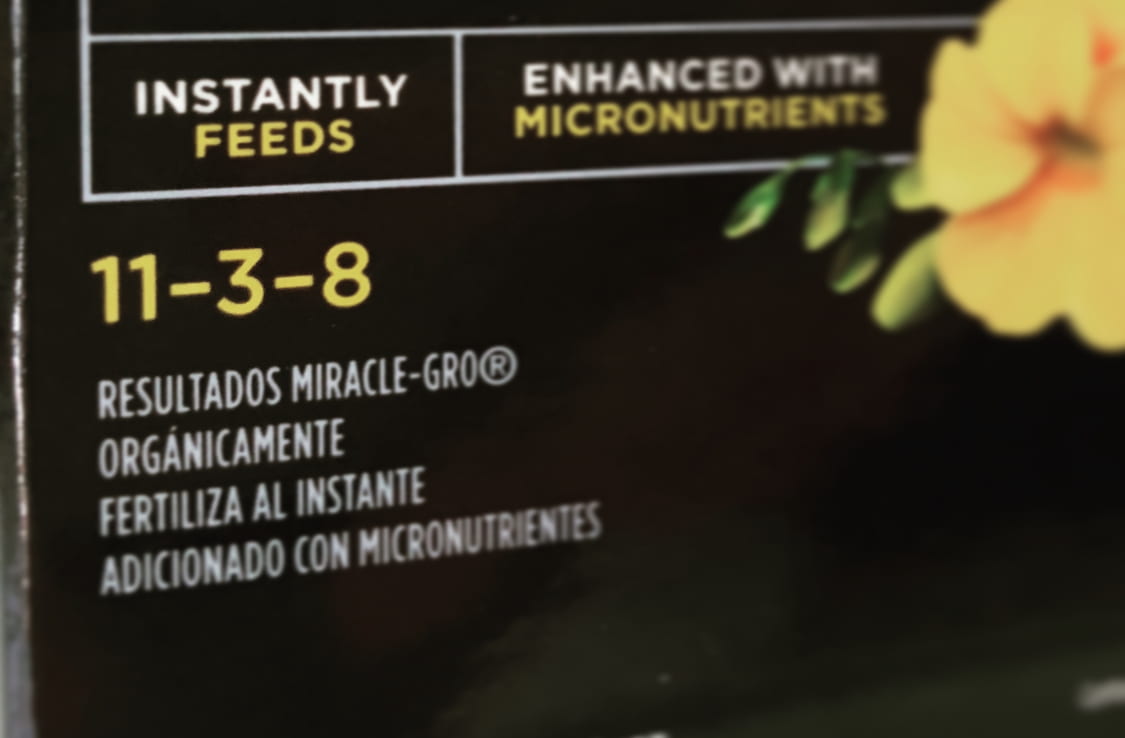
Miracle-Gro Performance Organics (11-3-8) has the best NPK ratio that is available for cheap. Nitrogen is highest, while phosphate the lowest. This has been hard to find lately, but a similar option exists with a good ratio too.
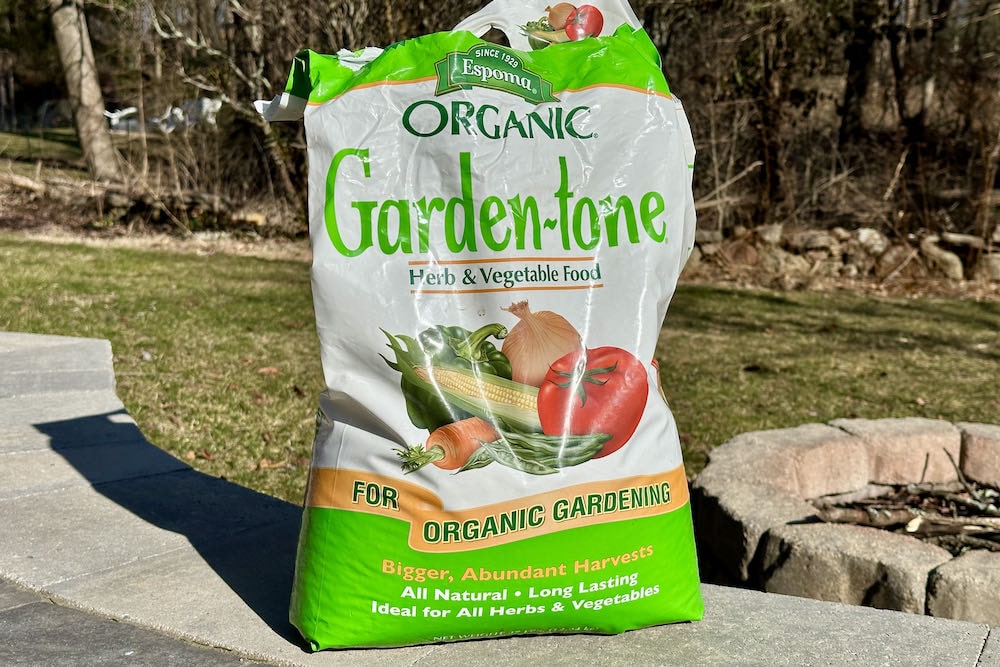
Another easy option is a slow release, all-purpose fertilizer like Garden Tone. These granulated blends contain all the primary and secondary nutrients that peppers need to thrive. They can also last for months before needing replenishment.
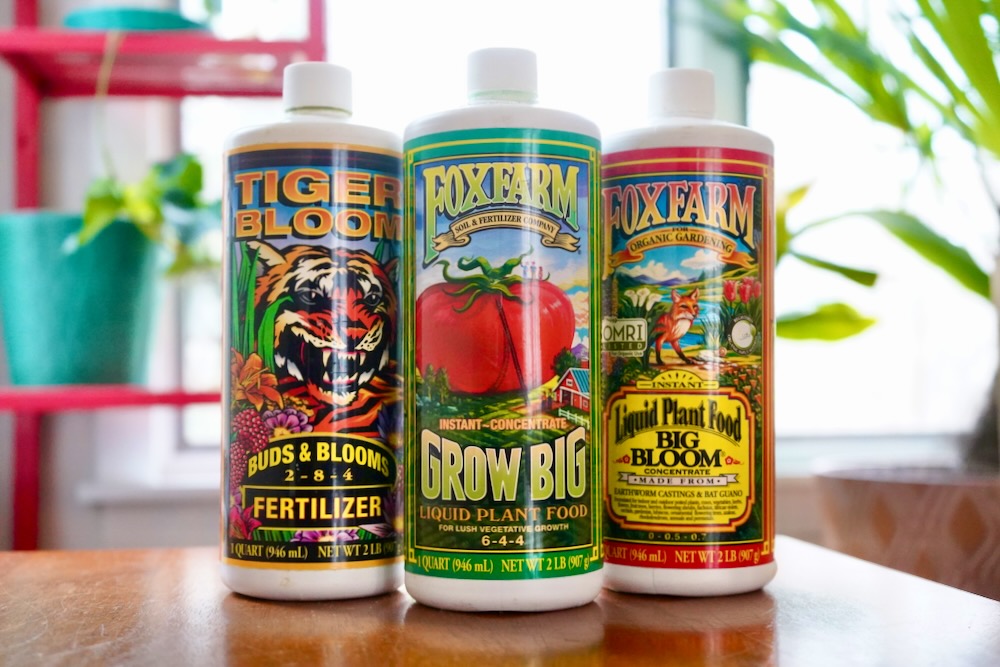
Another option we’ve seen great results from is Fox Farm’s trio of fertilizers. They have a straight-forward feeding schedule which makes the growing process a lot easier, especially for potted plants. These are best used in a controlled environment (potted plants, indoor growing, etc.) to avoid nutrient washout.
Also, be careful not to over-feed with these nutrients – they can burn!

How To Fertilize Peppers
Many casual gardeners fertilize whenever they remember to do it. This is not ideal, as you may be over or under-feeding your plants. To get the most out of your pepper plants, you’ll want to keep track of when you fertilized last and stick to a schedule.
When to Start Fertilizing
Once your plants have sprouted their first true set of leaves, the plants need nutrients from the soil. If you start seeds in seed starting mix, the soil likely does not contain any nutrients. That is why it is important to begin fertilizing as soon as the plants need it.
For most pepper varieties, fertilizing should begin about 1 week after the seeds have sprouted. After the first feeding, you can usually wait 2-3 weeks before re-applying since the plants grow slowly early on. However, fertilizer will play an essential role in forming healthy roots at this stage, as well as strong stems and leafy growth.
If your seeds were planted in a nutrient-rich medium, hold off on fertilizing until they are established in a final planting location. Compost, potting mix, and other soils often contain all the nutrients that peppers need, in which case there is no need to add more!
Frequency
Aside from the initial fertilizing (the first ~3-5 weeks of growth), we simply follow the packaging guidelines. Most fertilizers are administered weekly or bi-weekly for potted plants. Don’t over-fertilize and expect good things to happen! Pepper plants require a steady supply of nutrients, not an abundance of nutrients all at one time.
Note: If you plant in a medium that has built-in nutrients (potting soil, etc.), hold off on fertilizer until the plants are more mature and have used the available nutrients.
Nutrient Burn and Flushing
If you provide too much fertilizer, your pepper plants will show you. Leaves will develop brown spots, usually towards the edge of the leaf.
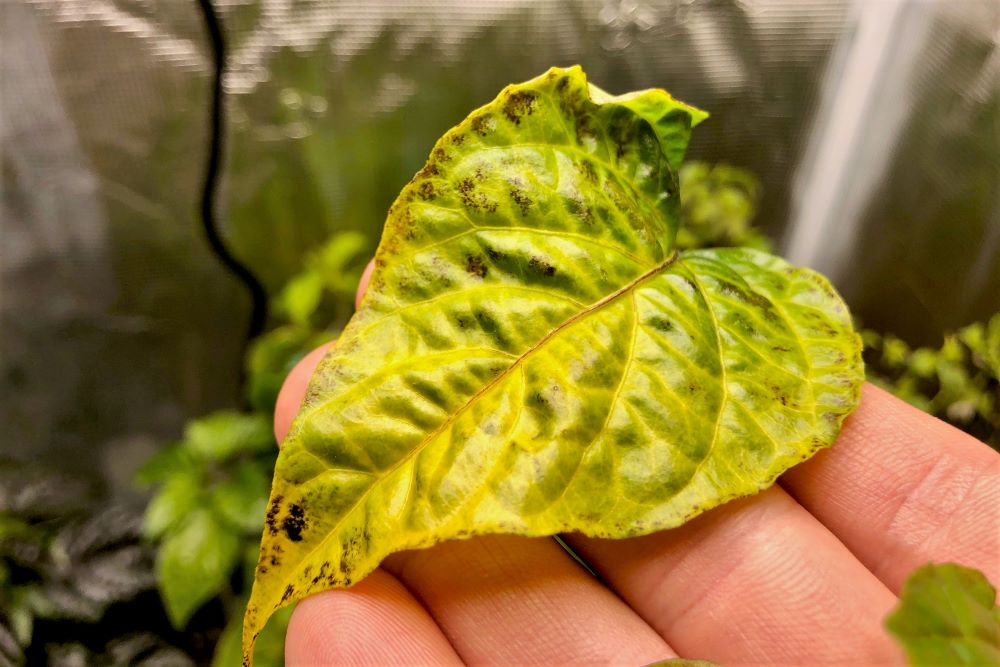
If you notice brown spots and have ruled out disease, you may be over-feeding your plants. Non-organic liquid nutrients are the most likely to cause nutrient burn, since they are immediately available for plant use. One option is to flush the nutrients from the soil to reduce the amount of excess compounds.
To flush your potted pepper plants, water the plants with plain water, allowing the excess water to flow out of the pot’s drainage holes. This process washes away some of the excess nutrients from the soil and root system.
If your plants are in a raised bed or in the ground, simply water without nutrients, skipping a few weeks of fertilizing. Basically, allow time for the fertilizer to be used by the plants before adding more.
Soil pH
While nutrients are what fuel healthy pepper plant growth, the pH of your soil is arguably just as important. Most peppers grow best in a soil pH between 5.8-6.8, or slightly acidic soil.
Why is pH important, you ask? Well, if the pH is too low or too high, your pepper plants may not be able to access and use the nutrients from the soil, even if they are present. This is called ‘nutrient lockout’ and can be detrimental to productivity and overall plant health.
You can test your soil’s pH with a simple meter, though the readings are often inaccurate. If you suspect you have alkaline soil, you can get a soil test.
Read Next:
I hope this article helps you choose the best fertilizer for your pepper plants. Remember, it’s important to “listen” to your plants. If a plant is unhealthy or nutrient deficient, you’ll know it!
What works for some people in certain climates may not work for others, so experiment with new feeding regimens. What’s your favorite fertilizer? Feel free to leave questions or suggestions in the comments below.

Calvin
One of the original Pepper Geeks! When Calvin isn’t gardening or learning more about peppers and botany, he might be traveling new places or playing some music.

Hello! 26 Days in with 30~ pepper seedlikngs (cayenne + habanero’s) most with first set of true leaves, few with third set sprouting. My question is in regards to fertilization frequency; The soil seems to require regular watering every 3-4 days at this rate (bottom watering in tray, filling up 1/4 high and letting them sit for 20-30 mins before emptying water/soil turns brown). I started these in a seedling mix (Jiffy, Natural & Organic Seed Starting Mix) which has no fertilizer and/or life sustaining elements that potting soil may have offered if used from the beginning. Should I continue to add the 1/4 dosage fertilizer (or closest to 1:1:1 until after being transplanted into potting mix) with EVERY watering in the few weeks to come? Thank you for all that you do!
If the soil has a lot of nutrients built in, you can let them acclimate for 2-3 weeks after transplanting without fertilizing. Then start back up after the plants have adjusted and used up some of the soil’s nutrients.
Hi,
First time gardener. We love green chiles so thought we’d try them. I hope I didn’t post this twice. I tried once but it disappeared, so I’m trying again. Thanks
Hoping you can help with some advice. We have about 70 New Mexico chile plants showing some of their 2nd set of true leaves. They’ve been outside in the Tucson sun in solo cups for about a week and seem happy. Some people here in Tucson say they water their chile plants twice a day, keeping soil moist. But I read online that it’s a good plan to let the plants dry out in between watering til the leaves wilt a bit telling you it’s time. Can Tucson sun and heat require a twice a day watering? This will definitely not allow the soil to dry. I’ve checked closely.
2nd question. Fertilizer. Local grower recommends Botanica’s 14-18-14 acid plant food for our plants. This is way off from the fox farm grow big recommended by a major New Mexico seed company, and we notice you use fox farm as well, but Tucson being a location with its own unique heat and sun we aren’t sure what to do. We’d sure appreciate advce. Thanks, K.
Tucson is hot, but twice-daily watering may be overkill. During the hottest parts of the year for us in CT (around 90-100°F), we may water our potted peppers once per day. If they are in the ground with a good mulching, they won’t need water nearly as often as when grown in pots.
As for fertilizer, as long as the plants are getting what they need, you can use whatever you’ve got. More nitrogen early on (which the Botanica’s has), and reduce it once the plants are starting to fruit (you could simply give a lighter feeding of the same fertilizer). Then, give them plenty of phosphate, potassium and calcium.
Hope all this helps!
Calvin
I am looking to do a few of my peppers hydroponically. Last year I used the general hydroponics big 3 plus CalMag with pretty decent success. This year though, I would like to try something different. Any recommendations on what to use on them? It is mostly NuMex Hatch Chiles and they will be grown in coir grow medium.
Thanks.
We haven’t really experimented with hydro much yet – we used general hydroponics’ Maxi series (maxigro, etc.) which were simple, but did have some big swings in pH. It was more likely due to the small reservoir we used though. I’ve heard masterblend is a good chemical nutrient for hydro. Good luck and let us know what you use and how it goes!
I did end up getting the 3 part Master Blend nutrients and it has been working quite well so far. It does drop pH significantly, so pH Up is a necessity.
Great instructions! Thank you! Any tips on adding lime to soil? Amount to start with? What to look out for?
I have 4 red chili pepper plants growing that were healthy with a full canopy of leaves, about 6″ – 8″ tall enjoying the S. Florida sun every day until one morning when an iguana ate the big leaves leaving only the stems and baby leaves and shoots at the stem bases. Will they survive (protected by wire cloches) and if so should I go heavy on the nitrogen for a couple weeks to encourage new leaf growth?
Hey Patrick,
Dang, that’s a tough break. Yes, they should survive assuming they don’t get infected with anything. Our cat chewed a plant down to the main stem and it made a full recovery and produced decent yields be the end of the season. Don’t over-fertilize, but yes I would give a good feeding as usual to promote leafy growth.
Good luck!
-Calvin
I use an old trick that my farmer Grandfather taught me when putting newer plants outside. He takes a 1/2 gallon waxed milk carton, cuts off the pouring spout area off and then cuts three sides of the bottom of the carton. You set the carton into the soil with the new plant inside. When the weather is too cold in the evening or if a big rain is coming he has the carton set over the plant and either flips the lid open or closed. We had hundreds of these and would go through the garden and close them on cold nights using a stick with a hook on it and then as the day grew warmer we would open the lids for them to get sun. Efficient and inexpensive.
i started my sweet pepper seeds indoors. i usually wait till the second set of leaves appear and then i fertilize them with some alaska fish fertilizer at 1/2 strength. i have them in yogurt cups. when they get larger i transplant then into potting soil and put them under lights.i have a crockpot that i put a bath towel over and place the tray that holds the transplanted plants on top of c.pot. i have it on low that keeps it around 75-80 degrees. it seems it is taking forever for the second set of leaves to appear.do you suggest that i fertilize the first set of leaves or wait till the second comes in . your thoughts
You can fertilize with 1 set of true leaves at low strength, this will definitely speed up the growth rate.
Instead of bone meal is crushed egg shells ok?
Yes, you can use egg shells, but I would work them into the soil early to help them break down as much as possible during the season.
Bake the egg shells then add vinegar. It changes the calcium carbonate to immediately available calcium citrate. There are videos on YouTube about it. Now this works great with Epsom salt because you now are getting calcium magnesium and sulphur!
Hi! Not being critical, but I just lost a bunch of seedlings because I “followed the directions” on a liquid fertilizer….even though I cut it in 1/2 for the first feeding! It was too much and it also created a fungus/damping off problem.
What I learned from a county extension is that most of these ratio’s are for growing or more mature plants, not for seedlings. They also told me that nitrogen can stimulate damping off diseases on young seedlings even if their first true leaves have appeared. The problem with “…use 1/2 pkg ratio…” or one pepper site that says “…use 1/4 pkg ratio…” is that you don’t know what the total amts are to start? 1/2 of what, specifically? Also, what you use depends on what your growing soil is; soiless/potting soil/compost/etc (for example, most composts have all the potassium and phosphorus plants need, and just need a little nitrogen until they are about 6 weeks old) Anyway, would like to see more depth on an article about nutrition for pepper starts/seedlings; it’s pretty vague in most articles.
Hi Norm,
I’m sorry to hear about your issue. I hate to see anyone lose their plants to an avoidable cause like this. We will take this opportunity to add some further information on recognizing nutrient burn and how to flush out nutrients if necessary.
To clarify on the “1/2 strength” directive, what we mean is to use 1/2 the amount of fertilizer in the same quantity of water. If the packaging recommends 1 tsp per gallon, use 1/2 tsp per gallon of water. This is the procedure we follow for seedlings after they reach about 1-2 weeks of age in seed starter mix. Like you said, if you sow seeds in a nutrient-rich medium, you likely won’t have to add any fertilizer until the plants are much larger.
However, not all fertilizers are created equal. Some are much more potent than others, in which case 1/4 or less strength may be appropriate. For example, a 10-10-5 vs a 2-3-1 nutrient grade. However, directions on the packaging should also correspond with the strength of the fertilizer.
Half strength doesn’t mean soak the pot when they are young. I only add small amounts of liquid fertilizer around the base of the stem. I mean like 2 ounces of half strength then lay off for 10 days. Sounds like you had a watering problem. Let the soil dry out. Peppers love this! The hotter the pepper the drier and hitter it like things.
Yes sir i had my first experience with dampening off this week. This seedling was outside being hardened off. 2 hours later i pick up my great looking Aji Mango pepper plant and it just falls over!! Broke my heart! The week before i put a product called Rev root stimulator, the top of the soil looks very dark and i could see how it ate away at the stem!
Hi Pepper Geeks,
I am preparing to start my first grow. I have everything I need, including a nice seedling starter kit which came with seed trays and an automatic watering system that works via a capillary mat (kind of like the one shown here https://imgur.com/vZul6Se). My question is: How do you recommend adapting fertilizing to a continuous watering schedule? I got the Fox Farm trio and it says to use 1/2 tsp per gallon once per week. But if I’m using continuous watering, should I just fill the reservoir with this level of concentrate once per week?
Thanks
Hi Willy,
Happy to hear you’re starting your first grow, exciting! As for the auto-watering system and fertilizer, we have never used one. However, I suspect that the concentration of nutrient will deplete over time, so you may need to change out the reservoir every so often to ensure the plants have enough nutrients. However, too much is bad. I’d recommend reducing the concentration of fertilizer by around half while the plants are young, and perhaps switching on and off between nutrient-rich water and plain water. Again, we’ve never used that type of system, so I can’t say for sure.
Just FYI, over-watering is bad news for peppers! If your system is keeping the soil too moist, you may want to allow them to drain/dry out between waterings. Just something to keep an eye on!
-Calvin
Hi Calvin
Thanks for the great info!
I’m just getting into veg gardening and have many vegetables, including peppers beginning to mature and will fruit in the next few weeks or so.
Based on your recommendations, I want to check if the fertilizer I have will be suitable. Its a 3:1:5 organic slow release fertilizer. However, I notice you recommend a high P fertilizer, as opposed to a high K one, whereas I have a high K fertilizer.
During the fruiting stage, a low-strength fertilizer is best, so a 3-1-5 should be just fine. Phosphate is important for pod formation, but as long as you are using a good soil mix, you should be okay. Just don’t give too much nitrogen at this point!
Best of luck,
-Calvin
I have seedlings with about 4 leaves. I’m thinking about using the Miracle-Gro Performance Organics. What the best way to mix it for feeding for young plants? I’m growing Carolina reapers and ghosts peppers
Hi Glen,
For young plants, we recommend using fertilizer at 1/2 strength. So if the Miracle Gro calls for 1 tbsp per gallon, use 1/2 tbsp per gallon until the plants have 3-4 sets of true leaves, then move up to full strength.
Hope this helps,
-Calvin
Hey Calvin, et al.,
I am a first time grower, and purchased a couple habanero plants from Bonnie Plants. The packaging recommended using miracle gro potting soil to transplant, so that’s what I’m using right now. I’m wondering when to fertilize my plants since it claims to have 6 months of fertilizers. I’m also supplementing every 2 weeks a foliar spray (1tbs/32oz spray bottle) a couple sprays per plant (4-5).
My habaneros are currently fruiting, so I was wondering when I should start fertilizing again. I know you mentioned using the fish fertilizer, but it’s a little pricey to purchase the fertilizer and cal mag (is there one in particular). Have you used garden tone throughout fruiting? It looks like low N @ 3-4-4. Also have you used miracle gro performance edible, red capped bottle?
Sorry for so many questions, I just want to be able to produce some good amount of peppers. I’m in zone 10b, 2 gal container, indoor limited spacing.
Hey there,
While the peppers are fruiting, the plants don’t need much nitrogen, just a bit of phosphorus and calcium. We can’t recommend FoxFarm’s trio enough, or just Grow Big and Tiger Bloom (switch to tiger bloom when flowering starts). We have not used the red cap Miracle Gro. We use this calmag, but it is pricey and highly concentrated.
If you want to keep it simple and cheap, you can just use an all purpose fertilizer like Miracle Gro organics mentioned in our article, and just decrease the strength to 1/2 when the flowers come.
Hope this helps and that you get a nice big habanero harvest!
-Calvin
Hi there! I have a fairly big raised pepper garden. This years crop consists of habenero, datil, pablano, cayenne, banana, jimmy nardello, tinidad scorpion and ghost. I am so confused with fertilizing. If I use the Neptunes Harvest now while I have fruit, do I also need to use the cal mag at the same time? I’ve noticed some leaf curl on my ghost plants but we have had a ton of rain as well. And what is the best way to apply the fertilizers? Thank you for your time!!
Hi Lori,
Cal-Mag is usually only needed if you notice a deficiency. When you do, you can use it together with other fertilizers (like the Neptune).
It is most likely due to the rain that your ghost plant’s leaves are curling, so I wouldn’t worry about the cal-mag just yet. Just be sure to keep to a consistent schedule with your main fertilizer and let nature take its course!
Good luck,
-Calvin
Hi, I read your article and the questions and contributions so amazed me. I am also growing pepper in the northern part of Ghana. I planted my pepper mid August this year and the rains came in heavily. I experience stunted growth and folding leaves. I thought it was due to lack of nutrients and apply NPK but there is no changes. In my mind I associated it to the too much water. My question now is , can my pepper growth change when the weather become warmer?
Hi Wilfred,
Too much water can definitely cause issues. If you get too much rain, only time will help as the weather begins to dry out.
Best of luck!
-Calvin
Hey Peppergeek!
I have been doing growing sweet bell peppers indoors (inside a grow tent under T5HO’s) and they’ve been doing great. I use a CalMag supplement and the Neptune’s Harvest 2-3-1 that you mention. I’ve had good results doing about 15-25% strength of Neptune’s Harvest and half strength CalMag (following manufacturer’s recommendations per gallon).
However, I am growing in coco coir, specifically a lightly amended coco blend that has about 2 weeks of fertilizer, which should now be out of my media. I am feeding with the nutrients every single watering, and I wanted to mention this on here for other growers as well as get your opinion. Some people like to do 75% to full strength of the feedings, and do it every so often.. But I have found a light feeding throughout the whole grow to be ideal in an inert media like coco.
My peppers are now budding and the flowers are opening up. I was thinking of increasing my 2-3-1 strength to 50% and continue up to 100% for fruit production.
How do you feel about this approach? Any advice for coco or semi-hydroponic growing?
Hi Andrew,
Very interesting approach! I do like the sound of that, it seems like it would be a lot easier to remember to fertilize if you are just doing it with every watering. As for the coco coir, we have yet to grow in that medium. The only advice I would give is to be careful with nitrogen as flowers begin to bud. The Neptune is relatively low in nitrogen so you shouldn’t run into issues there!
Good luck, and please keep up informed as your plants begin producing peppers!
Thanks a bunch,
-Calvin
Thank you very much!
It is so crazy, as for my case I’m thinking the clay colored pots attract the aphids and the soil I used for potting wasn’t that healthy. It’s been raining a LOT here and still, the ground plants are thriving. I decided I’m planting my next seedlings directly on the ground, or maybe a bigger % of them all. Again, thank you very much!
Hi! This is some interesting read. I programed a schedule of a 12-24-12 fertilizing for my peppers, every 21 days, as the package recommends. Anyway, my plants are fruiting now and i don’t know if I should fertilize them as i scheduled with that same fertilizer or switch to a different fertilizer with a different nutritional proportion. 30% of my plants are planted directly on the soil and they’re spectacular, the potted ones, though, are kind of struggling. I’m assuming the soil i used to pot the other plants wasn’t healthy, besides that, the potted plants are ideal aphid magnets, really couldn’t tell why. Back to my question. What should I do about the fertilizer. Thank you in advance
Hey Rolando,
You could stick to the same fertilizer all season, but I would cut back on the frequency/amount by half later in the season to avoid losing flower/pod production. Too much Nitrogen can cause this.
Glad to hear your in-ground plants are thriving. We’re having the opposite – our potted plants are great and in-ground is struggling with the full sun and soil.
Good luck!
-Calvin
Hey all. I started a bunch of hot pepper varieties this year from seed. Once germination took I moved them into a grow tent with LED lights. I began feeding with Jack’s brand 20-20-20 water soluble after new leave growth began. They started looking incredible and growth exploded. I kept up the recommended feeding and now my plants are all showing yellowing of the leaves and leaf dropping on older growth and leaf curling on the new growth.
I still have flowering which I’ve been snipping off. All of my plants are still indoors due to still being cold nighttime temps here in N.E. and I’m really feeling disheartened. I don’t know why they went from looking so good to so poorly and I haven’t changed a thing. I even questioned over watering, but I let them dry out well before watering again.
Does anyone have any suggestions or advice? I’ll try anything.
Thanks for everyone’s time.
Hi Jeff,
We are in N.E. as well and will soon be moving plants outdoors.
A few things to consider regarding the yellow leaves / curling leaves.
1. Are your plants in large enough pots? If you don’t transplant them into larger containers they may become root bound as they outgrow the pots. This can cause the curling leaves and stunted growth. The flowering suggests that this might be a possibility.
2. Is there enough airflow in your grow tent? It is important that the temperature doesn’t get too hot and that the plants get fresh air on a constant basis. Keep a temp gauge in your tent and always have an air outflow and a fan circulating the air.
3. Overwatering is definitely a possibility regarding the yellow leaves, but it could also be the plants’ inability to uptake nitrogen. You could try another fertilizer like Fox Farm ‘grow big’ or Miracle Gro all-purpose organic.
I hope this helps, and the flowering is a good sign that the plants are still doing okay! You can stop snipping them off now, they need time to mature (especially the hot ones).
-Calvin
Very helpful information as i start my chili journey all the way from Nairobi Kenya.
Hi Jeff,
I am having a similar issue, although, I live on the west coast and have many peppers on my plant already. After having thoroughly looked at my plant and reading up on possible causes, I am assuming my pepper plant is having trouble absorbing nutrients. I just read an article that referred to adding epsom salts to the top layer of soil and scratching it in (about a tbsp or two dependingon size of plant). If you are still having the leaf issues, maybe check this info out online. I am going to give it a try.
I also might try switching to a different fertilizer like Calvin suggested.
Good luck
I recently bought two pepper plants that have peppers growing and are flowering as well. One is a chili pepper plant the other habenero. I also have a baby ghost pepper which has yet to produce peppers.
They are all in containers and will be transported into bigger pots soon. I was hoping you could tell me which plant food is best? Also how many hours of sunlight is recommended (we live in fla) and as far as the fertilizer I read your recommendations for fish and seaweed.
Thank you for all info provided.
We are liking the MiracleGro Organics fertilizer for early stage growth. We also had good results with Fox Farm’s 3-stage liquid fertilizer set.
As for light, full sun (sun all day). Just put the containers in the most well-lit location possible and they’ll be happy. Be sure to gradually transition them outdoors if they are still inside.
Good luck with the spicy peppers!