
Overwintering Pepper Plants – Keep Your Plants for Years

Disclaimer: As an Amazon Associate, I earn from qualifying purchases. Pepper Geek takes part in various affiliate programs. This means that purchases through our links may result in a commission for us.
By nature, pepper plants are perennial, meaning they can live for many years in the right conditions. However, many casual gardeners simply start from seed each year – but this isn’t required!
Overwintering pepper plants is a (fairly) easy way to keep your chili plants alive longer. Winter weather is inhospitable to pepper plants, so some indoor space must be made for them to hibernate for a few months.
In this article, I’ll share the techniques I use to overwinter peppers. The process seems traumatic, especially for a first-timer, but your effort can pay off when spring rolls around.
What is Overwintering?
Since pepper plants cannot tolerate a hard frost, many growers are forced to make a decision. Compost the plants at the end of the fall, or try to keep them alive through winter.
If you have a heated greenhouse, you’re lucky. For the rest of us that have harsh winters, the only remaining option is to overwinter indoors.
Generally speaking, overwintering is the process of bringing an outdoor plant indoors to keep it alive through the winter months. This is necessary for any non-hardy plants that would otherwise die in the freezing weather.
Are Pepper Plants Perennial?
Technically, pepper plants are perennial in their natural environment, meaning they can live for many years. The problem is, peppers come from a tropical climate without winter weather. So, if you live in a place with freezing temperatures, the plants won’t survive year round.
For peppers, it is relatively easy and rewarding to overwinter plants. They are extremely resilient and usually come back stronger after the “hibernation” period indoors.
Most growers choose to force the plants into a dormant state, growing very little new foliage through the winter. You can try growing peppers indoors, but the risk of bringing in pests increases.
Overwintering Peppers (Video)
Why Overwinter Peppers?
Firstly, I think it is important to consider whether you should even bother overwintering. There are a few great reasons that you may want to, but some growers might prefer to simply start from seed each year.
The main reason to overwinter is to give the plants a head start in the following year. The already-established root system will allow the plant to regrow more quickly, ideally leading to an improved yield.
Another reason you may wish to overwinter is to preserve a special pepper plant. We like to grow unique varieties, and when we get a plant that has particularly strong traits, we may choose to overwinter. This could mean a plant that had no disease, high yield, delicious flavor, or higher-than-usual heat.
You’re reading this article, so I assume you’re planning to overwinter, so let me share a few benefits and drawbacks of winterizing your peppers.
Benefits
- Quicker growth in spring. Overwintered plants often rebound quickly once the temperatures rise. The large, established root ball kicks right back into gear and the plant’s shoot off new growth rapidly.
- Larger yields. The quick early spring growth leads to more branches and foliage, ultimately leading to a better yield when compared with seed-started plants.
- Grow peppers indoors (optional). While we don’t recommend it, overwintered plants can be used to produce peppers through the winter. With a grow light and a warm room, your plants can continue to grow pods through winter. If you want to grow peppers indoors, we recommend starting fresh from seed in a clean environment to avoid pest issues.
- Preserve genetics. If you grew an unstable pepper variety, overwintering it allows you to keep the same genetic traits alive for another season.
Drawbacks
- Pests. Aphids, mites, fungus gnats, oh my! These are not creatures you want in your indoor grow space. Without natural predators to feast on them, plant pests can run rampant indoors. We take several precautions to help avoid bringing pests, eggs, or larvae indoors with our plants.
- Extra effort. For some growers, the extra effort of pruning, replacing soil and repotting aren’t worth it. With proper technique, your seed-started plants can produce extremely well, so you may prefer to keep it simple and not overwinter.
With a basic understanding of overwintering and it’s pros and cons, let’s start preparing the pepper plants!
When to Start Overwintering Peppers
Before you start digging up your plants, first understand when you should begin the process. Overwintering prep work should begin as late as possible to allow any late peppers to ripen.
In short, begin the overwintering process when overnight temperatures begin to dip into the mid-40s Fahrenheit (~7°C). Pepper plants will begin to show signs of stress at this time, dropping leaves and reducing growth.
Tip: If you have a few peppers remaining on your potted plants, bring the containers into a garage or shed on cold nights. This can help prolong the season a few weeks until the cold temperatures are more permanent.
How to Overwinter Pepper Plants
Now, on to the fun part! With your timing dialed in, you’ll just need some basic supplies and about an hour or so to re-pot your peppers.
Supplies:
- Clean pot (anywhere from ½ – 3 gallons)
- Fresh potting soil (unopened)
- Water
- Mixing bowl
- Strong pruning shears
- Hose with spray nozzle (to clean out the roots)
- Insecticidal soap (optional)
- Bucket with clean water (optional)
How to overwinter peppers (steps)
- Prepare new soil.
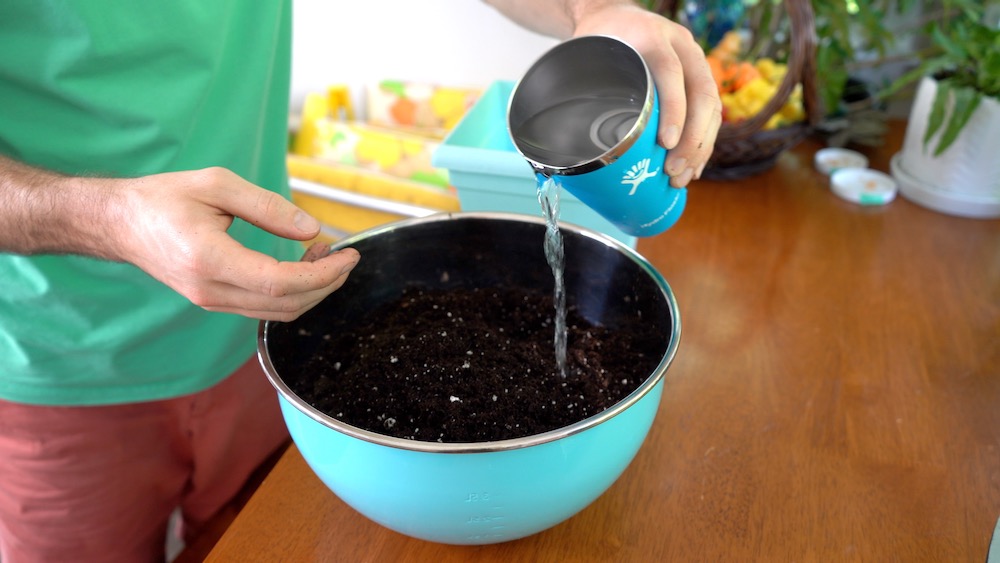
In a clean mixing bowl, add enough fresh soil to fill your overwintering pot. Make sure the pot is cleaned, too, using warm soapy water. Add some water to the soil and mix thoroughly until it has the moisture content of a wrung out sponge. The soils should be moist, but should not drip any water when squeezed.
- Add 1-2 inches of soil to pot.
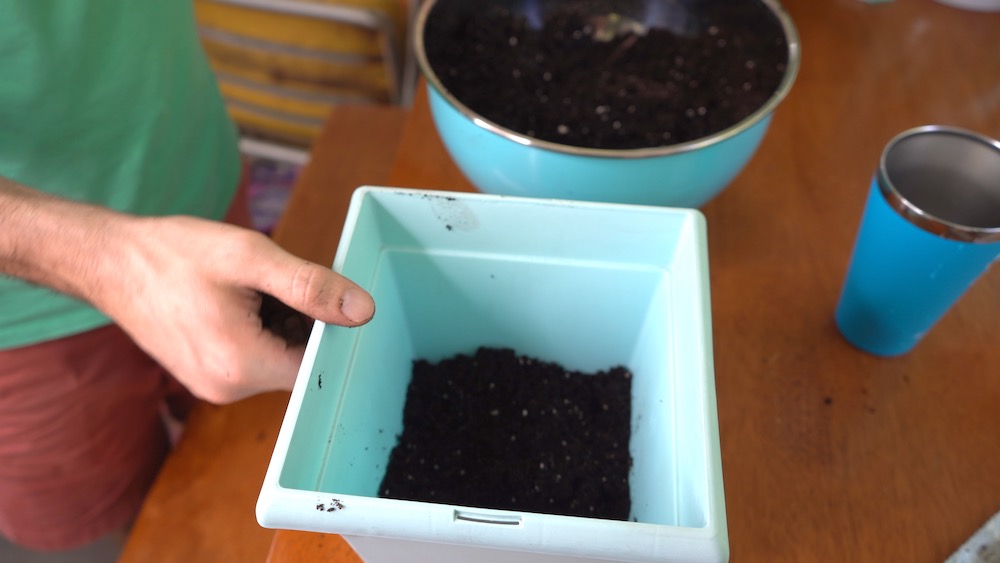
Add about 1-2″ of the pre-moisted soil to the new pot and compress lightly. This will provide a place for the roots to sit comfortably.
- Harvest and prune pepper plants.
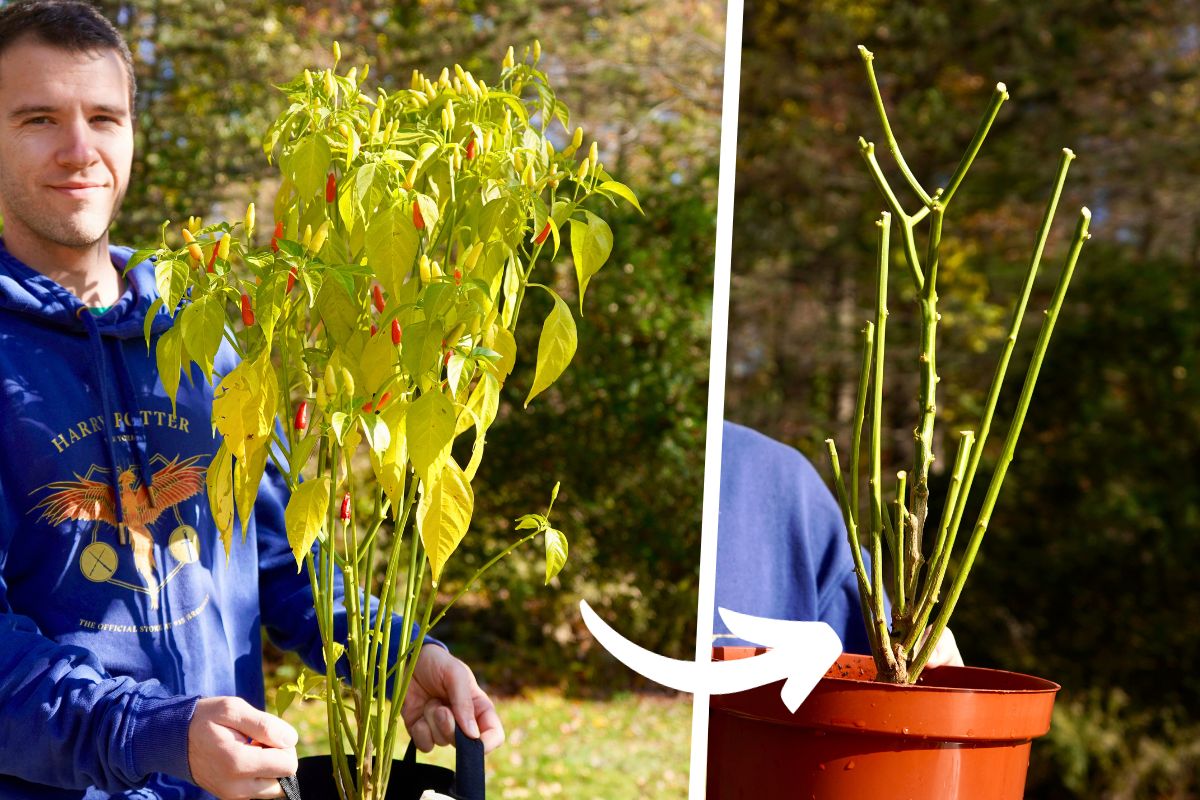
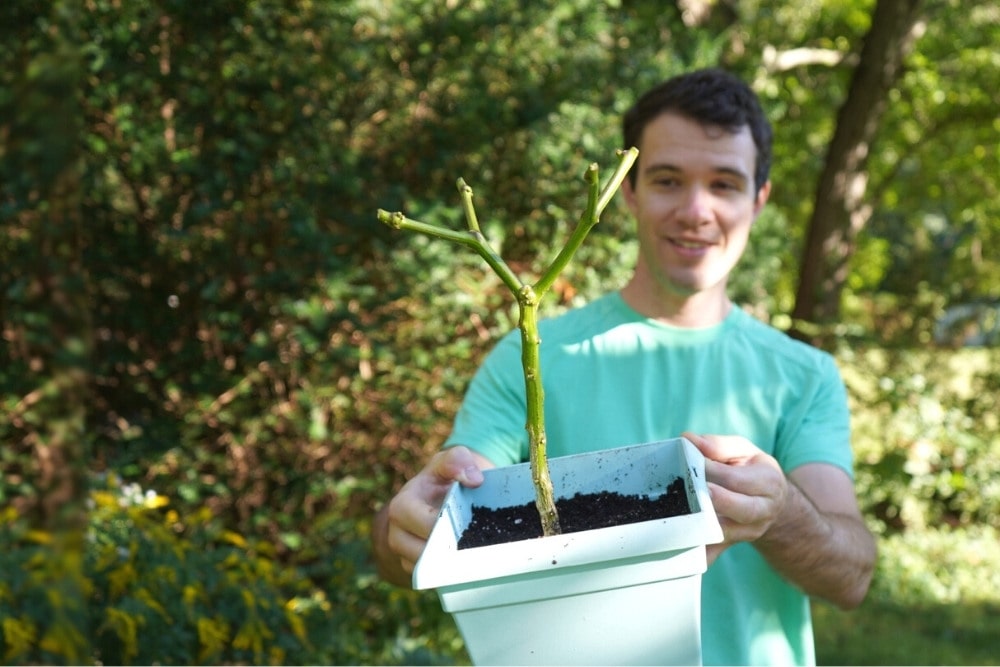
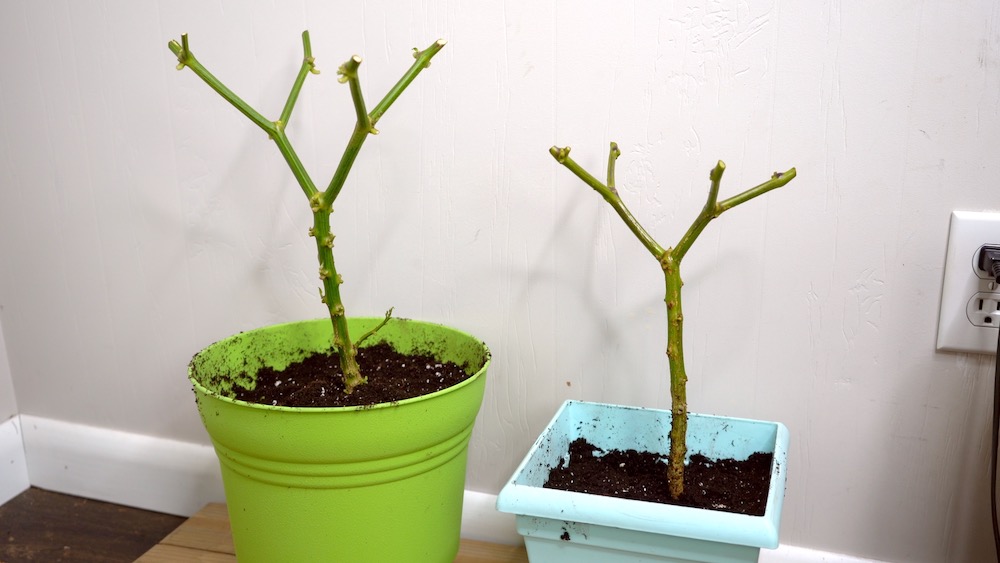
Outdoors, remove all remaining peppers from your plant and prune back the branches. We like to leave several nodes on the main stem, but some growers prune back to a small stump (just 3-4″ tall). As long as there are at least a few nodes, the plant should be able to regrow.
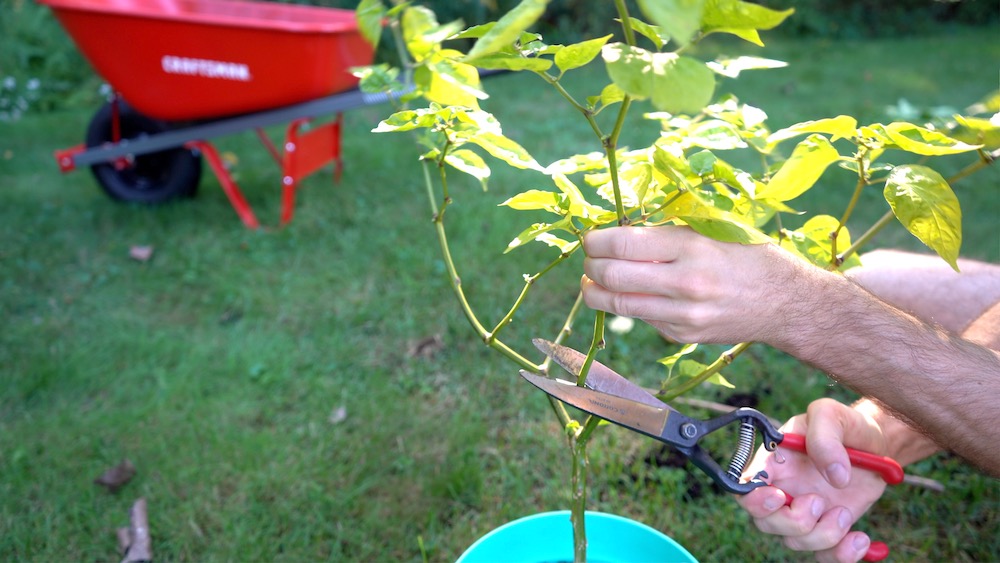
- Remove all leaves.
The leaves are the perfect hiding spot for aphids and other insects. To be safe, remove every single leaf from the plant. This part can feel overly-traumatic, like you are killing the plant, but it is still alive. The roots and stem remain alive and can regrow later from each node.
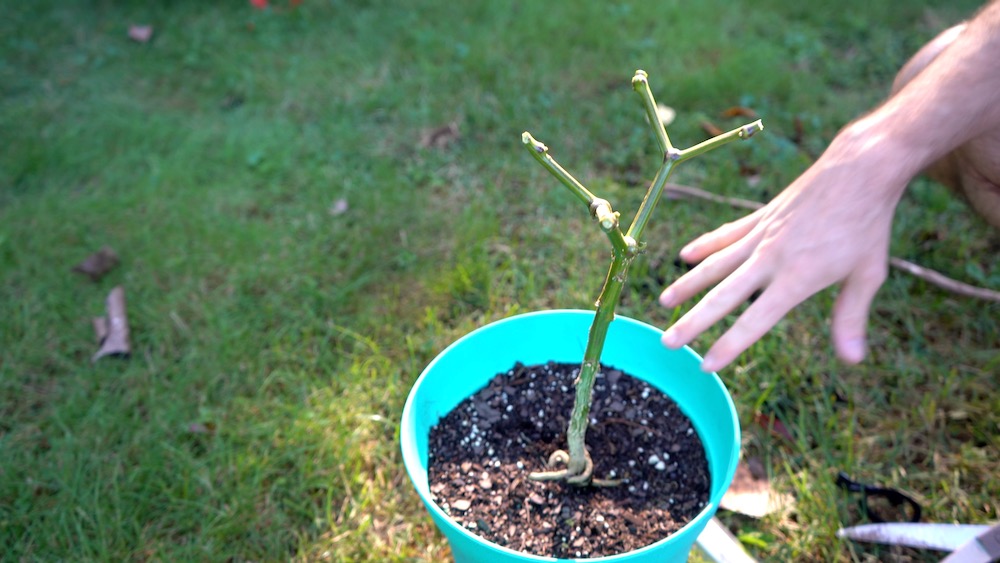
- Remove root ball and clean out all soil.
This is the final dramatic step to avoid pests. The soil is another breeding ground for many insects, including fungus gnats. Remove the root ball by loosening the pot and pulling the plant out on its side. Then, use your hands to begin loosening the soil and removing soil. Use a hose to spray the remaining soil from the roots. In the end, the root ball should have very little to no soil remaining.
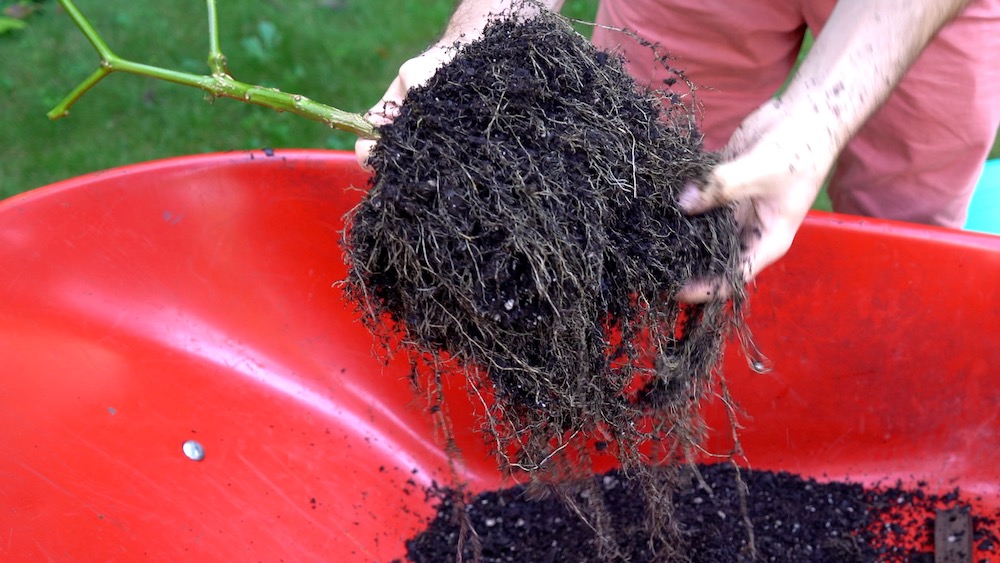
- Trim roots.
Trim the roots with scissors or pruning shears to the approximate size of your overwintering pot. Excess roots can become tangled.
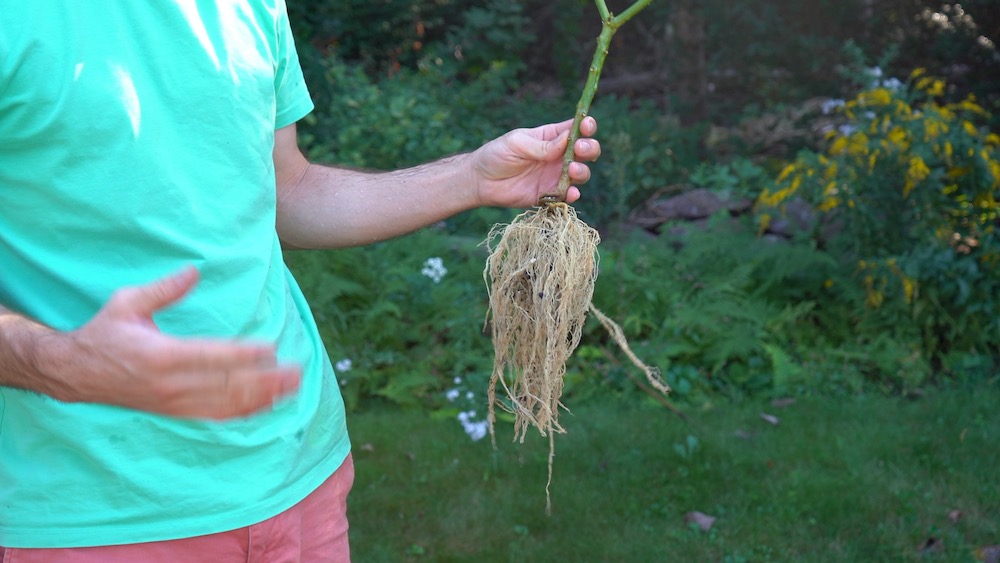
- Perform insecticide dunk (optional).
This step is an added level of protection against any remaining pests. Fill a bucket with about 3 gallons of water and add the correct amount of insecticidal soap. Mix thoroughly and dunk your plant both ways, allowing it to sit for a few minutes. This should take care of any aphids or other insects that remain in the roots.
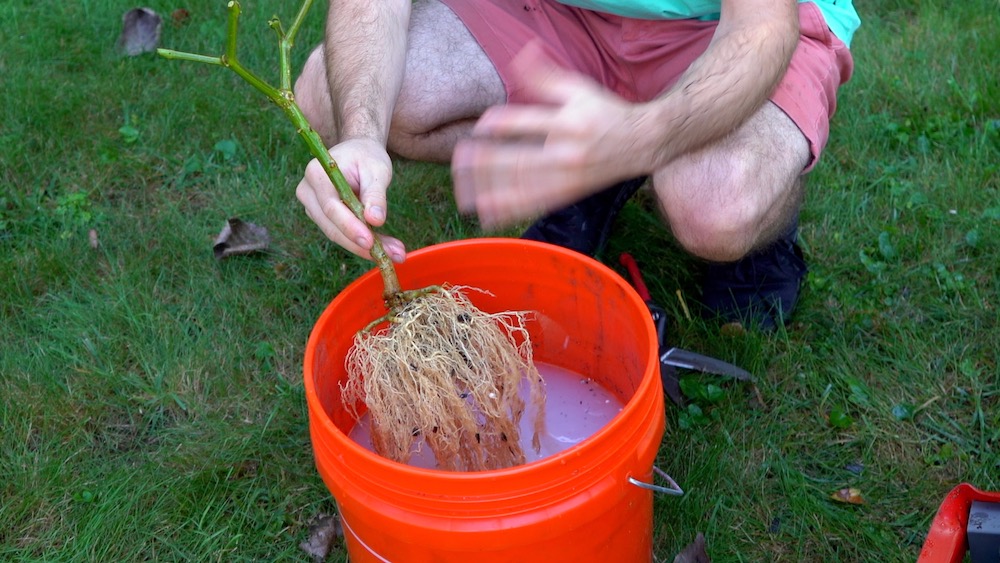
- Re-pot in fresh soil.
Back indoors, place the bare root ball into the prepared pot. Hold the plant with the main stem about 1″ from the pot’s surface and begin to add fresh soil around the roots. Use your fingers to gently poke soil into the loose roots. Once the soil is at the surface of the roots, compress lightly and top it off.
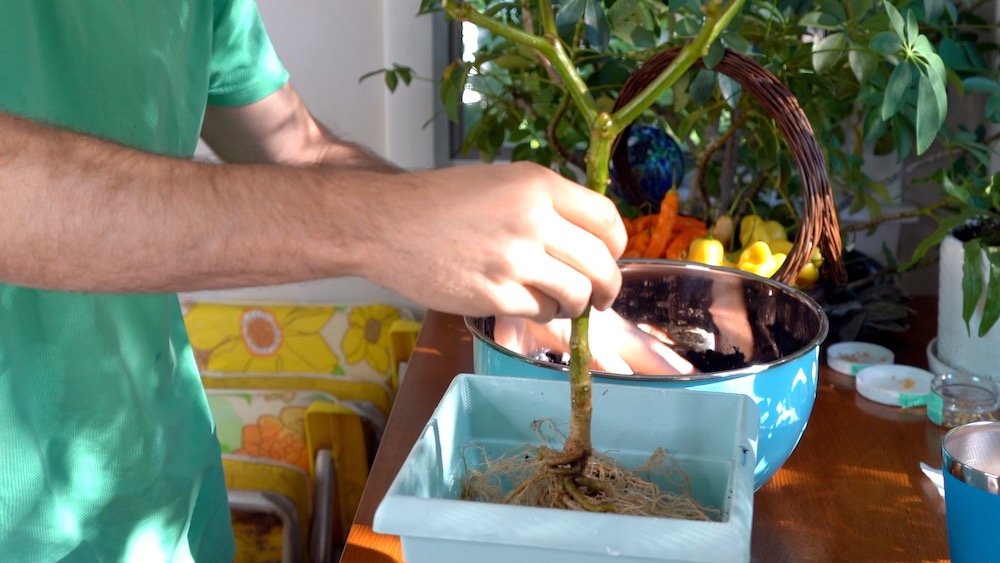
- Water and place in cool location.
Apply a gently watering to moisten the roots (use the insecticidal soap mixture if possible). Move the plant to a location with some ambient light (a window is fine) and a temperature between 55-65°F (13-18°C). A garage, shed, or mudroom usually works best, but be sure to monitor temperature. Don’t let the temperatures get too cold, as this can cause the plants to become overly stressed (more on temperature below).
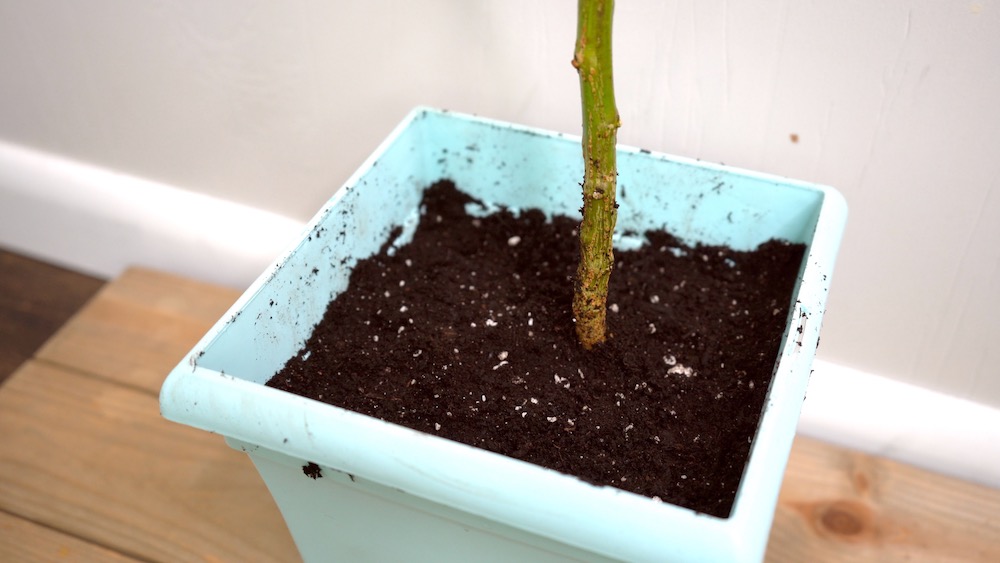
- Prune any additional leaves weekly (optional).
As the plant adjusts to its new conditions, it may try to produce additional branches and/or leaves. You can leave them to grow if you wish, but they can also be pruned. Either way, be vigilant for pests.
Note: There is always a risk that a pepper plant may not survive this process. It is traumatic, but in our experience the plants are surprisingly resilient!
What About In-Ground Plants?
For in-ground plants, the process is almost identical. The only change is how you remove the root ball from the ground. We use a spade to dig around the base of the plant, approximating to the size of the pot.
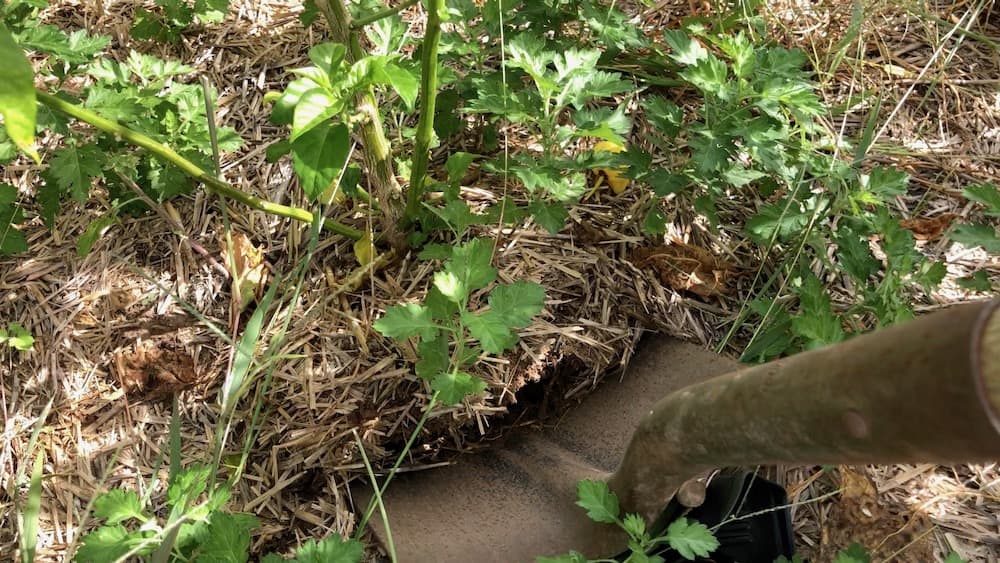
Once your pepper plant is positioned, you can mostly leave it be. However, it is still important to check in for any pests, temperature, and periodic watering. From here, moving back outdoors in the spring is the next major change!
Common Overwintering Questions
We get a lot of questions about overwintering, so here are some of the most common. Hopefully these can help you feel confident as you try it yourself.
What is the best container size for overwintering peppers? We like to downsize into a smaller container (0.5-1 gallon) to save space indoors. This can also allow you to overwinter more plants. However, you can keep the pot size larger and keep more of the root system intact if you have space for it inside!
Why cut off all the leaves? The leaves are a feeding place for aphids and other sap sucking insects. Since the goal is ‘hibernation,’ the leaves are more of a risk than an asset. Rest assured, if your plant survives the initial cut back, it will regrow new leaves from the nodes on each stem. You’ll likely see it trying to do so a few weeks after bringing it indoors!
Should I cut back new foliage that grows indoors? After moving the plants inside, your plants will likely start to grow new leaves within 1-2 weeks. We typically trim back new foliage every 2 weeks to keep the plants tidy, but you can allow it to grow if you wish. The cooler the temperature, the less leaves will grow.
What is the ideal temperature for overwintering peppers? If possible, keep the temperature cool, between 55-60°F (13-15°C). This will dramatically slow the growth rate of the plant and help initiate the desired dormancy. Any warmer, and the plant will constantly be trying to grow new branches and leaves, requiring more maintenance. Any colder and the plants may stress too much.
How much should I fertilize an overwintering pepper plant? We don’t recommend fertilizing at all. You can simply use a potting soil that contains some nutrient content. This will be enough to keep the plant from dying, as growth isn’t the goal.
How much should I water during overwintering? At temperatures in the 50s Fahrenheit, peppers won’t grow much, if at all. This means less water usage. In our experience the plants usually only need water every 3-4 weeks or so during the winter. The larger the pot, the longer you can go between waterings. More importantly, be careful not to overwater!
How much light is needed for overwintering? Lighting is similar to watering – not much is needed. Some natural daylight from a window will suffice for overwintering peppers. If you are overwintering in a windowless room, a small grow light on for 2-3 hours daily should be enough.
Do I have to harden off an overwintered pepper plant? Hardening off is the process of gradually adjusting an indoor plant to the outdoors. We recommend hardening off overwintered plants the same way you would with seedlings. However, the new growth should adjust more quickly to the sunlight.


Tips for Overwintering Peppers
In addition to the basic steps and conditions, I have a few tips for overwintering. These should help keep the plants healthy and happy throughout the winter, and keep the pests at bay.
- Use fresh, bagged potting soil. Fresh soil is a must for overwintering peppers. If you can find it, use a bagged soil that does not have any holes. The holes can invite insects to come in and lay eggs in the soil.
- Sterilize soil (optional). To be extra cautious, some growers recommend sterilizing soil in the oven. The soil should be heated to about 200°F for 10-15 minutes. This will kill all pathogens, but also good bacteria. Plan on potting into fresh unsterilized soil in spring for a healthier soil ecosystem.
- Add sand to the top of soil. We have heard that adding 1-2″ of sand or vermiculite to the surface of the fresh soil can prevent bugs from crawling up to the surface. I have not verified the effectiveness of this, but the method sounds good in theory.
- Check for pests regularly. We check on our overwintering pepper plants every 1-2 days to keep a close eye for pests. If any bugs are detected, immediately move the plant and identify the pest in question. Deal with the problem swiftly, and consider keeping the plant separate from any that are unaffected.
- Keep overwintering plants away from seed starting area. Since there is always a risk of pests, we keep our overwintering plants far away from our typical growing area. The last thing we need is an aphid problem in our seed starting station!
- Always keep temperatures cool. Cool temperatures are always recommended to slow growth. Peppers can survive just fine in cool temps, and will grow very slowly. This is ideal for overwintering, since growth is not wanted until spring.
These tips can help increase the chances of a successful overwintering. While the plants are relatively low maintenance, they still need some regular attention.
Dealing With Pests Indoors
If you do find an unwanted pest on your indoor plant, it must be dealt with immediately. Unfortunately, the options are limited since many pests are difficult to control.
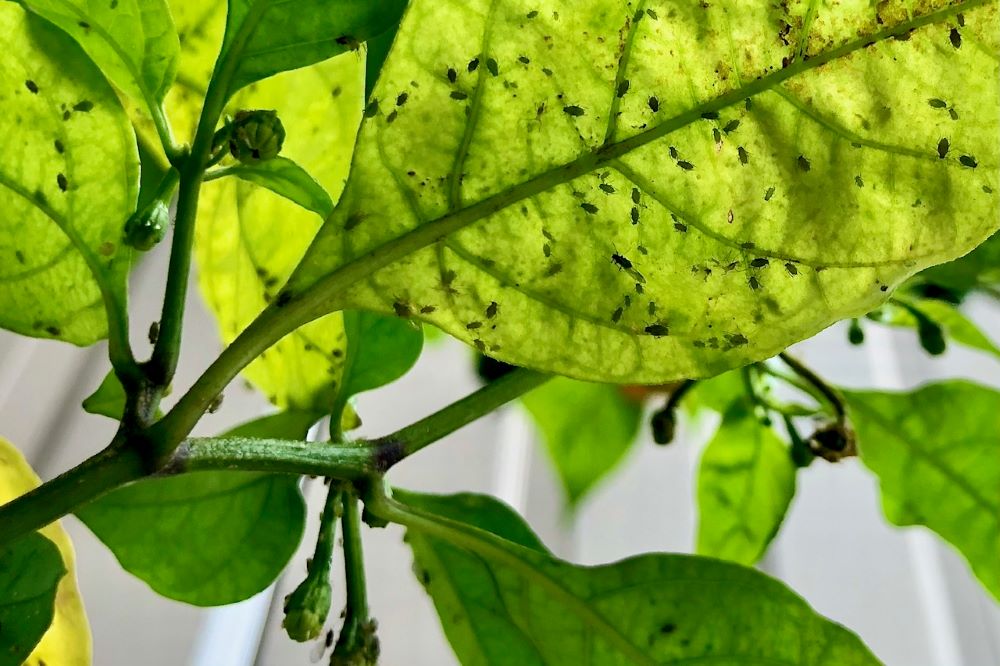
Aphids are one of the worst pests to bring indoors, as they can multiply rapidly. A single aphid can become a full-blown infestation, as they don’t require multiple individuals to reproduce.
- Keep infested plants separate. The most important thing to do is to separate any pest infested plants right away. As insects multiple, they may travel from one plant to another. This is why we always keep overwintered plants away from our seed starting area, just in case of an infestation.
- Spray with neem oil or insecticidal soap. Aphids will feed on young leafy growth first, so always keep new leaves pruned back as they appear. If the aphids still manage to survive, use a diluted neem solution to spritz the affected plants once every 2-3 days (recipe here).
- Drench soil with neem or peroxide. For fungus gnats, using a 20% ratio of hydrogen peroxide and water to soak the soil can kill them. Don’t spray this on the plant itself, just drench the soil and root system.
Pests are part of the risk of bringing outdoor plants inside. As hard as we try, there is always a possibility that one egg or individual will survive and causes issues.
Moving Back Outside
After a few months of plant-sleep, your peppers will be eager to get back outside to grow once more. As the temperatures rise, you can simply begin transitioning the plants outdoors as normal.
We basically just add our overwintered plants in with our seedlings as they harden off. Since the overwintered plants don’t have any foliage, hardening off is less critical. The new foliage will be immediately exposed to sunlight, making it more hardy in direct sun.
Up-potting
If you downsized your plant’s container, you can transplant into a larger container a few weeks before moving back outside. If you have the space indoors, you can grow in as large a pot as you’d like. We find that anything from 3-10 gallons works well for most pepper varieties.
Transplanting works just like moving seedlings to larger pots, but on a bigger scale. If you are moving the plant into the ground, make sure you harden off in the location where the plant will be planted.
I wish you the best of luck with overwintering your pepper plants. We have had some readers tell us their plants have been alive for 8 or more years! The effort is certainly worth it to some growers.

Calvin
One of the original Pepper Geeks! When Calvin isn’t gardening or learning more about peppers and botany, he might be traveling new places or playing some music.

I live in zone 6 can I winter my peppers in this cold zone? I have a monster Trinidad scorpion pepper I’d love to keep.
You just need a spot inside that doesn’t go below 50°F or so. We have overwintered in our basement successfully.
Thank you, I stumbled across this feature by accident rather than intent. Having forgotten to fully clear out my glazed porch area. I’d been unwell and when I got around to it found a healthy plant with lots of flower developing. Yes I was lucky, but had the best and earliest harvest yet.
Plants were here before us and will hopefully be here long after we are gone.
We rarely have hard frosts (never lower than the high 20s). One winter I left a jalapeno in the ground, pruned it back … and it came back marvelously one year, not so much the next. Others haven’t been as successful.
What tips do you have for overwintering in place? If a hard frost comes for a night or two would it work to cover them with towels? Are there some pepper plants that would do better than others with this? Thanks.
Best tip for this type of climate is to mulch heavily in late fall, and maybe keep an eye out for those days below freezing and cover the plants with a light covering. You could also just cover them for the entire “winter” until early spring when temps start to rise again. Wish we could do that!
I often experiment in late fall with seeing what peppers can survive cold weather (since they’re done for the year anyway); and there are differences — varieties that hail from tropical islands seem the most delicate and can take damage well above freezing, while many others can survive at or even slightly below freezing. Large plants with dense foliage fare better than those with sparser branches. But more than a few degrees below freezing, not even covering helps and no mainstream pepper species can survive.
I’ve successfully overwintered a healthy habanero plant for 4 winters and a lemondrop pepper plant for one winter. They’re sitting on my window sill, I’ve got some flower growth and they’re looking great.
My questions is, should I do any pruning of leaves/branches when I bring them outside to maximize better plant growth and/or better fruit yield? The last few years the habanero plant was very dense and bushy (with lots of fruit). Didn’t know if being dense and bushy was a bad thing or not.
Oh yeah, how many years do you think I can keep this going with my habanero plant (and lemondrop)?
Thanks!
How long does it take the winterized pepper plant to begin growing/showing leaves or a form of growth?
Brought mine in and they got hella aphids (I didn’t prune them back). Because they share a room with a 100 gallon feed tank of pond fish, I can’t spray them. I tried ladybugs (who DOESN’T want to release 1000 ladybugs in their spare bedroom?), but that didn’t work. Can I cut them back now? Mid-april? I still can’t take them outside, so the aphids would obviously be there still, but would it mitigate it? (I am zone 4b)
You can cut back any time, but at this point I’d be letting the plants start to grow back in preparation for moving back outside. Aphids are tough indoors, not much you can do other than what you tried. Ladybugs are not the best predator though, lacewings apparently do a better job (but I’m sure you’ve introduced enough live insects into your spare room 🤣
It’s April now in the Kootenays in British Columbia. I will not be able to plant my overwintered peppers outside till at least the 3rd week of May. They are reacting favourable to the brighter days. They are in a room with a window. They are growing leaves and some flowers are appearing. What is the next course of action? Should I take the flowers off? Should I fertilize at half strength to give them some food? I brought about 12 plants in and have 4 alive and doing well.
Great article, it’s exactly what I did last fall. I am straining at the bit to take them outside. I will follow your hardening off instructions. Thanks
My husband brought all his pepper plants inside in the fall, but did not trim back. They are growing leaves and some are still producing peppers however we have been fighting aphids. Any suggestions for moving them outside? Fresh soil, treat aphids, etc. but I am guessing too late to trim up the branches. We will do better next year!
I have one stem coming out of the lower part of my plant with two healthy looking leaves. The stem above that stem has no visible buds, stems, etc. this is as of 02/23/23.
Any advice.
I’m assuming if it’s better to trim the leaves back you should pinch off any new flower growth too? I missed the trim back the leaves in the video; all three of my peppers have a fair amount of leaves already and have started sprouting buds.
It isn’t a big deal if the plant wants to produce leaves, just keep in mind that it will be using some nutrients to do so. You can leave it on, just keep an eye out for pests. If it gives you a fruit or two in winter, that’s great! The initial trim back is to reduce chances of pests
I prepped 3 potted pepper plants to winterize indoor (a bell pepper, a jalapeno and a habanero). All three were approximately 3 ft tall and were very productive last season. I removed all remaining fruit, succor branches and leaves, back to three Y branch sections. The plants quickly sprouted new grow, that I did not remove. I since removed the bell pepper plant due to an aphid invasion. The remaing 2 plants put out flowers and a couple young fruit. Come spring, I intend to plant the 2 outdoors in a raised bed. Should I plant them as is (with all their new growth) or, cut them back to the three Y branch conditions they were in when I first move them indoors?
I would plant them as is with the new growth intact. You should still harden them off a bit to allow that foliage to adjust, but it should help the plant rebound quicker
For the last three years, well winters, I’ve simply buried the best of our Zonal and Regal pelargoniums from October through to February, a few might rot but less than one in ten and when lifted had lots of shoots giving a good head start for them.
I’m going to bury a few sweet pepper plants tomorrow just to see what happens, has anyone tried doing it the easy way?
Hi. Would it be okay to put my hot pepper stump and roots into a pot of damp peat moss instead of potting soil? Thanks. Great information and well presented by the way.
That should work – it might be a bit dense without anything to help aerate it. Usually, you’d add some sand, perlite, or vermiculite in with the peat
Hello Calvin! Very useful Information thank you! I have one question… overwintering pepper plants I am doing for the first time but want to confirm whether the stalks turn brown after it has been indoors for weeks and if no how can I prevent that? I water a lil every week and I have had some new growth on some… but worried now that they may be dying. Any suggestions?
Much thanks in advance… Silvia
Hey there, so the stems shouldn’t turn brown. If you are very worried, you can try scratching a small portion of the outer bark away to reveal the inside of a stem. If it is brown/dried out throughout, then the plant is likely dead. If it is green underneath the outer skin, it is alive. Try to be gently and not scratch too deep!
When overwintering ghost and black panther ‘s can I use Neem oil only for the root rinse”dunking” or does castile soap need to be added?
Neem oil alone will work
Calvin,thanks to you guys! Best hot pepper year yet!
Woohoo! I’m glad to hear that 🙂
Very informative article! Trying this for the first time now. Thanks@
A horticultural class instructor recommends using a fogging sprayer and just a bit of hydrogen peroxide in water — Spray weekly for outdoors. Indoors maybe the same
In my early years of chilli growing in the UK i tried overwintering as you have described. Many plants died, and those that survived were weak and took a long time to recover. Since then through experimentation, i have found that bringing plants indoors and trimming moderately works far better. I feed them a little and use a horticultural light on a timer. For many winters i have had plants fruiting throughout the winter. When repotted and planted out in spring they are far healthier, and the crop is excellent. I therefore recommend this alternate method. Just keep them going. Enjoy your beatiful plants all winter and give them a better head start for the coming year!
@Dominic, I was wondering if this work as would have to just bring them in the house and due to the heating etc but hopefully I should get crops continually then