Peppers That Thrive In Extreme Heat

Disclaimer: As an Amazon Associate, I earn from qualifying purchases. Pepper Geek takes part in various affiliate programs. This means that purchases through our links may result in a commission for us.
When you think of pepper plants, you may assume they all love growing in extreme heat. However, that isn’t always the case. Most varieties thrive in daytime temperatures between 70-90°F. But what if you live in a very hot climate?
Thankfully, there are some peppers that perform well in these harsh conditions. So, in this article I’ll share some peppers to grow in extreme heat.

1. Hatch Chiles
- Heat level: 2,000 to 8,000 SHU
- Seeds: Sandia Seeds
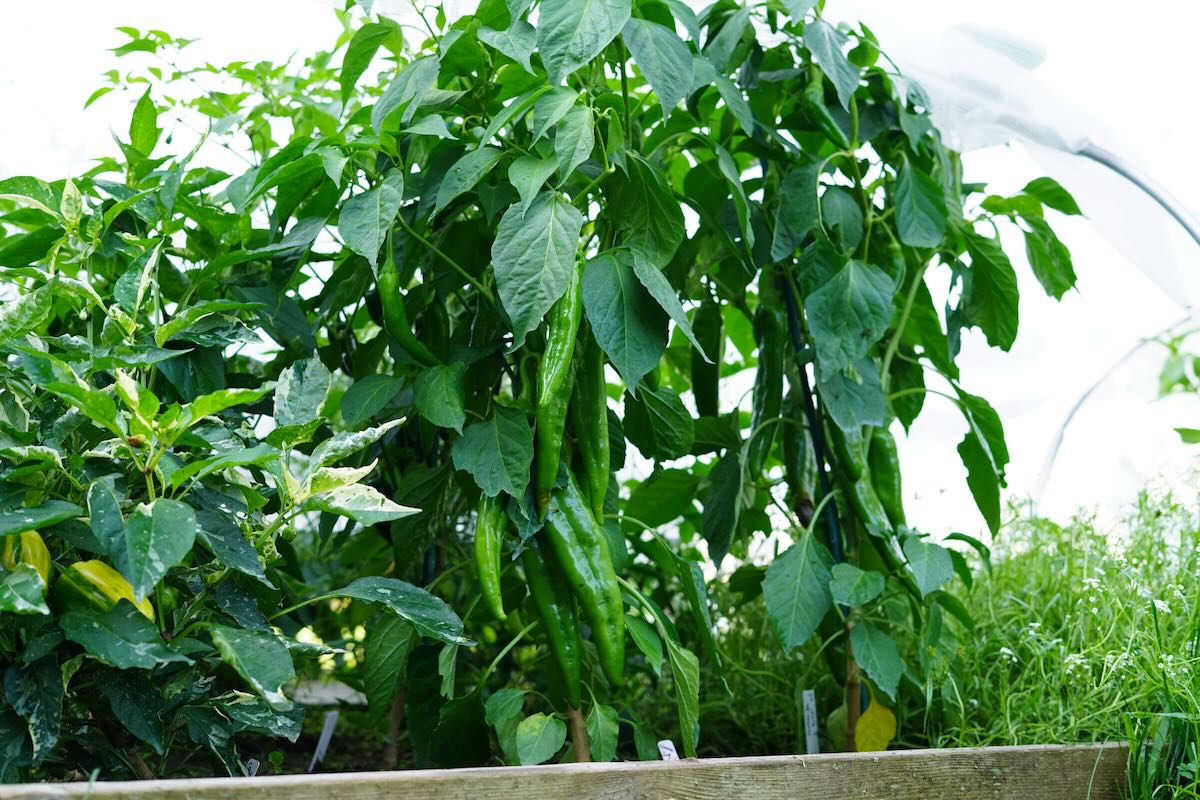
If you’ve been to the Southwest US, you’ve almost certainly seen Hatch chiles for sale. Whether they’re drying on beautiful ristras, or roasted and bagged during harvest season, they’re everywhere in the late summer. The plants grow large (6-10″) peppers and are incredibly prolific.
This category of peppers includes dozens of varieties with different heat levels. But in my experience growing them in the Northeast, they are one of the few peppers that hold up to a heat wave. Try varieties like Big Jim, Sandia Select, or Ms Junie and experience one of the best flavors any pepper has to offer!
Note: The Chimayo pepper also holds up to heat well, and it is thinner and curvier, with a unique flavor.
2. Jalapeños
- Heat level: 0 to 10,000 SHU
- Seeds: Johnny Seeds or Totally Tomato
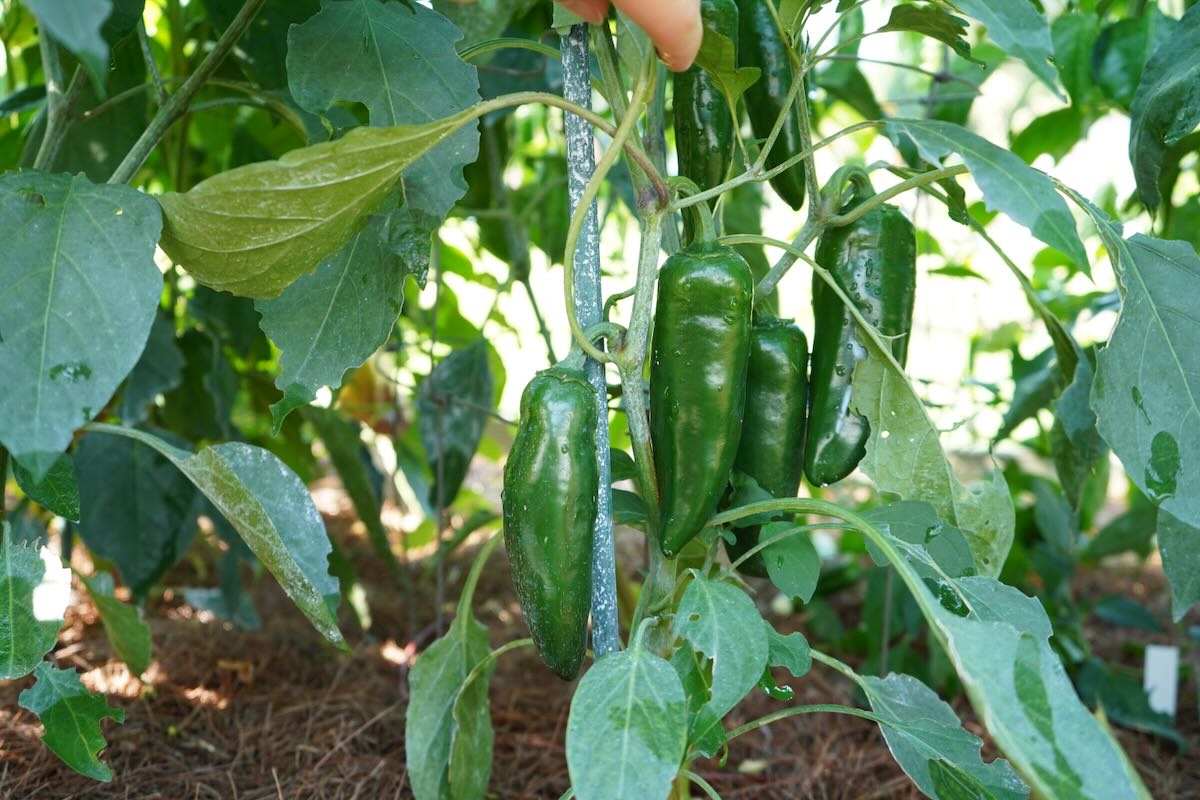
If you live in a hot climate, these famous peppers will grow just fine. There are probably hundreds of jalapeño varieties to choose from, but in my experience, they all tolerate heat very well.
In our testing of around a dozen varieties (so far), my favorites have been the Goliath, Jalafuego, and Lemon Spice. Some are extra spicy, while others have no heat at all (like the Nadapeño).
3. Chile de Arbol
- Heat level: 15,000 to 30,000 SHU
- Seeds: NMSU

Chile de arbol (“tree chile”) makes 2-3 inch, thin red pods on a tall, woody plant. Of all the peppers on this list, it probably handles heat the best. Native Seeds/SEARCH reported that its Del Arbol chile performed best in its demanding 2012 test plot in Tucson, Arizona.
These small peppers are great for making dried powders. You can leave them on the plant until they turn red and start to shrivel, then grind them into delicious chile flakes. They’re also used in Mexican salsas and chile oils, which makes them a great choice for our chili crisp recipe.
4. Chiltepin
- Heat level: 50,000 – 100,000 SHU
- Seeds: Sandia Seeds
The chiltepin is the only wild chile native to the United States, and it grows freely in canyons from West Texas to southern Arizona. The Wild Chile Botanical Area near Tucson has the largest population north of Mexico. Texas made it the official state native pepper in 1997.
The pods are very small, about the size of a pea. However, the heat is no joke! It hits fast and fades quickly, a unique trait of this pepper variety that many people enjoy. The plants tolerate heat extremely well, and can also handle drought. However, the plants still enjoy plenty of water in a dry, hot summer.
In the wild they often grow under larger shrubs, so if possible, give them some afternoon shade if it is particularly hot in your region.
5. Poblano
- Heat level: 1,000 to 2,000 SHU
- Seeds: Johnny Seeds
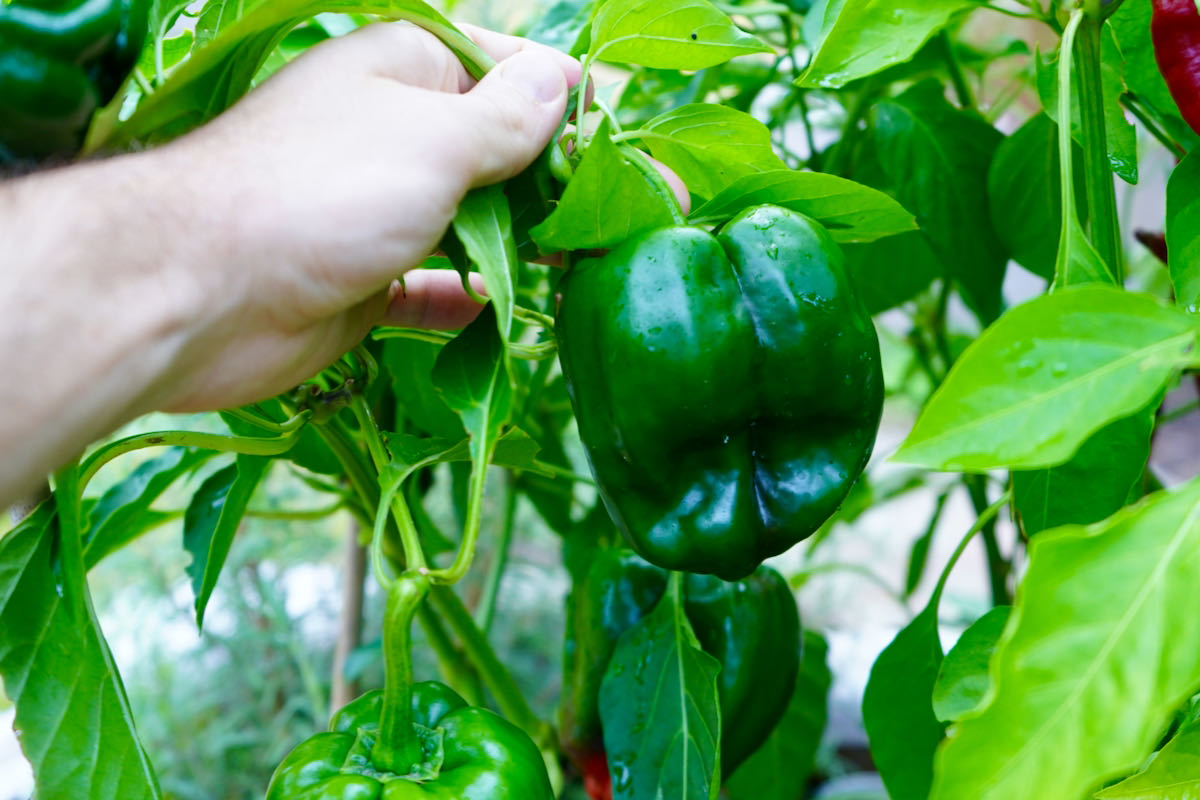
The poblano comes from Puebla in central Mexico and is mild in heat. It’s the classic chile for stuffing, roasting, and drying. When they’re left to ripen red and then dried, they become anchos, a key ingredient of mole and red chile sauces. Texas A&M includes it among its recommended hot peppers.
Poblanos do need more attention than the smaller peppers on this list. They’re native to highlands with warm days and cool nights, and their big fruits may stall when overnight temperatures are hot.
Give them plenty of support, use afternoon shade cloth in the hottest weeks, and keep the soil evenly moist. Once overnight temperatures drop in the fall, we usually get a second flush of fruits.
6. Habanero
- Heat level: 100,000 to 350,000 SHU
- Seeds: Refining Fire or Towns End
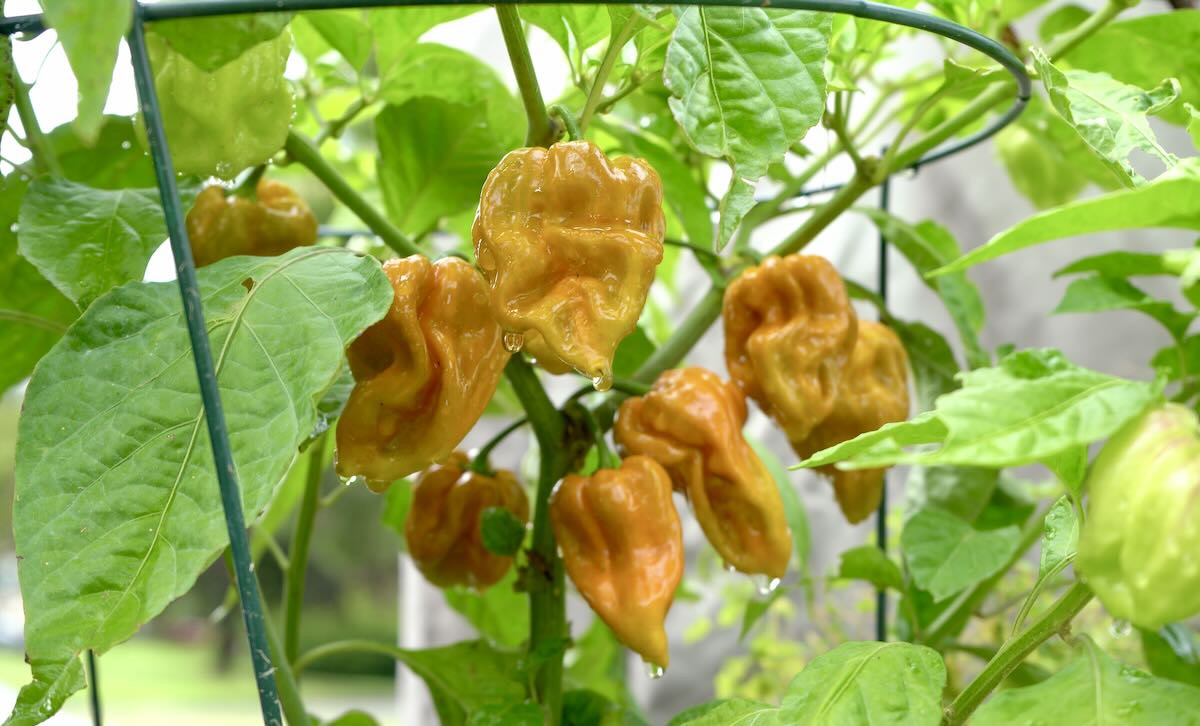
Habaneros and other C. chinense peppers are very different from the others on this list. While they can tolerate high heat, they don’t handle dry heat well. So, if you live in the tropics or another humid climate, habaneros are a great choice.
These are some of the most fun plants to grow, since you have endless options. There are super spicy variants, every color of the rainbow (except blue), and the plants are prolific.
7. Corno di Toro
- Heat level: 0 SHU (sweet)
- Seeds: Johnny Seeds or Sandia
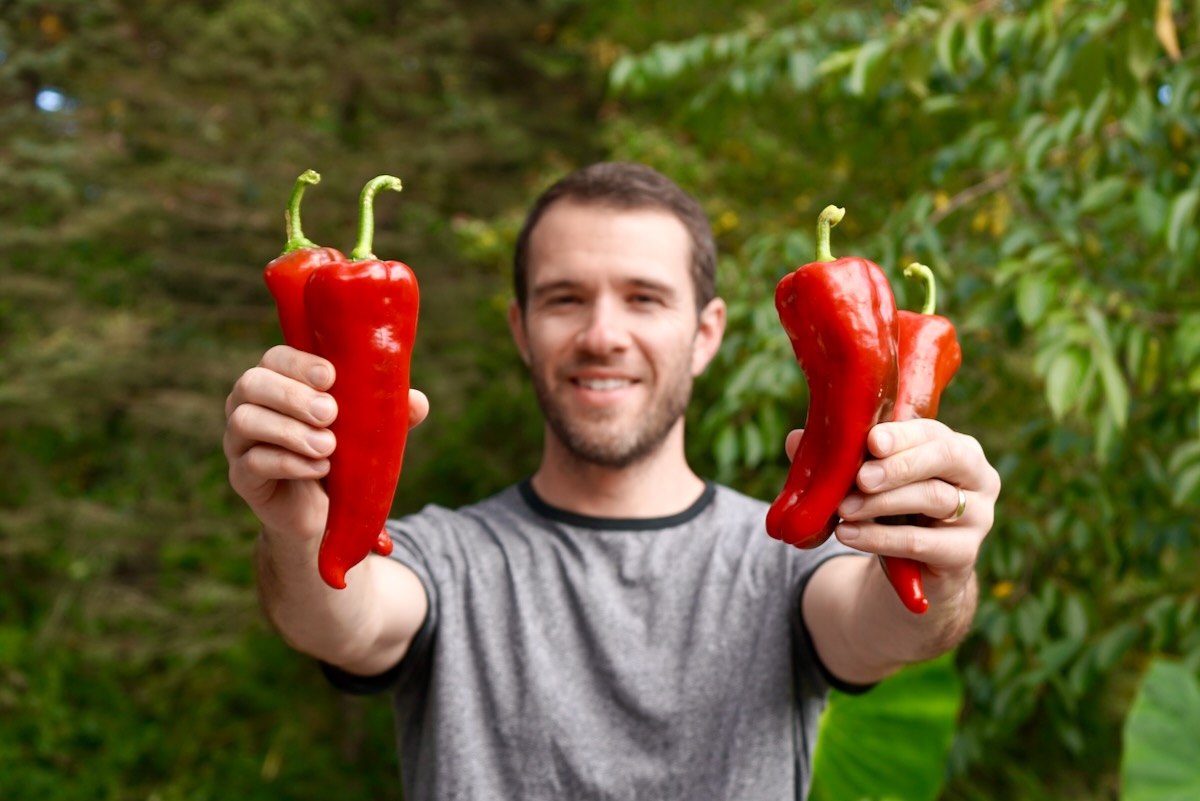
If you need sweet peppers that can tolerate high heat, your options are limited. The Corno di Toro (“bull’s horn”) pepper is one of them. These come in red and yellow, and are classically used for frying or stuffing. They are a much better choice than bell peppers when growing in extreme heat.
Other sweet peppers to test in your climate include sweet cherry peppers, Jimmy Nardellos, sweet banana, and Marconi.
I hope you try some of these amazing peppers in your hot climate. Share any additions you would add to this list in the comments below!

Calvin
One of the original Pepper Geeks! When Calvin isn’t gardening or learning more about peppers and botany, he might be traveling new places or playing some music.