
Pepper Plant Diseases and Problems

Disclaimer: As an Amazon Associate, I earn from qualifying purchases. Pepper Geek takes part in various affiliate programs. This means that purchases through our links may result in a commission for us.
Growing peppers is a lot of fun, but it doesn’t always work out perfectly. Some years, harvests can be significantly reduced by unforeseen pepper plant diseases or problems.
In this article, I will share some of the most common pepper plant problems, how to identify them, and how to prevent issues in the future. Some diseases are irreversible, other issues can be dealt with within a single growing season.
While this is not an exhaustive list of pepper plant diseases and problems, it covers the most common issues we are asked about by our fellow pepper growers.
In This Article
- Bacterial leaf spot
- Mosaic virus
- Blight
- Damping off disease
- Verticillium wilt
- Pests
- Blossom end rot
- Yellowing leaves
- Curling leaves
- Holes in leaves
Bacterial Leaf Spot
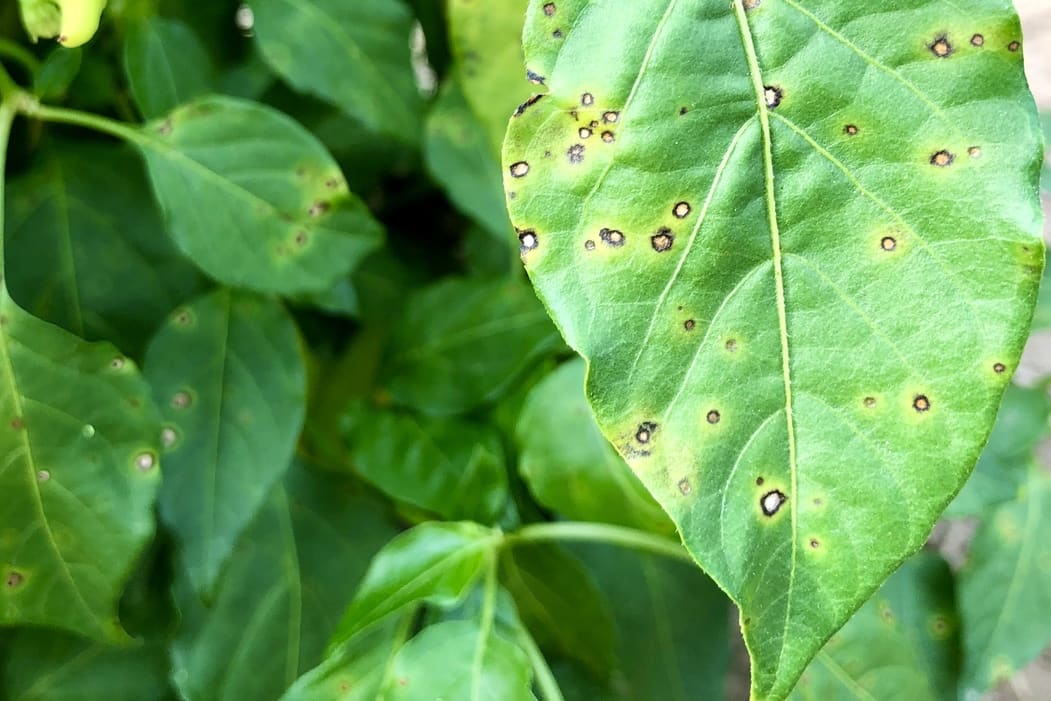
Bacterial leaf spot is a common bacterial plant infection seen all around the world. It is most common in rainy, humid, and temperate climates. These are the environmental conditions in which the bacteria can spread most easily.
Leaf spot is a bacteria, so it can be spread by touch, through seeds, or via soil. Use cleanly soil and watering practices to avoid splashing the leaves with soil or cross contaminating.
Symptoms
- Yellow and green spots on leaves
- Brown spots on leaves in later stages
- Raised, corky spots on peppers
- Leaf drop and decaying peppers
Solutions
- Remove infected parts. As with pepper plants infected with viruses, you should remove parts of the plant that show signs of leaf spot. The bacteria can spread easily, especially under damp and hot conditions. You don’t need to remove the entire plant unless it is totally covered.
- Provide adequate fertilizer. With proper nutrition, pepper plants can actually fight off the bacteria. As with humans, the more healthy we are, the more able we are to fight off bacteria quickly. Feed any affected plants with an all-purpose fertilizer at the recommended frequency. Remember, too much fertilizer is a bad thing, too, as high salts in the soil can lead to worse disease issues.
- Spray with natural fungicide. Although leaf spot is bacterial, fungal treatments have been known to help. Use a copper based fungicide as a foliar spray in the early morning or late evening to help reduce the spread.
- Avoid wetting the leaves when watering. Water is necessary for the spores to multiply and spread on your pepper plant’s leaves. Always water at the base of the plant to avoid splashing water onto the leaves.
- Practice cleanly gardening. As with all bacterial and viral pathogens, it is important to be cleanly while in the garden. If possible, use gloves when handling your plants. Avoid touching all of the plants, one after the other to reduce the spread of spores.
Learn more about various pepper leaf spot problems here.

Mosaic Virus On Peppers
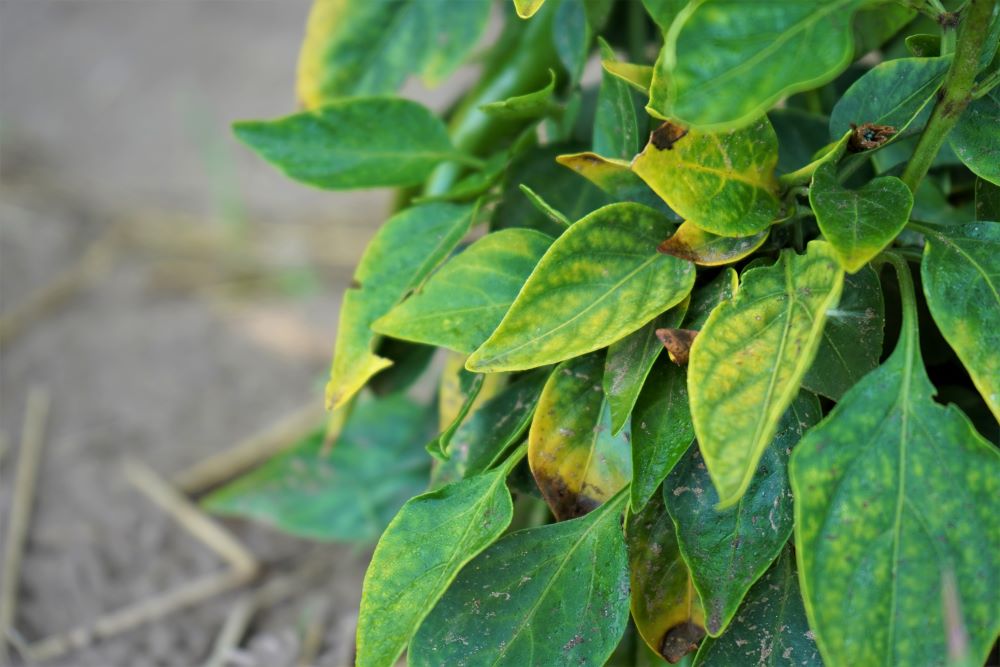
Another very common pepper plant issue is mosaic virus. There are many different types of mosaic virus, and once a plant is infected, it is irreversible. Some pepper varieties are resistant to tobacco mosaic virus, while none are resistant to cucumber mosaic virus.
Mosaic viruses can be seed borne or soil borne and are spread by sap sucking insects such as aphids. They can also be spread by contact of infected plants, and are most problematic in dry weather.
Symptoms
- Green and yellow mottled leaves
- Prickly or bumpy surface on fruits
- Stunted growth
- Low pepper production
Solutions
- Remove affected plants. There are no effective treatments for viruses. If you suspect mosaic virus, remove the pepper plants from the garden and burn them if possible. The fruits are still safe to eat, but the seeds can carry the virus, so do not save seeds from affected fruits.
- Keep the pests at bay. Mosaic viruses are commonly spread by sap sucking insects such as aphids. Use a pure neem oil solution with castile soap and water and spray plants to deal with these pests.
- Keep the weeds under control. Weeds can carry mosaic virus, and can also be a breeding ground for the insects that spread it. Use a ground cover, or at least keep the weeds at bay with a weeding hoe (these are great for saving your back).
- Avoid touching plants. Always wash your hands before and after gardening. Your hands can be the vehicle to transfer viral pathogens from one plant to another. Also, avoid smoking in your garden, as this can introduce mosaic virus to the soil.
- Plant resistant pepper varieties. Some varieties have been identified to be more resistant to tobacco mosaic virus, though none are resistant to cucumber mosaic and other viruses. Look for varieties that are labeled ‘TMV’ (tobacco mosaic virus resistant) at nurseries and garden centers. Some common types are sweet banana, super cayenne, and bell boy hybrid.
Blight On Peppers
Phytophthora blight is a pepper plant disease that is spread by a soil-borne pathogen. If your pepper plants have leaves low on the main stem, the rainfall can cause the soil to splash up on to the foliage, introducing the disease.
There are more than one type of blight, usually categorized into ‘early blight’ and ‘late blight.’ Symptoms are similar, but some are more common in different parts of the world at different times of the growing season.
There are many other plant varieties that are susceptible to blight, including tomatoes, eggplant, beans and all types of squash.
Symptoms
- Large, brown leaf spots and wilting
- Brown or black stems at base of plant
- Root rot (leading to plant death)
- Fruit rot (when in contact with infected soil)
Solutions
Plant your peppers in a raised bed or in pots to improve drainage. Blight is most commonly found in in-ground gardens or fields. Rainfall will have less time to sit on the surface of the soil and spread the pathogen in a raised bed or a potted plant.
If you can’t use a raised bed or pot, try mounding up the soil around each plant to avoid standing water at the base of the plants.
Another step to take is to use a mulch, such as straw, grass clippings, or black tarp. Mulching helps prevent splashing from the soil onto your pepper plant’s leaves when it rains. It also has other benefits like improved water retention and subduing weeds.
If it is dry, do not over-water your garden. Standing water is the only way that blight mold spores can multiply and spread. Wherever the infected water flows, the spores will follow.
Always acquire your soil and/or compost from trustworthy sources. Bringing infected soil into the garden is the easiest way to end up with this pepper plant problem.
Damping Off Disease
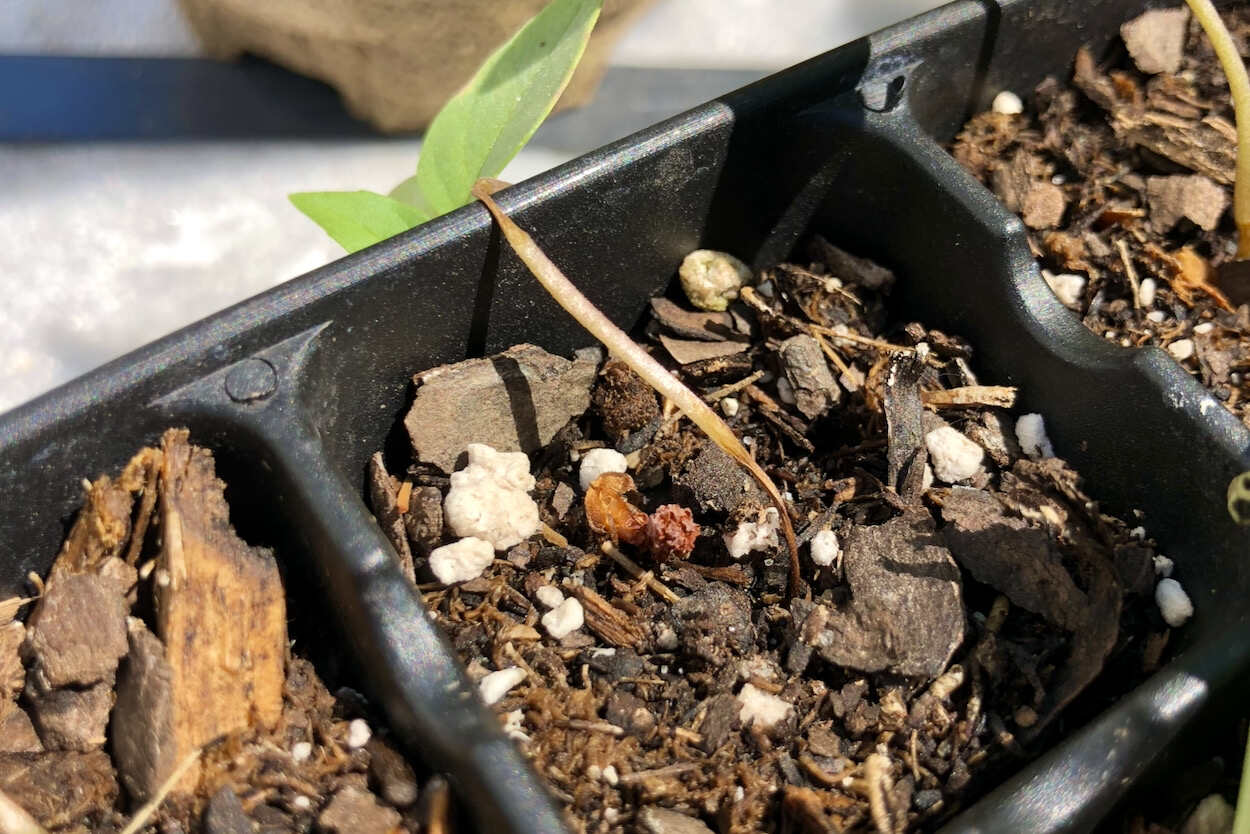
Damping off disease is a common cause of death in young pepper plants. It can be caused by a variety of fungi and molds. All of the pathogens thrive in moist, cool conditions (usually below 65°F).
Symptoms
- Seedlings fail to sprout from soil
- Brown spots on seedling leaves
- Browning on lower stem
- Soft, slimy foliage
- Young seedlings fall over and die
Solutions
- Keep garden tools clean. Always practice good hygiene in the garden. Clean your tools at the end of the season using hot, soapy water and allow them to fully dry. Also, after working in the garden, make sure to clean your hands (I usually just take a shower) and wash clothes. Watering cans and hose nozzles that have been in contact with the soil can also harbor the spores.
- Don’t over-water. In addition to the many issues caused by over-watering, damping off is more likely in an overly-moist soil. Allow the surface of the soil to dry before adding more water to pepper seedlings.
- Keep it warm. We use a seedling heat mat to germinate our pepper seeds at around 80°F, then use grow lights after they sprout. The lights keep the grow tent warm, between 70-75°F.
Damping off is a severe issue that can spread from one seed cell tray to another, and if affects many different plant species. It is common to see entire trays of plants perish when damping off disease occurs, so take good care to prevent it.
Verticillium Wilt On Peppers
Bacterial wilt is an issue that can impact pepper plants along with many other vegetables. It is commonly found in former tobacco fields, and can wreak havoc on entire crops if not caught early. It is most common in the Southeastern US.
The bacteria plugs up the vascular tissue of the plant, making it impossible for water to be transferred throughout the plant. Typically, pepper plants infected with verticillium wilt will begin to wilt on one side of the plant first.
As the bacteria grows, the plant will eventually collapse and die. If it is discovered, this pepper plant problem should be dealt with immediately.
Symptoms
- Yellowing and wilting leaves, sometimes starting on one side of the plant
- Vascular discoloration (inner tissues of the stems turning brown)
- Fully collapsed plants (death)
Solutions
- Water your plants. The most common reason for pepper plants wilting is simply a need for water. Don’t over-react to wilting, assume it is bacterial wilt, and rip up your plants! Try some water first, and if that doesn’t solve the issue in an hour or so, investigate further. Learn more about pepper plants wilting here.
- Remove affected plants. As with most diseased plants, the first step is to remove and destroy affected plants. Only resort to this step if you are sure that your plants are infected.
- Control pests. Cucumber beetles and other insects can spread bacteria from one plant to another. Learn how to identify and control these pests and others to keep bacterial wilt from spreading and persisting in your pepper garden.
- Add beneficial bacteria to soil. Using beneficial bacteria has been shown to be effective at treating bacterial wilt. This method may be better suited for professional farmers who grow peppers and other veggies for profit.
Pests On Pepper Plants
Pests can cause significant damage to pepper plants on their own. From aphids to spider mites to thrips, the list of potential pepper plant pests is long. Thankfully, there are preventative measures you can take against most of them.
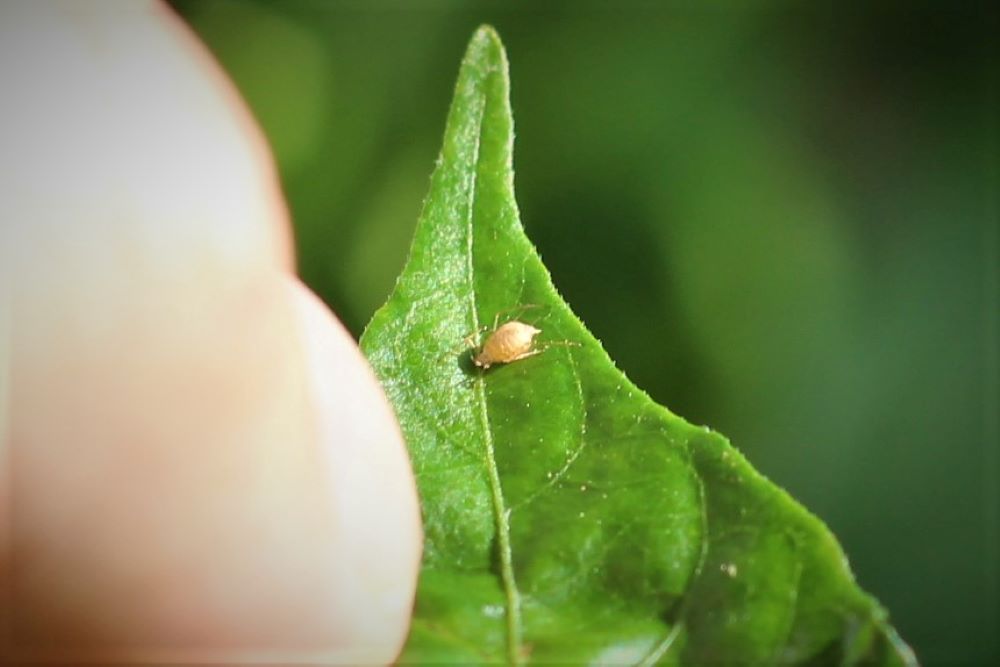
Symptoms
- Visible pests (check under leaves, on stems, etc.)
- Leaf curling or distortion
- Dark spots on leaves
- Holes in leaves
Solutions
The type of pest will often determine the best solution. Sometimes, you can simply remove the pests, as with caterpillars, slugs, and earwigs. However, others are small and come in large numbers to feast on your pepper plants.
- Spray with a hose. Aphids and other small, sap sucking insects can’t fly, and do not have a very strong grip. By spraying the leaves directly with clean water, you can knock a majority of these pests off of the plant. This isn’t a permanent solution, but it can slow them down.
- Spray with neem oil. Spray your pepper plants using a solution of 1 tbsp pure neem oil, 1 tbsp castile soap, and 6 cups of water. The neem oil is all-natural and will kill active pests and deter new ones from joining the party.
- Introduce beneficial insects. Lady bugs and predatory wasps are some of the most common beneficial garden bugs. You can attract them by planting certain companion plants, or buying larvae to hatch in your garden. Always release live ladybugs in the evening when the sun is going down to avoid them flying away. The ladybugs will stay and feast on aphids and other sap suckers.
The list of pepper plant pests is lengthy, and this is in no way a complete guide to controlling them. However, a general rule is to grow a diverse range of plants so that natural predatory insects come to control the pest populations. For more info on dealing with aphids, read here.
Blossom End Rot On Peppers
Blossom end rot is most common on tomatoes and large sweet pepper varieties. It is primarily caused by a lack of calcium within the plant which leads to an inability to form the fruit’s skin. It is not actual rot, but just an underdeveloped fruit.
The pepper skin will develop dark, soft spots, usually on the bottom of the fruits. This vulnerable skin invites mold to grow, making the affected part of the fruit inedible.
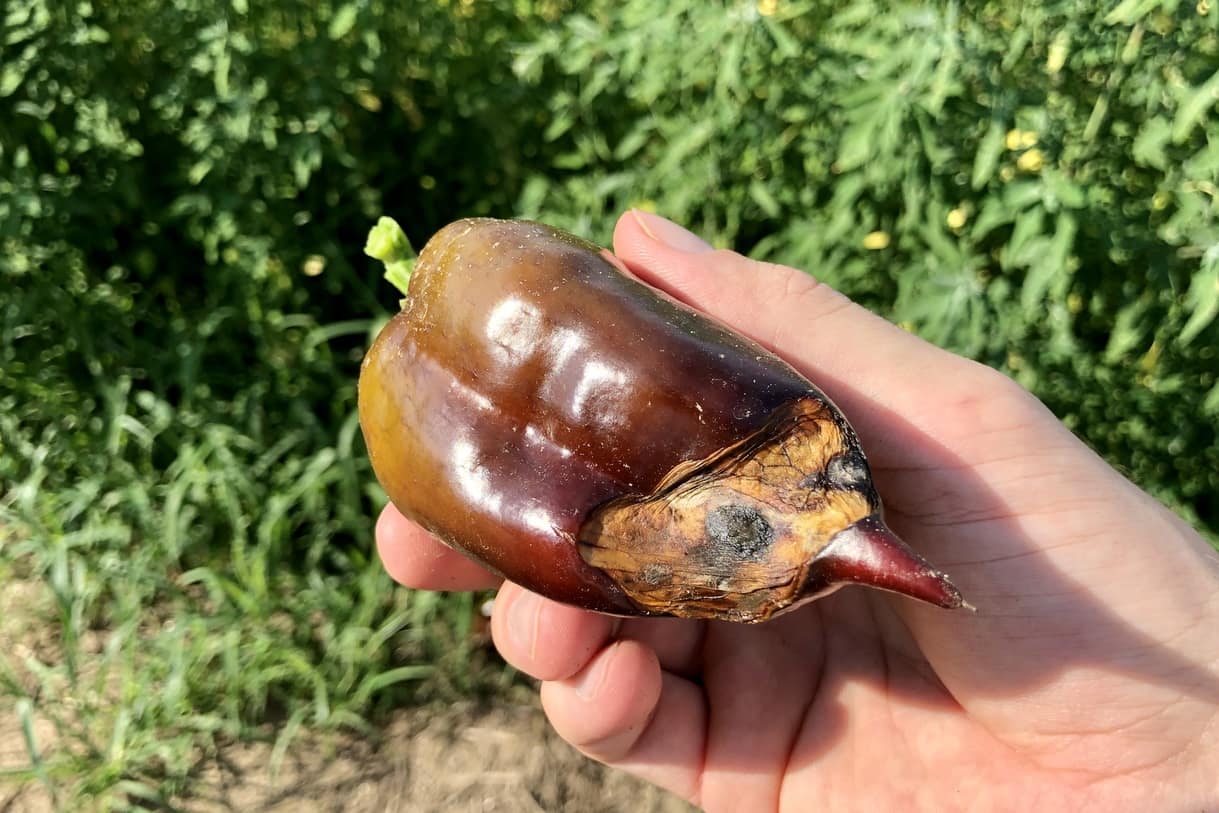
Symptoms
- Soft spots on bottom of pepper pods
- Shriveled and dead skin
- Mold inside of peppers
Solutions
- Water evenly. Even though the issue is calcium-related, providing calcium rarely fixes the issue. Most of the time, BER is caused by improper watering; allowing the plant to become completely dehydrated, then flooding it with lots of water. This causes the plant to transpire much of the absorbed water through the leaves, and for most of the available calcium to bypass any developing fruits. Instead, water before your pepper plants start to wilt from lack of water, keeping soil evenly moist and well-drained.
- Wait it out. It is fairly common for the earliest fruits to have blossom end rot, while later fruits will be normal. Sometimes, the best thing to do is to simply do nothing at all and wait for your plants to sort things out themselves!
In case you are not already, be sure to fertilize regularly with a solution containing calcium.
Learn more about blossom end rot on peppers here.
Yellowing Leaves
One of the most common issues pepper growers face is the dreaded yellowing leaves. While it is usually not a big deal, there are measures you need to take to correct this pepper plant problem.
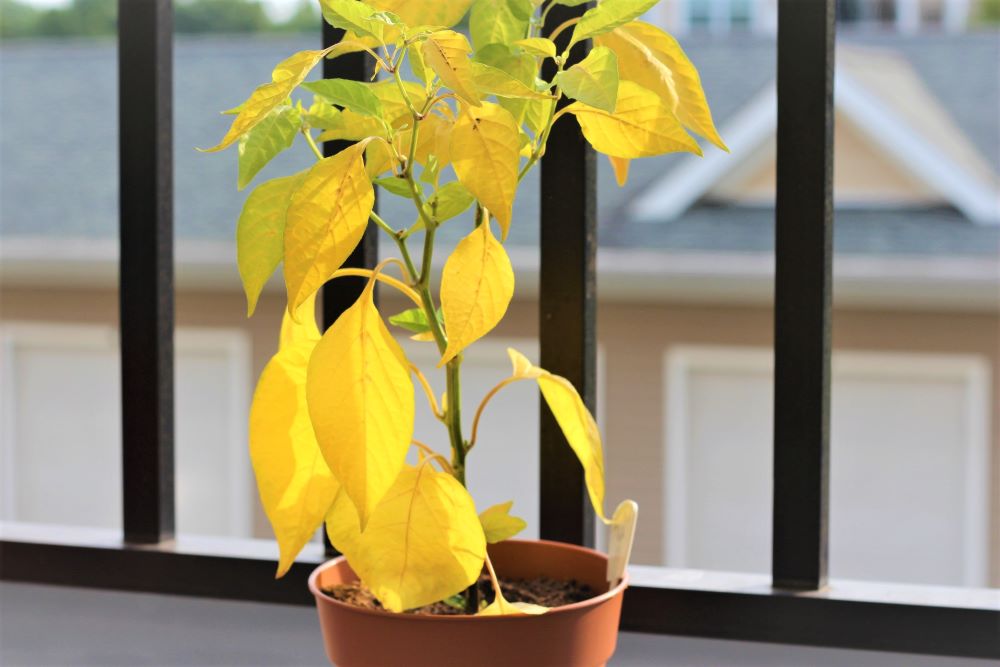
Symptoms
- Yellowing leaves
- Leaf veins turning yellow
- Leaves falling off
Solutions
While the solutions to yellowing leaves will vary depending on the cause, here are a few potential fixes.
- Provide nitrogen. Nitrogen is an essential nutrient for healthy plant development. It helps pepper plants grow lots of big, strong green leaves. It is also the most common nutrient to be deficient in soil. Make sure you are fertilizing regularly and that your fertilizer contains enough nitrogen. Also, get a soil test annually if you are planting in the ground.
Tip: If the problem is nitrogen, the yellowing leaves will begin at the bottom of the plant, moving upwards over time.
- Provide magnesium & calcium. A magnesium deficiency will cause chlorosis when severe, meaning the veins of leaves will remain green while the rest turns yellow. Use a cal-mag spray or use soil amendments like bone meal and blood meal when planting peppers. Many all-purpose fertilizers contain these secondary nutrients.
- Don’t over-water. Over-watering is another possible reason for pepper plants turning yellow. Be sure to only provide water when necessary and to allow potted plants to drain excess water. Peppers prefer even-moisture, so use a moisture meter or allow the first inch or two of soil to dry between waterings.
Learn more about pepper plants turning yellow here.
Curling Leaves
Here is a problem faced by first-time and veteran pepper growers alike. With so many possible causes, treating curled pepper leaves can be tricky.
Most of the time, curling pepper leaves is a sign of either too much light, too much water, or plant edema. There are diseases that can cause curled leaves, but if the plant appears otherwise healthy, it is most likely one of these causes.
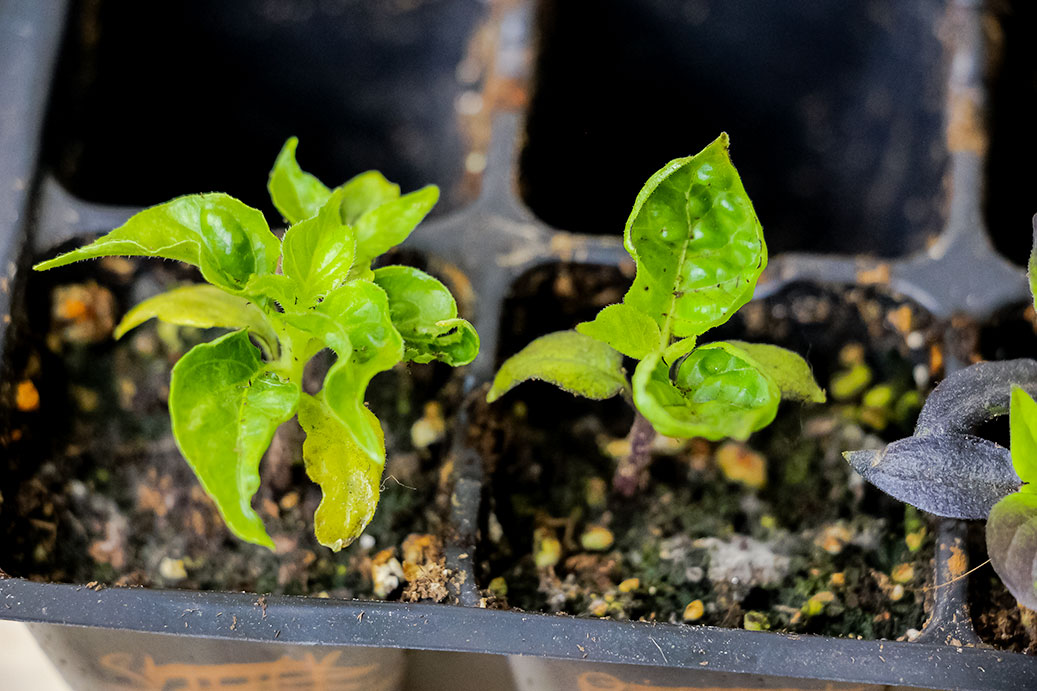
Symptoms
- Curling leaves
- Distorted leaves
- Stunted growth
Solutions
- Move grow lights up. If you are growing peppers from seed indoors, your grow light may be too close to your plants. If you are using an LED light, it should probably be at least 12-15 inches from the plant leaves, depending on the light’s power. Read up on your specific light unit and be sure that your plants have enough space.
- Increase airflow. Plant edema is caused by environmental conditions, especially poor air circulation and over-watering. If your plants appear to have white crystallized bumps along the underside of leaves, they may have edema. Increase airflow with a fan if indoors, or by using wider pepper plant spacing outdoors.
- Make sure your soil has calcium. Pepper plants require calcium in order to properly form strong cell walls. This is what gives the leaves and pepper pods their symmetrical, uniform shape. When calcium is deficient or missing, the leaves and fruits may distort. Ground soil is rarely deficient in calcium, but potted plants can be affected. Check your potting soil’s ingredients. If calcium is not mentioned, be sure to provide calcium with an all-purpose fertilizer like this one.
- Don’t over-water. We’ll say it again, over-watering is bad! Don’t provide too much water for your pepper plants. It can cause curling leaves, too.
Holes In Pepper Leaves
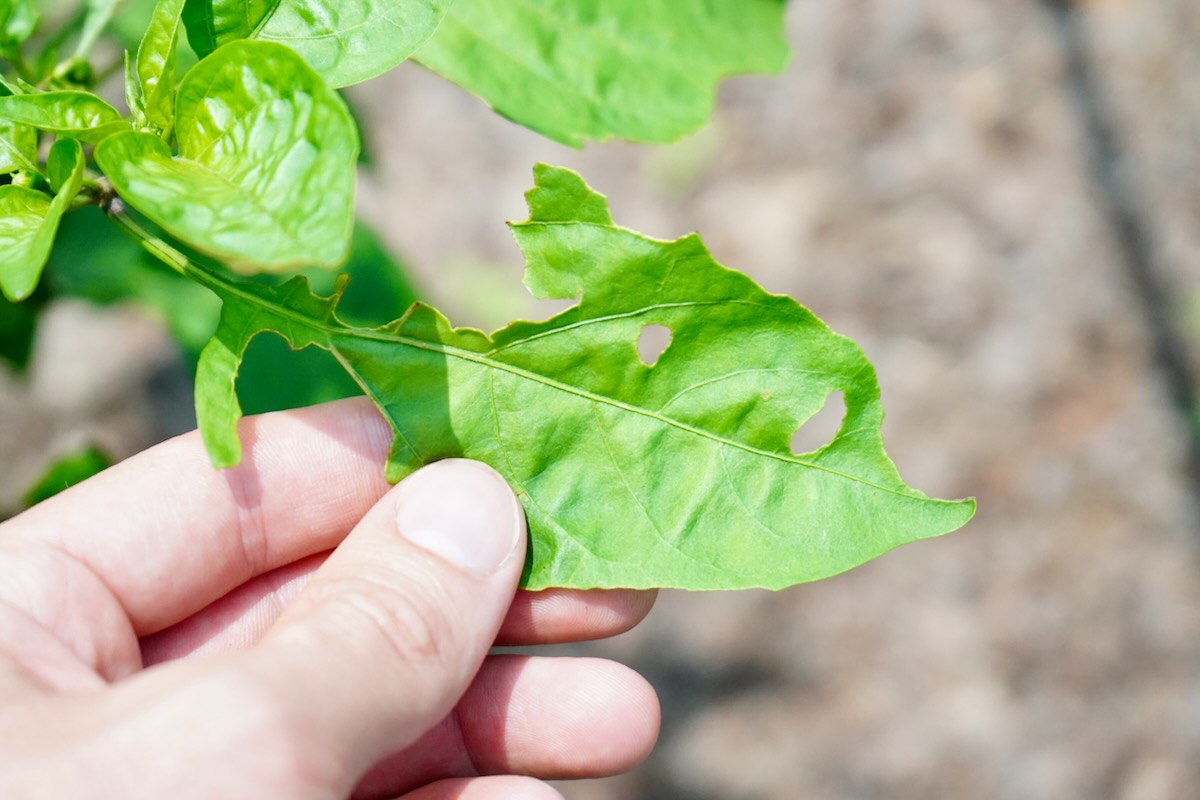
Another common problem you may face growing peppers is holes in the leaves. This can be caused by a variety of outside factors.
Symptoms
- Holes in leaves
- Ragged edges of leaves
Causes & Solutions
- Pests. Beetles, stink bugs, caterpillars, earwigs, slugs, and more pests can chew leaves in your pepper plant leaves. Start by observing your plants at different times of day to identify the pest that is to blame. Then, treat the pest accordingly (usually either hand-removing, or as a last resort, spraying to kill the targeted pest). I suggest avoiding pesticides if at all possible, as they can often cause more problems in the long run (and sometimes make the pest problem worse!).
- Wind damage. Physical damage can easily happen from strong winds or falling debris from trees. Keep your plants upright with a stake to avoid this, especially while plants are young.
I hope this article helped you diagnose your pepper plant problems. While these are by no means the only issues you may have with your pepper plants, they are definitely the most common problems we have seen.
Keep a close eye on your plants, look out for any changes, and most importantly, keep them healthy and happy with enough nutrients, water and sunlight! Happy pepper gardening.

Calvin
One of the original Pepper Geeks! When Calvin isn’t gardening or learning more about peppers and botany, he might be traveling new places or playing some music.


I have a Thai pepper plant growing in a pot and I pruned it(topped off) a couple of weeks ago. The amount of new shoots and leaves is incredible. Should I cut any of them back? Some leaves are large and actually turn from time to time. Thanks for all of the information on this site!
You can just allow it to bush out naturally from this point! It should continue to grow. If it is too thick/bushy, you can thin out some leaves to improve airflow, but I would simply let the plant go.
@peppergeek, Thank you!
Hi. Last year April I planted some Caribbean seasoning pepper seeds. In Trinidad they are known as pimento pepper but throughout the Caribbean they are knows as caribbean seasoning pepper. I have never been able to grow anything and this was my fourth time trying. I was able to get them to grow. They seem to be surviving the winter, and although they are a bit stunted, at least I haven’t killed them.
On the leaves of some of them are some dusty spots. More dusty looking than spots. I wish I could upload a photo. I have been clipping off the bad leaves but it slowly comes back. Also some of the leaves are warped. But the major thing is the dusty raised things on the top of the leaves. Can you suggest something. Other than that the plant looks healthy.
Hm, this sounds like it could be powdery mildew, but hard to say without seeing. You can feel free to upload a picture on our subreddit here: https://reddit.com/r/peppergeek
I want your help my habanero pepper the fruit are now turning black and the leaves also turned yellow and the stem dry up
Hi Pepper Geek! I just recently got into growing peppers and I started growing cayenne in a container. I never pruned it or anything, just let it grow at its own pace. It started producing flower buds and some of the flower opened. I always shake it lightly every morning to make sure it pollinated. The problem is, all of these flowers fell off and I noticed that all of the new shoots growing are brown and looks to be wilting. It rarely ever develops into a large leaf, it just dries out and fall. What could be the problem here? The other leaves are fine for now, just the new growth seem to be wilting.
Thanks for this article!
I grow chilies indoors in tents. Multiple chili plant leaves have started turning bronze and crisp in the part of leaves closer to the stem and eventually fall. New growth has stalled and is deformed with tiny unrecognizable leaves that dry out. I don’t believe this is due to pests as I treated organically previous infestations of thrips and spider mites and they are gone. Could be related to temperature, humidity or airflow or else. This has happened before.
Would greatly appreciate any advice on what could be going on.
Happy to share photos.
Thank you for your video on “getting rid of the burn on your hands” Foolishly I cut up a full 2qt bowl of, fresh from our garden banana peppers, without gloves! After washing my hands the BURN set in…they were turning redder by the second. I ran for the milk, soaked for a while, then rinsed…ouch. Next tried a baking soda paste…ow. On to the aloe plant, squeezed out the juice and lathered by hands…hands still pulsing with the burn. Ok now to help from on-line: Vinegar to cut the oil and a layer of corn starch which I kept on for a loooong while, the pain eased a bit…I just had to “bite the bullet” and let the pain subside overnight. This morning my fingers are still red but the pain is gone…my final words: NEVER cut up a large batch of hot peppers without GLOVES. Thanks for listening, Katie
I want yours help ,
Sir chilli anthracone & chill wilt
Hi! I am newish to growing peppers and some of my more recent jalapeños have weird light colored patches that I have not been able to find an explanation for. Any idea what this could be? I have pictures I can provide.
It could be sun burn – if the pods are exposed to direct sunlight and don’t have any leaves to shade them, they can develop soft, white patches that can eventually rot.
Hey Pepper Geek,
I’ve got a pretty rampant chili/pepper maggot problem this year – this is a first time for me ever even hearing about them. I’ve had to toss about half my yield so far. How can I combat the problem now and prevent it next year? I’m growing about 15 sweet and hot pepper varieties and it has affected them all, including some tomatoes. Such a drag! Thanks for your wisdom in advance.
Started 3 types of seeds, Bells, Arbol and Guajillo. The sprouted up within a few weeks after sowing. But then the problems started. A few of the plants first leaves started to turn purple/black on the outer edges. I talked to my local nursery and they suggested I add some nutrients. And now the plants are starting to fall over and the leaves are falling off. Most just have the start of the 1st set of true leaves. Help! I think I have killed them.
Falling over sounds like damping off – too much moisture, and especially a problem in cooler temperatures. Water less. Purpling leaves is normal for many varieties. Too much fertilizer is just as bad as no nutrients! Plants can get burned and overwhelmed. Hope this can help!
Thanks for your response. They have all died…I think the killing blow was damping off, but after watching all of your YouTube videos, I know I made several mistakes. So I am going to start over and try again.
My little jalapeño plant has been producing beautiful fruits all summer, until about 2 weeks ago, the stems suddenly began turning brown and became shriveled, appearing to prohibit nutrients/water from reaching the pepper. I just picked all of them suffering this dilemma (all sizes, and all green) and have maybe 2 peppers on healthy stems left. Lots of flowers remain. I haven’t found this type of description of issue in my searching for answers.
My other weird symptom is a few leaves become sick (slight discoloration, darkening) and then flip upside down on their stem. I keep picking these odd leaves off, but haven’t had this problem with past pepper plants. Any ideas on either problem? I grow lots of veggies and these are the only ones having problems. Thanks!!
I have been having the second thing you mentioned- leaves turning darker and flipping upside down. They also have a kind of puckered or wrinkly look. I have no idea what this is either!
Sorry to not be of help but thanks for asking this question!
🙂
Hi pepper geek,
I’m not sure what is happening with my Cajun bell pepper plant. While it is producing some nice little peppers, it’s producing a ton of little berries. Do I snip these off? What are they?
Thanks so much for your help.
That sounds strange…are you sure another plant (maybe a weed) is growing beside it? A picture would help – feel free to message us on Instagram with a picture
Just joined. Thanks. I’ve been growing peppers (and other edibles as well) here in my home garden for about 20/25 years now. Its size is about 10′ x 30′ with each row about 18″ wide. Over the years I have had (and still have) more problems than most folks ever imagine. What I have learned is that I need to get as much as possible out of my plants as soon as possible because, inevitably, I will lose the war. A practice that I have done for several years now is adding a small amount of Epsom salt to each hole before setting in the plant. Additionally I spray the leaves with a mixture of the salt and water about every 2-3 weeks or so. As I understand it, pepper & tomato crave magnesium & sulfur which is what Epsom salt is. Your thoughts? Thanks again
Hi Joe – we have mixed feelings on epsom salt. Sure, it does provide magnesium, but it can also affect the calcium uptake by binding to calcium in the soil and reducing the amount that is available to the plants. If the soil is desperately lacking magnesium (and you know this for sure), then epsom salt would likely be beneficial, but we don’t usually amend with it unless we know there is a need.
We intend to keep our soil ‘happy’ by adding compost annually until the soil reaches the right consistency and nutrient content, and then just work to keep it protected at all times (covered in the winter, keep something growing in it, avoid tilling whenever possible).
Peppers look like they gave ash or dust on them.
Probably just pollen.
Hi…. i need part of this information posted by you for farmers in my country. 6 amongst this disease is common here and this info is needed by them. I will be taking part of the information as source for mine. Hope you wont mind
New to gardening.
Got a young (red) pepper plant from nursery about 2.5 weeks back. In India, monsoon has just arrived. Sunny days are rare. I keep it under shade to avoid overwatering from rain. However, the growth is super slow. The flowers are falling without blooming with little green stem attached to them.
There were 2 tiny yellow pepper growing at the time of bringing them home, and in these 2.5 weeks, they have barely turned a shade darker.
Leaves are a little wilted and turning yellow often. Those which are yellow, when touched upon, are falling without resistance. I am worried about my young one. 🙁 What can i do to make it better?
Also, the potting mix has garden soil, coco peat, and cow dung manure (it’s good organic manure used here quite often).
Unfortunately with too much water and little sunlight, the characteristics you describe are common and expected..on sunny days, give them as much as possible, and make sure drainage is good for when it rains
Hi there,
Love your channel. I got a late start on my garden, planted peppers on 10th of June in the ground. Living in NH we have had 12 in of rain alone in July. My peppers looked horrible (yellow leaves, dropped leaves, etc). Added nitrogen to compost when planted, just fertilized with Phosphorus (highest number) granular and showing signs of life plus cut off flowers as you mentioned to put energy back in. Should I now use FoxFarm, I have all 3 bottles you showed in the video and which one? I need lots and lots of peppers to make my red pepper jelly – 🆘
Many thanks,
Andrea
Hey Andrea – thanks! I’m glad to hear the plants are coming back a bit. You can add some of the big bloom and tiger bloom during watering to help encourage more blooms and to give a bit of nitrogen. Don’t go overboard at this point in the season, as the plants should just need time and decent weather to produce!
Hi. My chili pepper plants are about 2 years old. It getting taller and taller. Do I need to prune the top even if it has lots of flowers? Also there are white mold like stuff on the bottom branches. One branch actually got brittle and fell off. Please help..
You don’t have to prune, but you can if you want to. For an older plant, I might prune to keep it tidy and convenient for the plant’s location.
There’s blackening on my peppers. There’s black joints which my research says is normal but now that the peppers are growing there’s black streaks in a couple then one with mostly black. What is happening and how do I help my peppers?
Some peppers turn black-ish during ripening (jalapenos do this naturally before they turn red). Also, direct sun exposure on the peppers can cause discoloration.
Shoutout to pepper geek for answering people’s questions. 😀 Happy gardening!
🙂