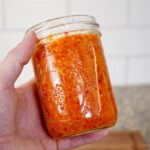
Fermented Hot Sauce
Simple fermented hot sauce recipe using hot peppers, garlic, carrot, and onion.
Equipment
- Glass jar
- Kitchen scale
- Airlock lids optional, recommended
Ingredients
- 50 grams hot peppers habanero, jalapeño, etc., chopped
- 150 grams sweet peppers chopped
- 150 grams carrots chopped
- 100 grams sweet onion chopped
- 3 cloves garlic
- 12 grams salt sea or kosher (2-3% by weight)
- vinegar white or apple cider, ~5%
Instructions
Fermenting the ingredients:
- Clean and dry the glass jar by boiling (ideal), or washing with hot soapy water.
- Select the freshest ingredients available, as this can affect the success of fermentation.
- Weigh all of the fresh produce in grams and make a note of the total.
- Measure out 2-3% of the total weight of the produce in salt. For example, in this recipe, we need 12 grams of kosher salt for the ~460 grams of peppers, carrots, onions, and garlic.
- Rough chop the produce and add it to a food processor. Sprinkle the salt over the top.
- Blend the ingredients until they reach a finely chopped texture.
- Add the mash to the prepared glass jar, pressing it down to release all air pockets as you go. Any air left is a vulnerability for mold.
- Cover the mash with a cartouche (a piece of parchment cut to the size of the surface), pressing it into the surface to protect the top from air exposure.
- Cover the jars with an airlock lid and ferment for 3-4 weeks at room temperature (ideally between 65-70°F).
Finishing the hot sauce
- Once your fermented mash is finished, combine the mash with 1-2 tablespoons of vinegar (apple cider or white vinegar) in a blender.
- Add additional vinegar 1 tablespoon at a time, blending as you go until the sauce reaches a pourable consistency.
- Bottle the sauce and refrigerate for up to 3 months.
Notes
If you prefer a hotter hot sauce, feel free to adjust the ratio of hot peppers to sweet peppers. Also, if you have superhots, 1 or 2 peppers is usually enough to heat a ferment of this size.
Scale this recipe as desired. For example, if you love garlic, feel free to double or triple the amount suggested.
Always weigh your ingredients and salt to make sure you are adding at least 2% of the total weight in salt. This is critical to avoid a failed ferment!
Safety notes:
- After adding the mash to the jar, press down your ferment to release all air bubbles trapped within the ingredients. These can cause mold to grow within your ferment, spoiling it.
- Store the finished sauce in the refrigerator to avoid the bottles building pressure as fermentation continues. Cold temperatures greatly slow the lacto-fermentation process.
- It is normal to see bubbles forming a few days after the ferment forms (these are CO2 and are a good sign that fermentation has begun).
- Smell and taste-test your ferment after about 2 weeks in a room-temperature location.